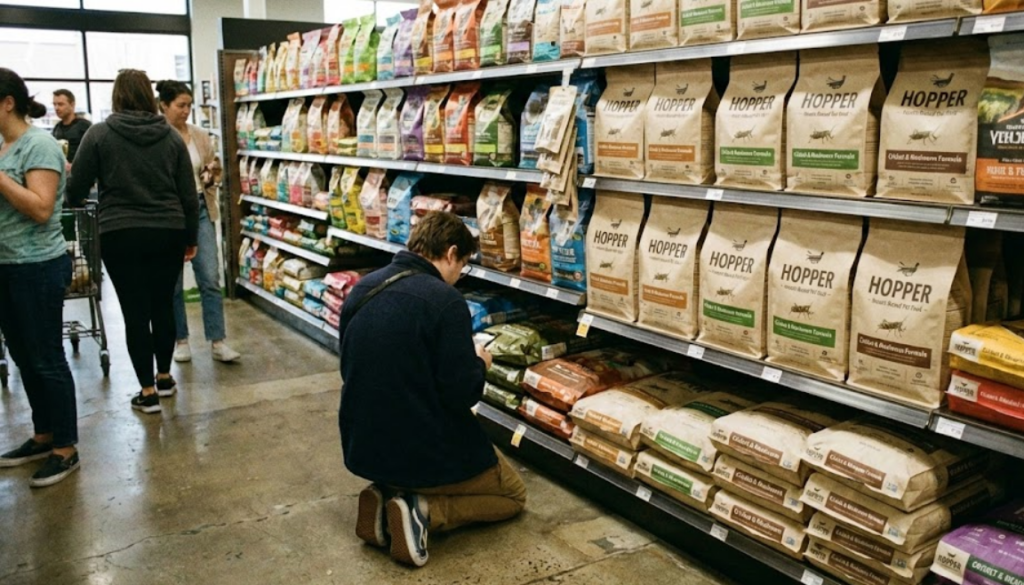
At some point recently, insect protein stopped behaving like a curiosity and started showing up in places that usually take their time. We noticed it first in pet food aisles, then in feed industry briefings, then in investor decks that did not lean on novelty to hold attention. That tends to unsettle people, mostly because the shift happened quietly.
When we ask what is insect protein, the question usually carries a second layer. Why is this suddenly acceptable. And does its presence say something about where food systems are heading, whether we like it or not.
The Protein Gap People Rarely Notice Until It Affects Cost and Supply
Protein feels solved right up until it stops behaving that way. We see prices drift upward. Ingredients get swapped without much explanation. Brands start talking about supply resilience instead of flavor profiles.
Most protein production still leans on a narrow base. Land intensive crops. Water heavy inputs. Feed systems built on the assumption of stability. When any of that tightens, the entire chain reacts. We keep seeing this surface in food security work published by some global research bodies, where protein availability shows up less as a trend and more as a structural concern.
What Insect Protein Is and How It Is Produced
The Biological Makeup Behind Insect Protein
Insect protein comes from insects selected for how efficiently they grow and convert feed into usable mass. Biologically, the output looks familiar to us. Amino acids the body already knows how to use. Fats that carry energy. Trace minerals that often disappear during heavy processing.
What tends to stand out, once we look past the framing, is efficiency. These insects evolved to thrive on low value organic material. That trait becomes valuable as soon as scale enters the picture.
From Indoor Farms to Protein Powder
Production happens indoors, under controlled conditions, stacked vertically to limit sprawl. The insects grow quickly, reach harvest size in weeks, then move through heat treatment to meet safety standards. After drying and milling, what remains is a stable protein powder that blends easily into existing formulations.
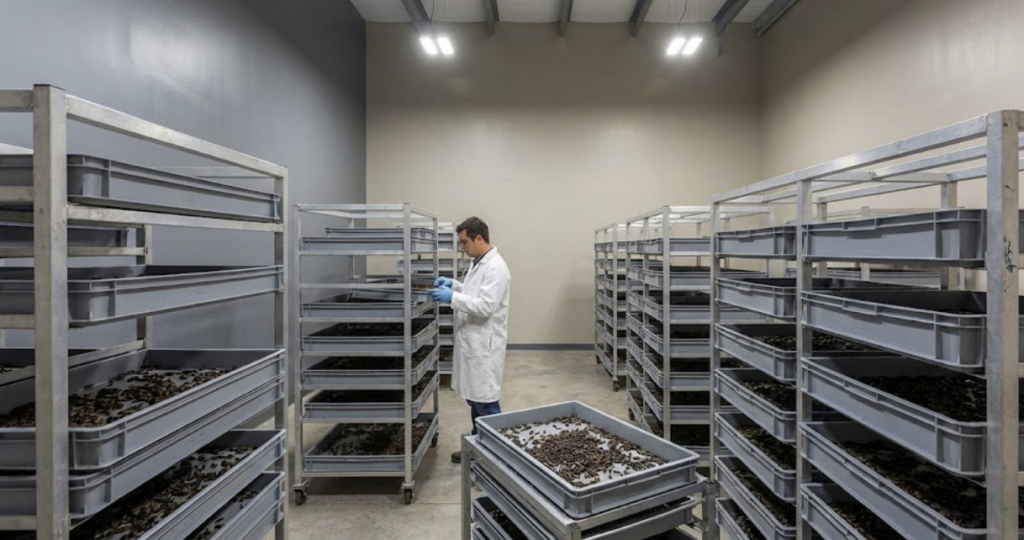
Some producers have chosen to make this process unusually transparent in public materials. From our side, that transparency matters less as a selling point and more as a way to normalize how controlled and unremarkable the system actually is.
The Insects That Actually Matter in Commercial Production
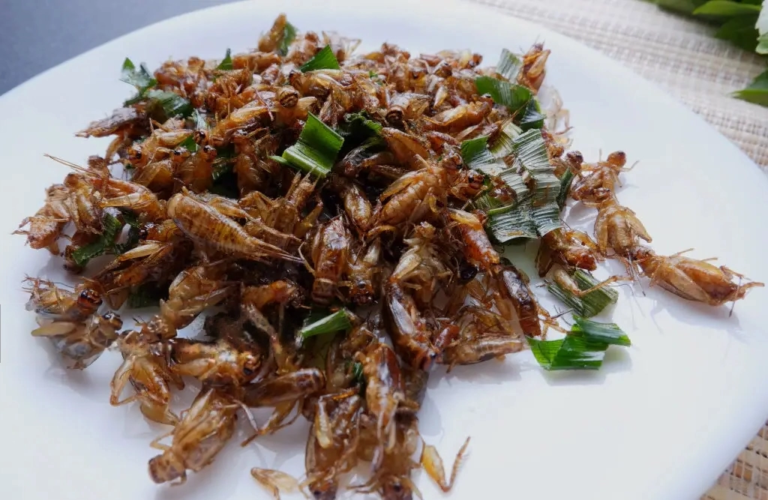
Despite the imagery we tend to associate with the idea, commercial insect protein relies on very few species. Black soldier fly larvae dominate large scale production, especially for animal feed and pet food. Mealworms appear more often in trials aimed at human consumption. Crickets show up mostly where familiarity helps carry the idea.
That concentration keeps supply predictable, which is usually what matters most at this stage.
What Insect Protein Looks Like Nutritionally
Amino Acids, Digestibility, and How the Body Handles It
From a nutritional standpoint, insect protein holds its position without much drama. Protein content aligns with conventional animal sources. Amino acid profiles support muscle maintenance and general metabolism. Digestibility stays high when processing is done correctly.
We see these points come up repeatedly in nutrition research summaries, especially when the comparison shifts away from branding and toward how the body actually handles protein.
Insect Protein vs Whey Protein in Real Use
Whey protein still sets the standard for fast digestion and neutral taste. Insect protein behaves differently. Digestion tends to spread out. The nutrient profile feels broader. Some of us who struggle with dairy notice fewer issues.

Rather than competing directly, it fills a different nutritional role, especially outside narrowly defined fitness routines.
Why Insect Protein Keeps Showing Up in Sustainability and Food Security Talks
Sustainability discussions often drift toward abstraction. Insect protein stays grounded. It reduces reliance on soy and fishmeal and fits into circular systems that reuse food waste. Also, it scales without claiming new farmland.
That combination explains why we keep seeing it appear in policy level frameworks and long range planning documents, usually without much fanfare.
Resource Use, Efficiency, and Why Governments Care
Water requirements stay low. Land use shrinks through vertical farming. Feed conversion rates outperform most livestock. These traits matter to regulators because they reduce exposure across multiple systems, something we can see reflected in regulatory assessments.
Safety, Regulation, and Why This Is Already Past the Experiment Phase
Safety concerns surface early, then settle. Processing standards mirror those used across animal protein industries. Heat treatment. Pathogen control. Traceability.
In regions like the European Union, insect protein already falls under established novel food frameworks outlined in formal guidance. That clarity moves the discussion away from experimentation and toward routine use.
Why Pet Food Adopted Insect Protein Before Humans
Pets bypass cultural hesitation. As owners, we care about digestion, allergies, and consistency. Insect protein addressed those points quickly.
Once insect-based pet food brands saw stable outcomes, adoption followed without much noise.

How Dogs and Cats Respond to Insect Based Diets
Dogs digest insect protein easily. Cats handle the amino acid profile without issue. Palatability improves once fat content is adjusted to species needs.
We can watch this progression play out in long running owner discussions, where early skepticism fades once results appear at home.
Allergies, Palatability, and Veterinary Interest
Food allergies drive many diet changes. Insect protein offers a novel option without common triggers. Veterinarians track outcomes rather than trends. Reduced skin irritation. More consistent digestion. Stable energy levels.
Where Insect Protein Is Already Used Without You Noticing
Aquaculture uses it more each year. Poultry feed trials expand quietly. Specialty food products blend it into formulations without calling attention to it.
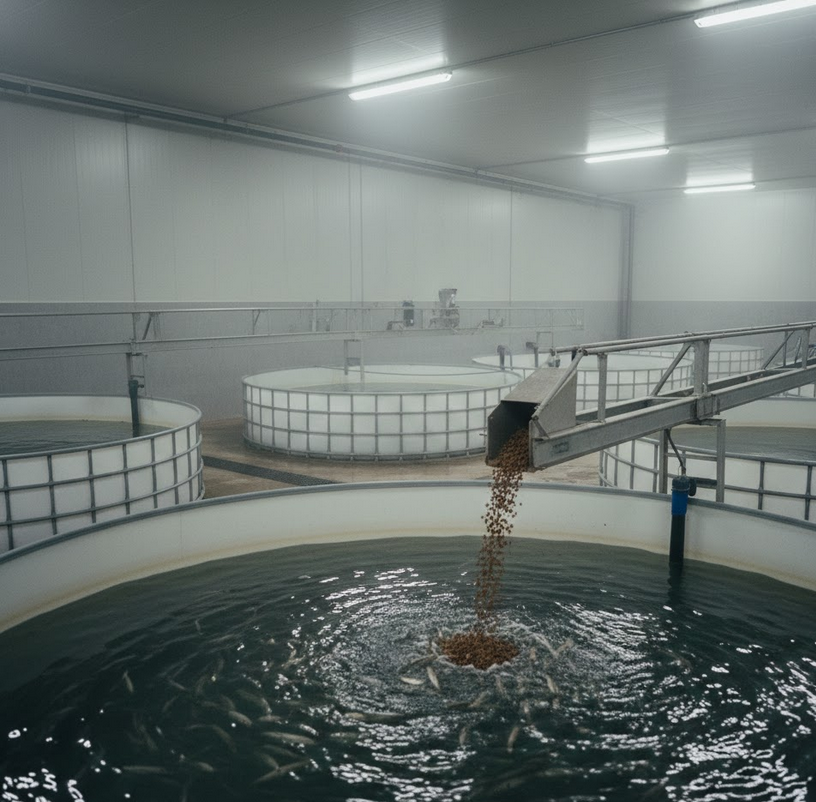
Most of us already interact with insect protein indirectly. The framing just has not caught up yet.
The Real Barriers to Human Adoption
The remaining barriers are psychological. Discomfort. Cultural framing. Early attempts to sell the idea through shock rather than utility.
Once those soften, adoption tends to follow usefulness. We have seen this pattern repeat across food history more than once.
What the Next Five Years Likely Look Like for Insect Protein
The next phase looks quieter. Less spectacle. More integration.
Insect protein will appear in blends, feeds, and functional foods where performance matters more than story. We will keep asking what is insect protein, though with less edge. Most of us will care about cost, consistency, and whether it fits cleanly into systems we already trust.