If you’ve been reaching for peanut butter labeled “natural” thinking you’re making a healthier choice, you’re not alone. You’re also not protected. “Natural” has no legal definition in the US food system. Any brand can print it on a jar. USDA Certified Organic is the only label with actual enforcement behind it, and even that doesn’t tell the whole story.
We tested and ranked the best organic peanut butter brands available on Amazon right now, filtering strictly for verified USDA certification, real customer data, and one thing most roundups skip entirely: what the label still won’t tell you about your peanut butter.
How we ranked: USDA Organic certification was non-negotiable. We cross-referenced Amazon ratings and review volume, checked ingredient lists for unnecessary additives, and factored in format variety. No brand paid to be here.
Some links on this page are affiliate links. If you buy through them, we earn a small commission at no extra cost to you. It doesn’t change what we recommend — no brand paid to be on this list.
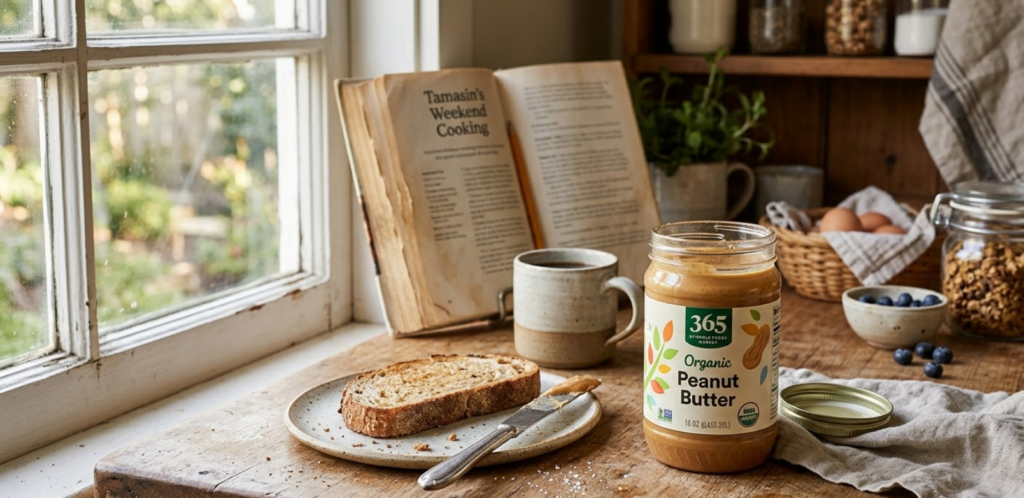
Two ingredients: organic peanuts and salt. That’s it. No palm oil, no added sugar, no stabilizers. 365 keeps it as clean as it gets for a mass-market brand, and the price ($0.31 per ounce) is hard to argue with. With over 10,000 units bought on Amazon last month alone, it’s clearly not a secret.
The one honest caveat: it separates. The oil rises to the top, which is what happens when there are no hydrogenated oils keeping the jar “stable.” That’s not a flaw. It’s proof the formula is honest. Stir it once when you open it, store it upside down, done.
Sourced from USDA certified organic peanuts, though the label doesn’t specify country of origin, worth noting if origin matters to you.
Best for: Anyone who wants verified organic peanut butter without paying a premium. The everyday jar.
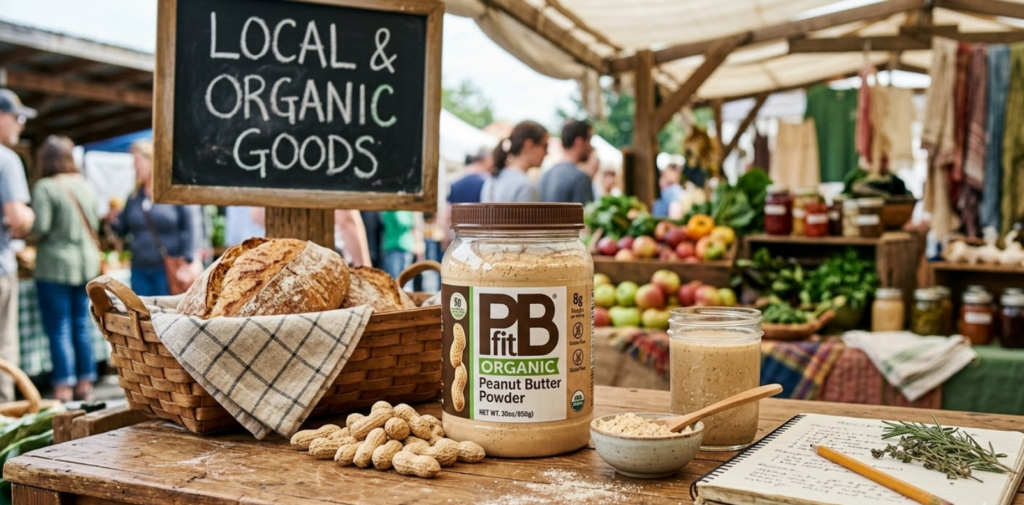
Note: PBfit is a powder, not a traditional jar peanut butter. It mixes with water to a spreadable consistency but has a different texture and use case. We’ve included it because it’s the highest-rated organic peanut product on Amazon by a significant margin, and for the right person, it’s genuinely the better buy.
The process: roasted peanuts are pressed to remove most of the fat, leaving behind a protein-dense powder with 87% less fat than traditional peanut butter and 7g of protein per serving. At 60 calories per serving versus roughly 190 in a standard jar, it’s a different product entirely, but the organic certification is real and the 28,300 Amazon reviews don’t lie.
It works well stirred into smoothies, oatmeal, and sauces. As a straight spread on toast it’s thinner than you’d expect from a jar. Manage expectations and it over-delivers.
Best for: High-protein diets, calorie-conscious eating, smoothies and cooking. Not a straight swap for traditional peanut butter. A different tool entirely.
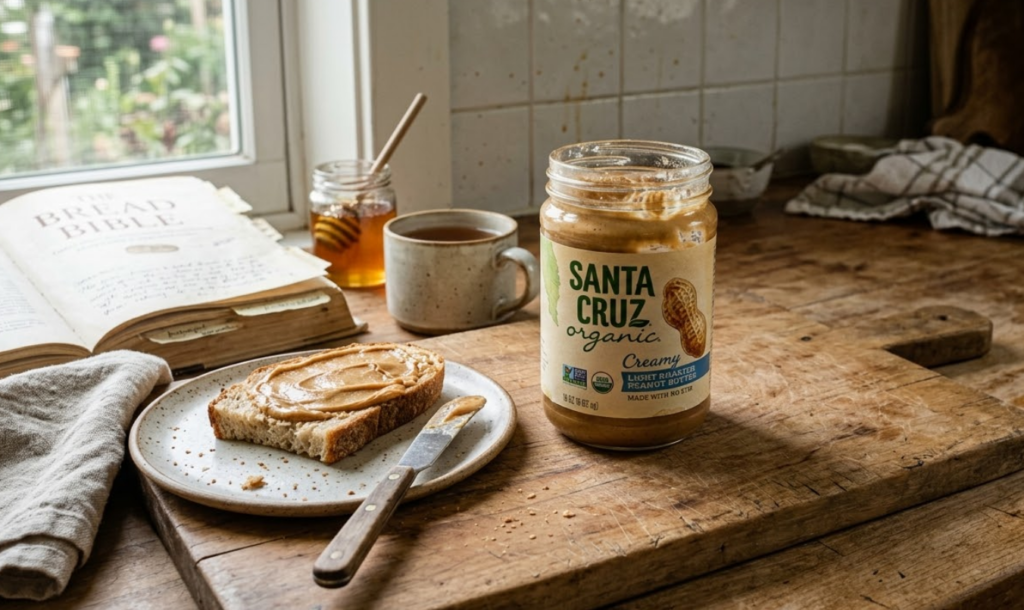
Santa Cruz has been making organic peanut butter since before “organic” became a marketing trend. The light roast keeps the peanut flavor clean and mild, less intense than a dark roast, more versatile on toast or in baking. Two ingredients: organic roasted peanuts and salt.
It separates like any honest peanut butter should. At $0.44 per ounce it’s mid-range priced, which for a brand with this track record and review volume feels fair. This is the jar you’d reach for if you want organic peanut butter that behaves like peanut butter. Nothing fancy, nothing unnecessary.
Best for: The classic organic jar experience. Baking, toast, sandwiches. Reliable and clean.
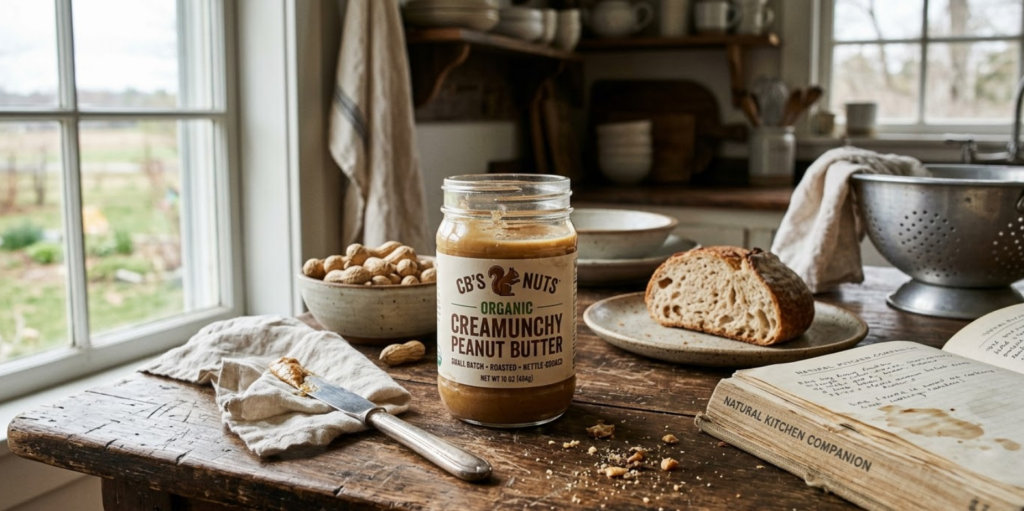
CB’s Nuts sits in small-batch territory. 486 reviews compared to 365’s 7,400, but that review count tells you something different about who’s buying it. This is the jar for people who actively sought it out rather than defaulted to the top Amazon result.
“Creamunchy” is their hybrid texture, somewhere between smooth and crunchy, with small peanut pieces throughout. At $0.60 per ounce it’s the priciest jar on this list, but 600+ units bought last month on Amazon suggests it’s building a loyal base.
Ingredient list is clean: organic peanuts only. No salt even, which puts it in a different lane from the rest of the list.
Best for: Texture seekers and people who want a truly small-batch organic option with zero additives, not even salt.
The Thing the Label Won’t Tell You: Aflatoxin
Here’s what no peanut butter roundup talks about, and probably should.
Peanuts are one of the crops most vulnerable to aflatoxin contamination, a naturally occurring mycotoxin produced by mold that forms during growing, harvesting, or storage. The FDA monitors aflatoxin levels in the US food supply and sets action thresholds. Most mainstream brands stay well within them.
But here’s the problem: USDA Organic certification says nothing about aflatoxin. The certification governs how peanuts are grown (no synthetic pesticides, no GMOs) but it doesn’t require aflatoxin testing or guarantee low exposure. Organic peanuts carry the same aflatoxin risk as conventional ones because the mold that produces it doesn’t care about farming method.
What actually reduces aflatoxin risk is sourcing origin and storage protocols. US-grown peanuts are generally considered lower risk than some imported varieties because of stricter domestic testing requirements. Virginia and runner peanuts tend to have lower contamination rates than Valencia or Spanish varieties.
None of the brands on this list disclose their aflatoxin testing publicly. That’s an industry-wide gap, not unique to organic. But it’s worth knowing that “organic” doesn’t solve this particular problem, and that eating varied protein sources, rather than relying heavily on peanut butter daily, is a reasonable hedge.
Decoding the Label
What It Says
What It Actually Means
Worth Paying For?
Natural
Nothing. No legal definition.
No
USDA Certified Organic
No synthetic pesticides, no GMOs. Third-party verified.
Yes
Non-GMO Project Verified
Tested for GMO absence. Separate from organic.
Yes, if organic isn’t certified
No Added Sugar
Literally just no added sugar. Doesn’t mean clean ingredients.
Neutral
No Palm Oil
Good. Palm oil is linked to deforestation. Worth noting.
Yes
No Stir
Stabilized with hydrogenated oils to prevent separation. Avoid.
No
Our Honest Recommendation
For most people: 365 by Whole Foods. Clean ingredients, verified organic, lowest price per ounce on this list, and 7,400 reviews to back it up. The oil separation isn’t a problem once you know to expect it. This is the jar we’d reach for first.
For the classic organic experience: Santa Cruz Light Roasted. A brand that’s been doing this longer than most, with a track record that holds up. Worth the extra cost over 365 if you want something with more heritage behind it.
For protein and low-calorie cooking: PBfit. Not a traditional peanut butter, but if you’re adding it to smoothies, oatmeal, or sauces, it outperforms everything else on this list on nutrition per calorie. The 28,300 Amazon reviews are not an accident.
For texture and small-batch quality: CB’s Nuts. The premium pick. No salt, no additives, unique texture. If you’re buying peanut butter the way you’d buy specialty olive oil, this is the one.
And if you’re shopping in a store without any of these brands available: flip the jar over and read the ingredient list. Two ingredients maximum: organic peanuts, and maybe salt. Anything else is a reason to put it back.