If you’re looking for the best organic loose leaf tea, there’s a reasonable assumption you’re probably making: if it says organic, it’s clean. No pesticides, no synthetic fertilizers, nothing that shouldn’t be there. That assumption is mostly right. But it misses something the label never mentions.
Tea plants are hyper-accumulators. They pull whatever is in the soil (lead, arsenic, cadmium, and fluoride included) straight into the leaf. USDA Organic certification controls what farmers spray on the plant. It says nothing about what was already in the ground before the first seed went in. A tea can be 100% certified organic and still carry measurable heavy metal contamination depending on where it was grown and what that soil has absorbed over decades.
That’s not a reason to stop drinking tea. It is a reason to be more deliberate about which brands you buy from, and to understand that the organic label, while worth having, is not the whole story.
We looked at four USDA Certified Organic loose leaf tea brands currently available on Amazon. All four are genuinely certified. What separates them is sourcing origin, testing transparency, and what you actually get for the price.
Quick note on how we ranked these: every brand here carries confirmed USDA Organic certification. We pulled star ratings and review counts directly from Amazon. We did not accept “natural” or “clean” marketing language as a substitute for actual certification. Some links in this article are affiliate links. If you buy through them, we may earn a small commission at no extra cost to you.
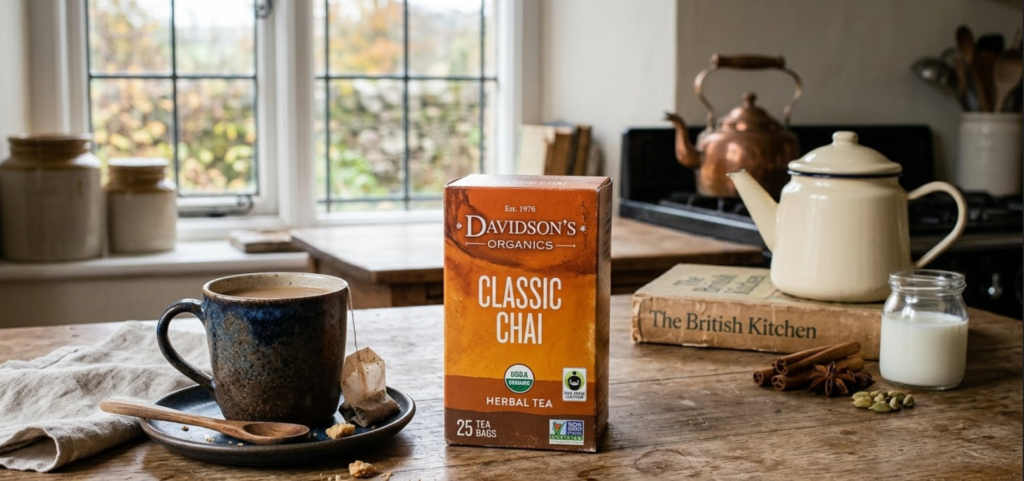
Davidson’s Organics: The Bulk Buy That Actually Delivers
Davidson’s has been sourcing organic tea since 1976, which makes it one of the oldest certified organic tea operations in the US market. The English Breakfast loose leaf comes in a 16-ounce bag at around $1.29 per ounce, significantly cheaper than most competitors at this certification level.
The review count tells the real story here. Over 2,600 ratings at 4.6 stars, with 2,000+ units bought in a single month. That kind of sustained volume for a loose leaf product means repeat buyers, not one-time curiosity purchases. People are coming back.
The tea itself is a straightforward black blend. Full-bodied, good for morning, works well with milk. Nothing experimental. Davidson’s doesn’t try to be a lifestyle brand. They source, certify, and sell. That simplicity is part of why the price stays reasonable.
The sourcing question: Davidson’s sources from multiple origins including India and China. They don’t publish third-party heavy metal testing results publicly. For everyday drinking at volume, it’s a solid certified choice. For someone specifically concerned about heavy metals, the lack of published testing data is worth noting.
Best for: Anyone who drinks tea daily and wants certified organic without paying a premium price.
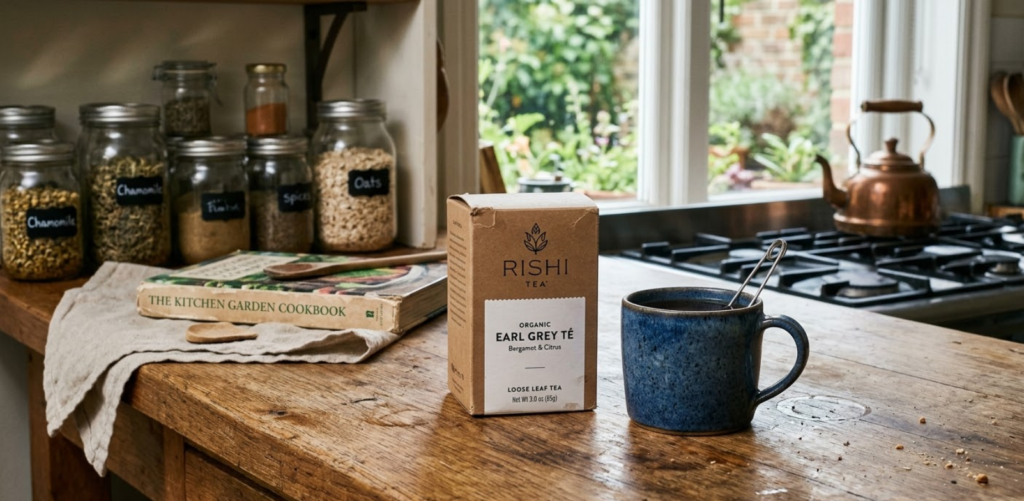
Rishi Tea: Premium Sourcing With a Wellness Angle
Rishi is a Milwaukee-based company that has spent over 20 years building direct relationships with tea farms in Japan, China, Taiwan, India, and Sri Lanka. Their loose leaf range sits at the higher end of the price spectrum, but the sourcing story is more transparent than most.
The Turmeric Ginger blend, their top-selling loose leaf on Amazon, pulls 4.6 stars across 2,300 reviews. That’s a caffeine-free herbal blend, which appeals to a different buyer than straight black or green tea. It speaks to Rishi’s broader positioning: functional, wellness-oriented, beyond just caffeine delivery.
What makes Rishi more interesting from a quality standpoint is their farm-direct sourcing approach. Fewer middlemen typically means better traceability, and traceability is exactly what matters when thinking about soil quality and contamination risk. They publish more sourcing detail than the average brand.
At $4.38 per ounce for the 4-ounce size, you’re paying a real premium. The per-ounce cost drops with larger formats. If you drink a specific blend daily, the economics improve quickly.
Best for: Buyers who want a premium certified organic option with more transparent sourcing and a wellness-forward blend range.
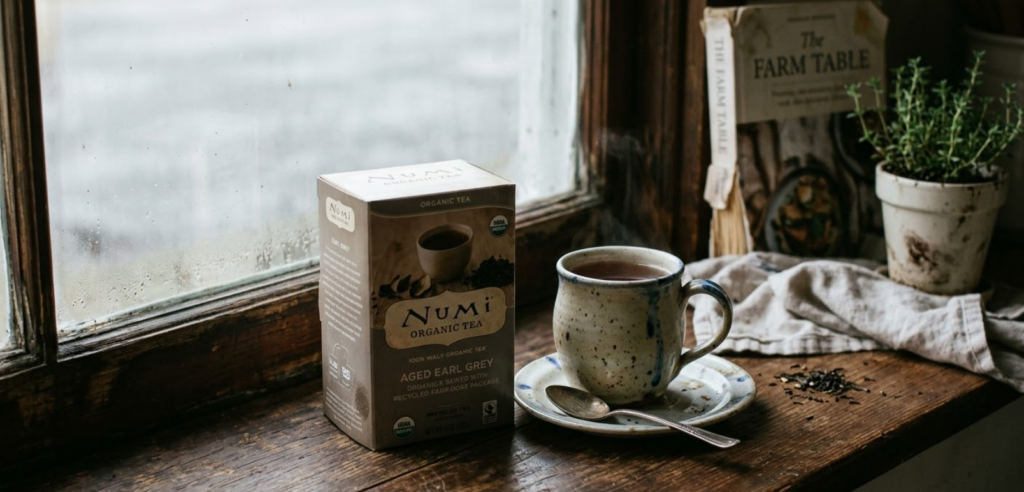
Numi Organic Tea: The Sustainability Brand That Backs It Up
Numi is the most mission-driven brand on this list, and unusually, they have the certifications to support the positioning. Their loose leaf breakfast blend carries USDA Organic, Fair Trade, and Non-GMO Project verification. That’s a certification stack you don’t often see combined at this price point.
The 16-ounce bulk bag brews around 200 cups, priced at roughly $2.44 per ounce. That’s more expensive than Davidson’s but below Rishi. The review count is lower (473 ratings) but the 4.4 star average is strong, and the brand has a loyal following among buyers who care specifically about ethical sourcing.
Numi sources from Rainforest Alliance certified farms and publishes sustainability reports. Their packaging uses recycled materials. For someone whose purchasing decisions track both personal health and environmental impact, Numi is the most coherent choice on this list.
The tea quality itself is solid rather than exceptional. The breakfast blend is well-balanced, not bitter, and works for everyday drinking. It’s not competing with single-origin specialty tea. It’s a reliable daily driver with a supply chain you can feel reasonably good about.
Best for: Buyers who want organic certification plus Fair Trade and a brand whose sustainability claims are backed by third-party verification.
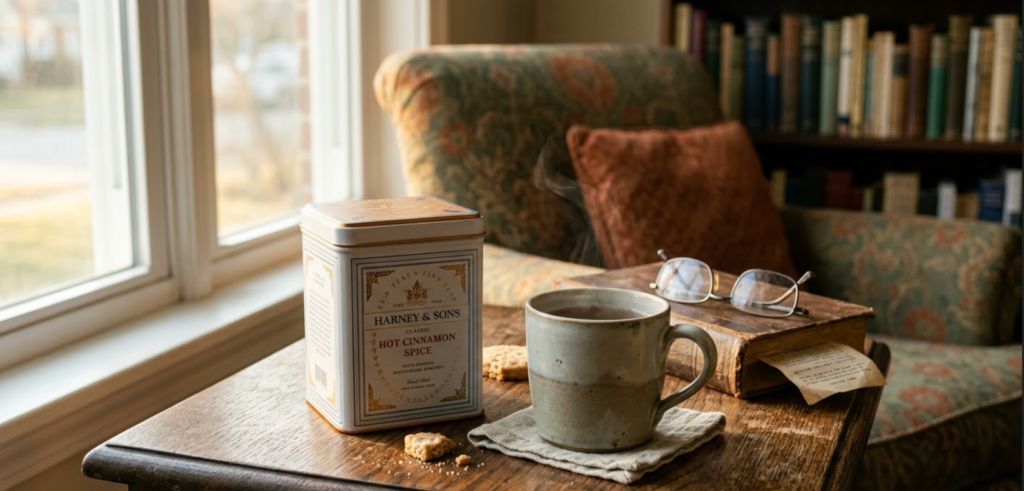
Harney & Sons: The Heritage Brand With an Organic Line
Harney & Sons has been blending tea since 1983. They’re primarily known as a premium tea company, and their organic line is a subset of a much larger catalog. The Organic Assam loose leaf carries USDA certification and sits at $1.88 per ounce for the 16-ounce bag.
The review count here is the lowest of the four (181 ratings at 4.3 stars). That’s not a red flag, but it does mean less social proof than the others. Harney’s reputation carries weight on its own, built over four decades of tea blending. Their customer base skews toward serious tea drinkers and gift buyers rather than bulk everyday purchasers.
The Assam is a strong, malty black tea. Classic breakfast style, good body, no frills. If you know Assam, you know what you’re getting. Harney does it well.
For the organic-specific buyer, Harney is a fine choice. The certification is real, the quality is consistent, and the brand has enough heritage that sourcing standards are taken seriously. It’s not the cheapest option and it’s not the most sustainability-forward. It’s a well-made certified organic tea from a company that knows tea.
Best for: Tea drinkers who already trust the Harney brand and want an organic option within that lineup, or buyers looking for a quality gift.
What Organic Certification Doesn’t Cover (And Why It Matters for Tea)
Most people buying organic loose leaf tea are trying to avoid pesticide residue. USDA Organic certification does that job. But tea has a contamination risk that certification doesn’t touch: heavy metals absorbed from soil.
Tea plants (Camellia sinensis) are known to accumulate fluoride, lead, arsenic, and aluminum from the soil they grow in. This isn’t a fringe concern. Research published through PubMed has documented elevated metal content in commercially available teas, including organic varieties. Older tea leaves and lower-grade teas tend to carry higher concentrations than young, high-quality leaves.
The contamination risk depends heavily on where the tea was grown and what that soil absorbed over time, whether from industrial activity, natural geological deposits, or decades of agricultural runoff. A certified organic farm in a historically contaminated region can still produce tea with elevated heavy metal levels. Certification controls inputs. It doesn’t remediate soil history.
This doesn’t mean organic tea is dangerous. For most people drinking one or two cups a day, the exposure is well within safe ranges. It does mean that if you’re drinking tea heavily, or buying for children, it’s worth looking for brands that publish third-party testing results. Very few do. The Environmental Working Group has flagged heavy metal testing gaps in the tea industry as an ongoing issue. Until more brands publish independent lab results, the most practical approach is to vary your sources and avoid drinking exclusively from one origin.
What the Label Says vs. What It Actually Means
What It Says
What It Actually Means
Worth Paying For?
USDA Organic
No synthetic pesticides or fertilizers. Says nothing about heavy metals or soil history.
Yes, baseline standard worth having
Fair Trade Certified
Workers on the farm received fair wages and safe conditions. Third-party verified.
Yes, if supply chain ethics matter to you
Non-GMO Project Verified
No genetically modified inputs. Tea is not a high-GMO-risk crop, so this adds low additional value.
Neutral, nice to have, not critical for tea
Natural
No legal definition. Means nothing.
No
Pure / Clean
Marketing language. No regulatory standard behind it.
No
Whole Leaf
Less processing than tea bags. Generally higher quality and lower dust/fannings content.
Yes, relevant quality indicator
Single Origin
From one farm or region. Better traceability. Easier to assess contamination risk by origin.
Yes, if sourcing transparency matters to you
Our Honest Recommendation
If you drink tea every day and want the best value on a certified organic loose leaf tea, buy Davidson’s. The price per ounce is the lowest of the four, the review count is the highest, and the certification is genuine. It’s not glamorous. It works.
If you care about the full supply chain (farming practices, worker conditions, environmental impact) buy Numi. The Fair Trade certification adds meaningful accountability beyond the organic label, and the brand publishes more about how it operates than most of its competitors.
If you want the most transparent sourcing and a premium product with a wellness-focused blend range, Rishi is the pick. The farm-direct relationships mean better traceability, and that matters more for tea than most food categories given the heavy metal question.
If you already buy Harney & Sons and want to stay in that ecosystem, their organic Assam is a solid choice. For someone coming to this fresh, the lower review count and higher price relative to Davidson’s make it harder to recommend as a first pick.
One thing all four share: none of them publicly publish third-party heavy metal testing results. That’s an industry-wide gap, not a specific failing of these brands. Until that changes, varying your sources and not drinking exclusively from one origin is the most practical protection available.
If ginger tea is part of your daily routine, we covered the best certified organic options in our organic ginger tea roundup, same methodology, same certification standards.
For a broader look at what organic certification actually covers across food categories, our organic honey guide goes deep on how certification works and where it falls short. Or, maybe you would like to know about how polyphenol tests determine if that bottle of organic olive oil is real or not?