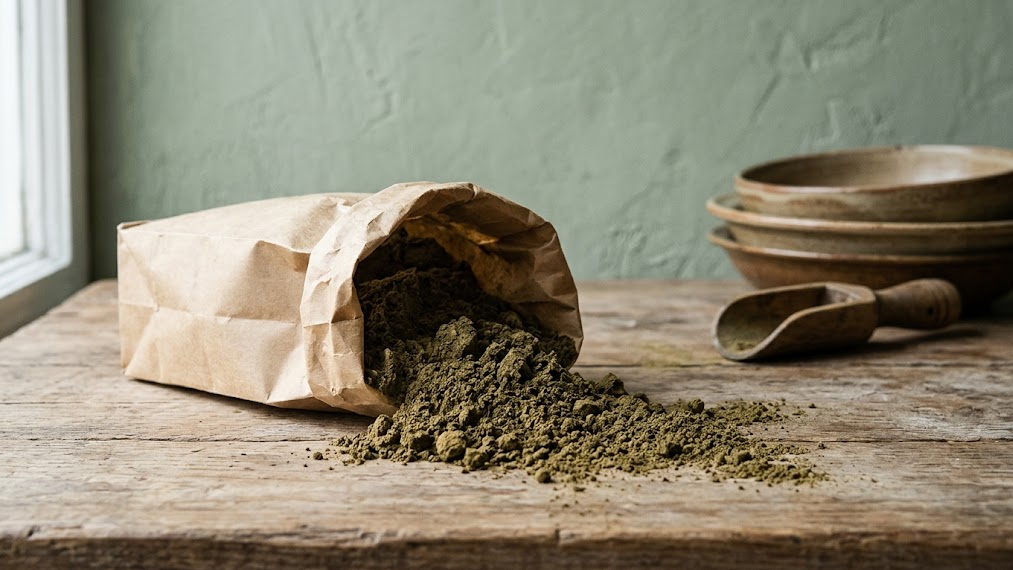
The USDA Organic seal on a bag of kelp powder tells you one thing: no synthetic pesticides or herbicides entered the growing process. That’s a real thing. It just isn’t the thing worth worrying about with kelp.
Kelp grows in the ocean. It doesn’t need pesticides. What it does do is absorb iodine directly from seawater, and that iodine content varies dramatically depending on species, harvest season, water depth, and processing. A 2026 UConn Sea Grant fact sheet found raw sugar kelp from Connecticut farms may contain up to 28,000 micrograms of iodine per serving. A 2004 peer-reviewed study in Thyroid testing 12 commercial seaweed species found iodine concentrations in kelp products ranging from under 100 µg/g to over 8,165 µg/g. Same category. Wildly different numbers. The adult upper limit for iodine is 1,100 micrograms per day.
The organic certification says nothing about where on that range your powder lands. It can’t. Iodine content is a function of the ocean, not the farm’s practices.
That doesn’t mean organic kelp powder is dangerous. It means the label people lean on most doesn’t cover the variable that actually matters. What follows is what to look for instead, and which brands have published the data.
Some links in this article are affiliate links. No brand paid to be included.
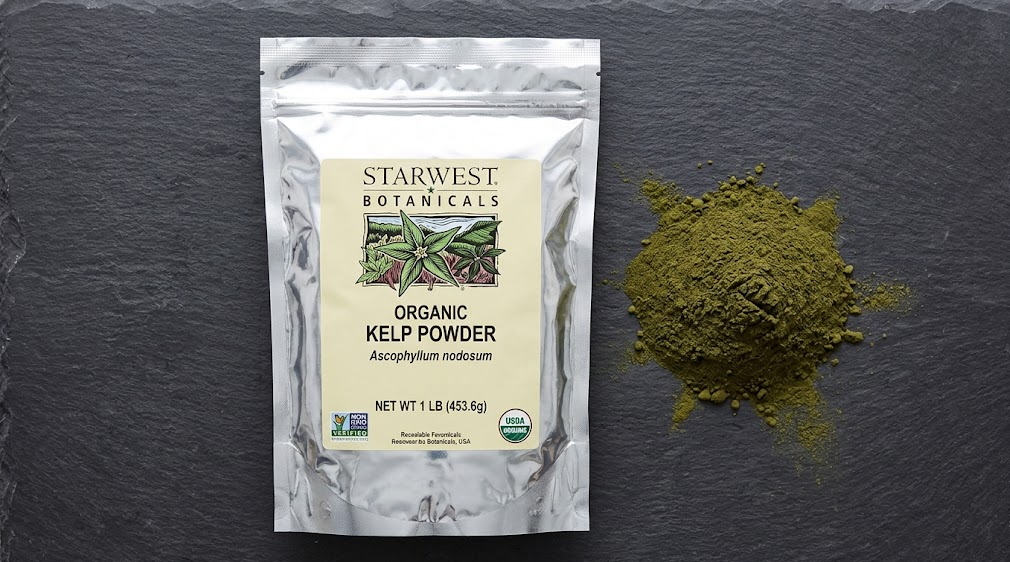
✔ USDA Certified Organic ✔ Certified Kosher ✔ Non-GMO ✔ 16 oz ✔ 4.6 stars (2,800+ ratings) Buy on Amazon
Starwest Botanicals has been supplying bulk herbs and botanicals since 1975. That longevity matters in a category with a lot of newer brands and thin documentation. The Kosher certification adds a layer of independent oversight: a certifying body audits the production facility and sourcing chain beyond what organic certification alone requires. It doesn’t test for heavy metals or iodine specifically. However, it does confirm an outside party has reviewed the operation.
The brand doesn’t publish COAs with heavy metal or iodine results on their consumer-facing pages, and the product listing doesn’t specify iodine per serving. That’s a real gap, and most of the market shares it. What Starwest offers is the combination of a long track record, organic and Kosher certification, and a substantial review count on Amazon. For culinary use, adding kelp to soups, broths, or seasoning blends, that’s a defensible baseline.
Best for: Cooks who want organic kelp at a reasonable per-ounce cost from a brand with an established audit trail, and aren’t adding daily large doses.
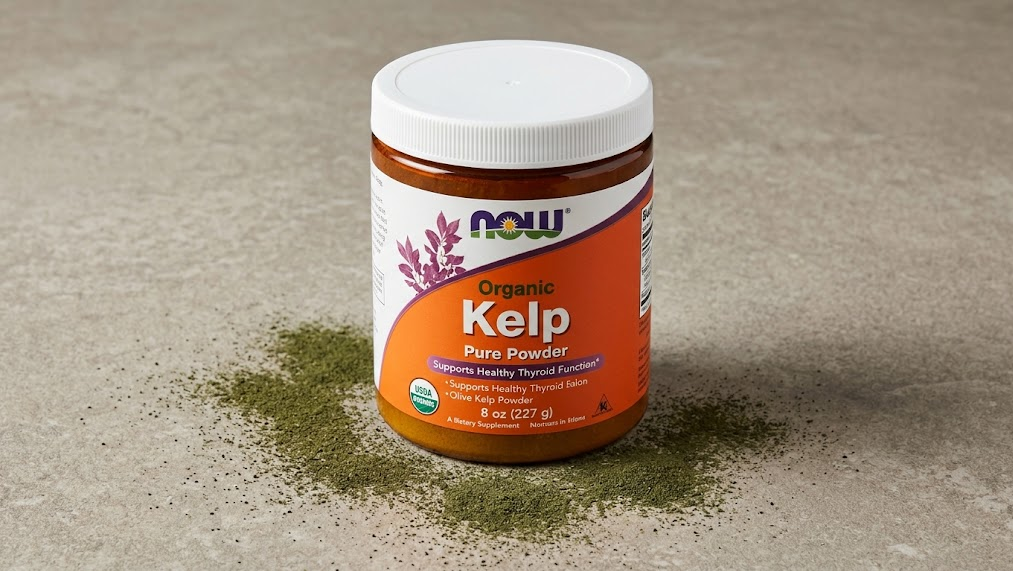
✔ Certified Organic (QAI) ✔ Non-GMO ✔ Made in USA ✔ 8 oz ✔ 4.6 stars (500+ ratings) Buy on Amazon
NOW Foods is one of the few brands in this category that labels a specific iodine amount per serving. Each 90mg scoop delivers 450 micrograms of elemental iodine, listed as 300% of the Daily Value. That number is what most of the market doesn’t publish, and it makes a practical difference: you know what you’re getting and can adjust accordingly.
The NIH sets the adult upper limit at 1,100 mcg/day. One NOW scoop lands at 450 mcg, well inside that. But FDA’s food-additive regulation for kelp (21 CFR 172.365) sets a tighter ceiling: no more than 225 mcg of iodine per day from kelp products for adults. One scoop is twice that limit. That doesn’t make the product illegal. The regulation governs kelp as a food additive, not as a standalone supplement. By ConsumerLab’s 225 mcg benchmark (where the failures covered below come from), NOW’s serving exceeds it. Whether that matters depends on your total daily intake from all sources: iodized salt, dairy, seafood, everything else.
For a supplement brand with NOW’s scale and history (founded 1968), GMP testing and QAI organic certification are the floor, not a ceiling, but it’s a floor most newer entrants in this category don’t clear.
Best for: Anyone who wants to know what they’re actually taking, and who understands that 450 mcg is a starting point for tracking daily iodine intake, not a ceiling.
Micro Ingredients is the top-selling option in this search category, moving 600+ units a month on Amazon. The value case is real: at around $0.62 per ounce in a 2 lb bag, it’s the lowest per-ounce price among organic options here. The review count is substantive rather than inflated by a handful of early buyers.
The transparency gap is equally real. The product listing notes the kelp is “whole plant sea,” USDA certified organic, and tested in a GMP facility. No COA with iodine per gram or heavy metal results appears anywhere through the brand’s channels. To be clear, that’s the industry norm for whole-food kelp powders, not a failing unique to this brand. Still, if you’re comparing on documentation alone, NOW Foods gives you more.
For smoothie additions and culinary use at moderate amounts, the 2 lb bulk format is practical if you go through it. For daily supplement use where iodine tracking matters, the absence of a labeled per-serving figure is a gap worth weighing.
Best for: High-volume buyers using kelp in cooking and smoothies, not as a daily iodine supplement, who want certified organic at the lowest per-ounce cost.
One Brand to Skip
Several listings on Amazon for organic kelp powder include “thyroid digestion aid” or “thyroid support” in the product name or subtitle. Supplements sold in the US cannot legally claim to treat or support a specific organ’s function in disease-adjacent terms without an FDA notification filing. “Thyroid support” exists in a gray area, but “aid” language pushes toward a drug claim the FDA doesn’t permit for food supplements. The problem isn’t that kelp doesn’t affect thyroid function. It clearly can. The problem is brands framing that as a therapeutic feature rather than a consequence of iodine content that varies per batch. That posture says more about the brand’s compliance approach than the quality of the powder.
The Thing Nobody Tells You About Kelp and Iodine
Most kelp powder marketing leads with thyroid health. Iodine supports thyroid function. Kelp is rich in iodine. Therefore, kelp powder supports thyroid health. The logic isn’t wrong. It’s just incomplete in a way that matters.
The thyroid needs iodine to produce hormones. Too little iodine and you get hypothyroidism. But too much iodine can trigger the same outcome in people with pre-existing thyroid conditions. The mechanism is called the Wolff-Chaikoff effect: the thyroid transiently decreases hormone production in response to iodine overload. In people with healthy thyroid function, this resolves within 24 to 48 hours as the thyroid adapts. In people with Hashimoto’s or other thyroid disease, the adaptation may not occur. The result is iodine-induced hypothyroidism, which can be transient or permanent.
In 2017, ConsumerLab tested six popular kelp supplements. Half contained roughly twice the iodine stated on their own labels: 530 to 960 micrograms per daily serving. That’s two to four times the 225 mcg daily ceiling FDA’s food-additive regulation (21 CFR 172.365) sets for adult kelp intake. One of the three failing products also tested positive for arsenic contamination. That gap comes from a straightforward problem: kelp’s iodine content varies by batch, species, and season. Without per-lot testing, the label is a guess.
The honest framing: kelp powder is a reasonable iodine source for people who are genuinely deficient and want a food-form option. It requires more care in dosing than the marketing suggests, especially if you have any thyroid history. The adult upper limit of 1,100 mcg/day is a ceiling most people should consider before adding a daily kelp habit on top of an already-iodized diet. Iodized salt, dairy, seafood, and eggs all count toward that total.
Label Decoder
Label Term
What It Covers
What It Doesn’t Cover
USDA Certified Organic
No synthetic pesticides, herbicides, or fertilizers in cultivation. Audited by an accredited certifier.
Iodine content. Heavy metal levels. Iodine variability between batches.
Non-GMO
Genetic modification not used. For a wild-harvested seaweed, this is almost redundant.
Anything about what’s in the water it grew in.
Kosher Certified
Production facility and sourcing chain audited by an independent certifying body.
Heavy metals or iodine per gram. Kosher certification tests for prohibited ingredients, not environmental contaminants.
“Source of Iodine”
Iodine is present in the product.
How much iodine per serving. This phrase appears without a number on most listings.
“Tested in GMP facility”
The facility follows Good Manufacturing Practices for supplement production.
What was tested, what the results were, or whether results are available to you.
“Thyroid support”
A structure/function claim. Legal if the brand has filed an FDA notification. Does not require proof of efficacy.
Whether the product actually improves thyroid function. In excess iodine, the opposite effect is documented.
Honest Recommendation
If you’re using kelp powder as a culinary addition, a small amount in soup stock or a seasoning blend, any of the three brands above are defensible picks. Starwest Botanicals gives you the most established brand with the longest track record at a reasonable per-ounce cost.
If you’re using it as a daily iodine supplement, NOW Foods is the only option here that labels a specific iodine amount per serving. Four hundred fifty micrograms per scoop sits inside the NIH’s adult upper limit. It’s twice the 225 mcg ceiling FDA’s kelp regulation (21 CFR 172.365) sets. And it’s before your other iodine sources for the day. Track the total, not just the scoop.
Anyone managing a thyroid condition, diagnosed or suspected, should talk to a doctor before adding kelp powder regularly. Iodine directly affects thyroid hormone production. Content varies by batch in ways labels don’t capture. The interaction with thyroid medication is real.
The one-sentence version: organic kelp powder is a useful trace mineral source when you treat it as one, not when you treat the label as a guarantee of what’s inside.
For more on mineral-dense whole-food supplements with similar certification considerations, see our roundup of organic spirulina powder and our piece on organic acai powder.