USDA Organic certification for maple syrup covers the trees and the farming inputs. That sounds reasonable until you find out what it doesn’t cover: the taps, the tubing, the collection tanks, and the evaporators the sap actually runs through before it becomes syrup. In older operations, some of that equipment still has lead-soldered components. Maple sap is slightly acidic and it’s processed under heat. The FDA has flagged this combination as a lead leaching pathway. None of it shows up on the label. The organic seal tells you the tree was clean. It says nothing about the journey from tree to bottle.
We looked at five organic maple syrup brands that are actually available on Amazon, verified their USDA certification, and ranked them by what matters beyond the seal: facility transparency, grade honesty, and whether the operation has any reason to be using outdated equipment. If you came here to grab the fastest answer, Crown Maple is the one brand that directly addresses the equipment problem with an estate-grown, fully modern stainless steel facility. Everyone else on this list is still a solid pick, but that’s the context you need before you choose.
How we ranked these organic maple syrup brands
We filtered Amazon by Organic Content (Sustainability Features) to confirm genuine USDA certification, then pulled star ratings and review counts using a US address set to LA 90001 for accurate results. We cross-referenced grade transparency, facility type where disclosed, and value per ounce. No brand paid to be on this list.
Some links on this page are affiliate links. If you buy through them, we earn a small commission at no extra cost to you. It doesn’t change what we recommend. No brand paid to be on this list.
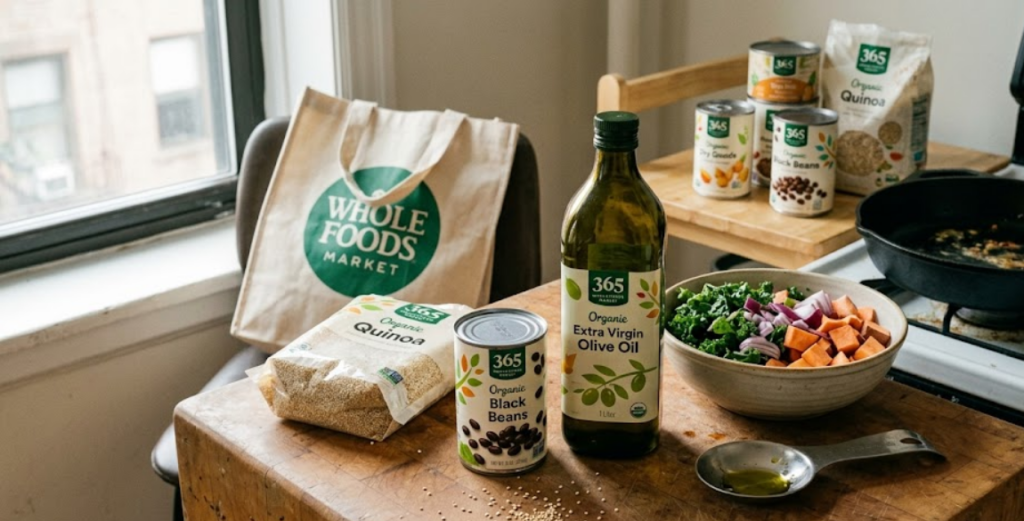
This is the anchor pick for anyone who wants a reliable, everyday organic maple syrup without overthinking it. Seventeen thousand reviews at 4.7 stars is about as proven as a product gets on Amazon. The 365 line exists because Whole Foods built its own sourcing standards around it, so the organic certification here is well-established. The price is competitive, the grade is Grade A Amber Rich (more on why that grade matters below), and it works across every use case from pancakes to baking to salad dressings.
What it won’t tell you: the sourcing is distributed rather than estate-grown, so there’s no specific transparency about the processing facility or equipment. That’s the trade-off for the price point. For most people buying syrup for regular kitchen use, this is the right call.
Best for: Everyday cooking and baking, budget-conscious buyers, anyone who wants the cleanest entry-level option with maximum social proof.
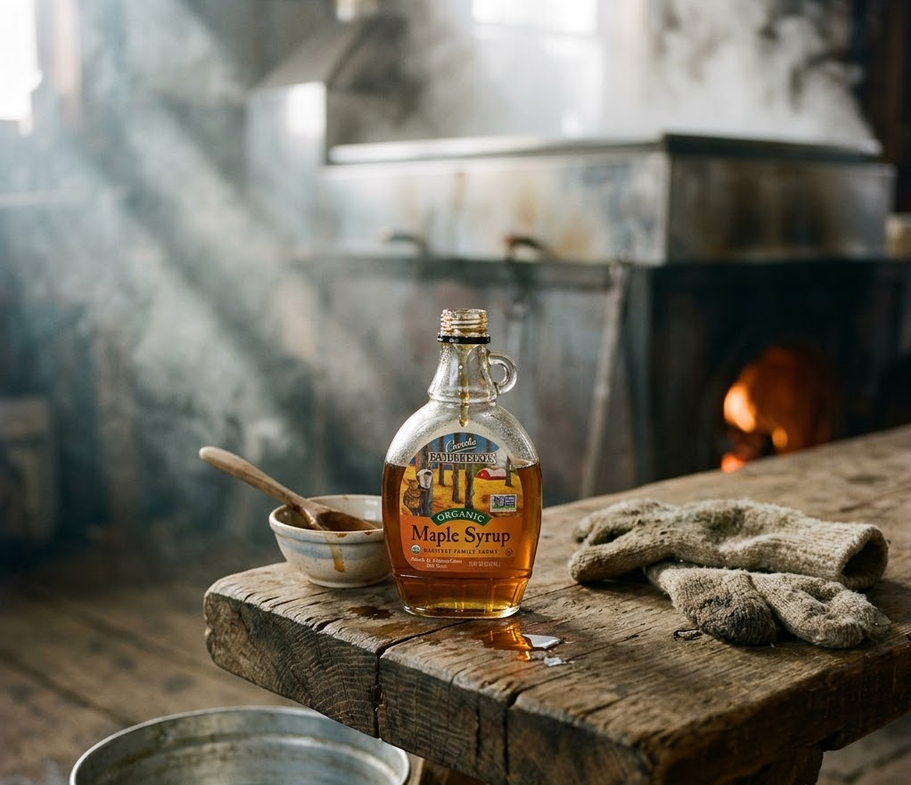
Coombs has been farming maple in Vermont since the 1850s. That’s not a marketing detail, it’s actually relevant: a multi-generational operation that survived this long has a built-in incentive to maintain its equipment and reputation. The cooperative model means they’re sourcing from a network of family farms in the Northeast, all under the same organic certification umbrella.
They’re transparent about grade, offer several varieties including the stronger Dark Robust, and the price sits comfortably between the budget picks and the premium tier. The review count (2,700+) is lower than 365 but the rating holds steady, which suggests the people buying this are buying it on purpose, not by accident.
Best for: Buyers who want a farming story they can trust, anyone who cares about supporting cooperative models, good mid-range option if 365 feels too anonymous.
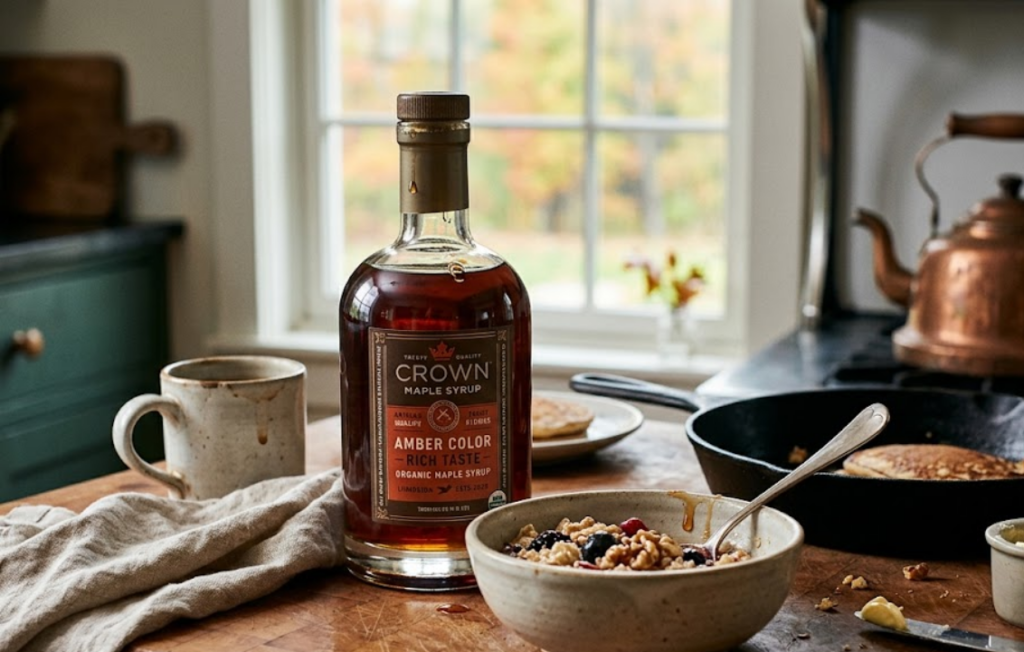
Crown Maple is the direct answer to the equipment problem this article is built around. Their operation in Dutchess County, New York is estate-grown, purpose-built, and runs entirely on modern stainless steel equipment. There are no legacy taps, no older tubing, no inherited infrastructure from operations that predate lead-safety standards. What that means in practice: you’re not relying on a label claim or a cooperative’s aggregate equipment standards. You’re buying from a single controlled facility where the entire process is visible and modern.
It’s the most expensive option on this list. The price reflects the facility investment and the premium positioning. They offer multiple grades and the bottles are genuinely beautiful if that matters for gifting. The ratings hold across a wide review base which means repeat buyers, not just first impressions.
Best for: Anyone who wants maximum confidence in the full production chain, gifting, premium cooking where quality per tablespoon matters more than cost per ounce.
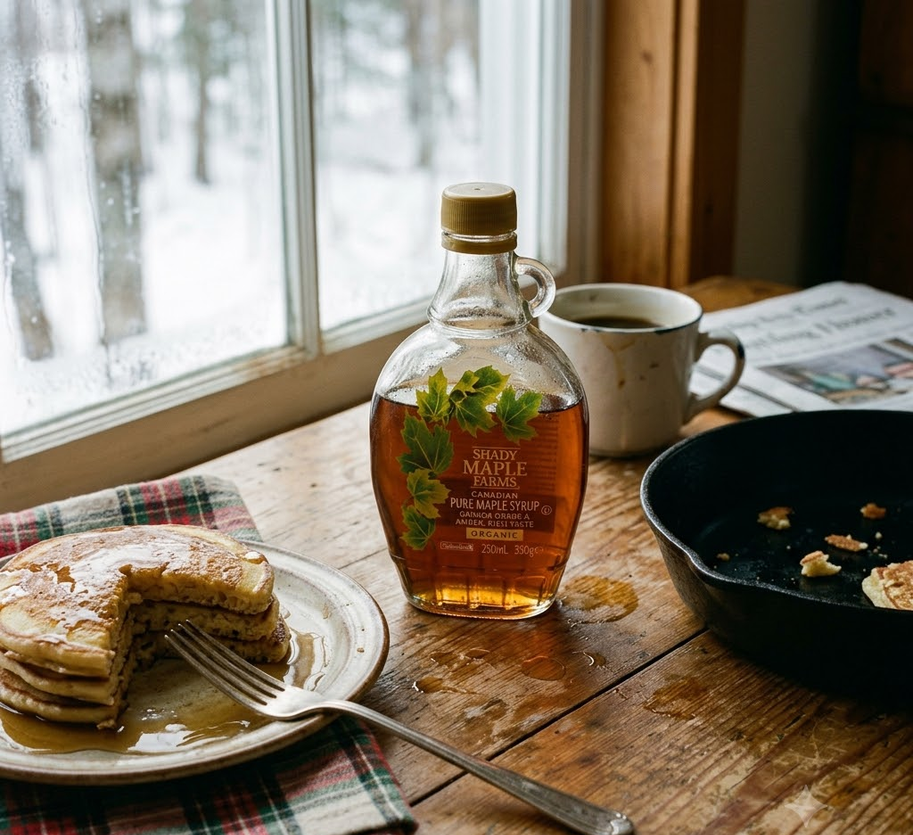
Shady Maple Farms is a Canadian producer and the one on this list most likely to be selling Very Dark (formerly Grade B) maple syrup. That grade change matters, and we explain it fully in the section below. The short version: Very Dark means stronger flavor, more minerals, more antioxidants, and historically the grade that serious cooks and bakers sought out before the USDA renamed everything in 2015.
The review count is lower here (504+) but the 4.8 star average is the highest on this list. Fewer reviews at a higher average usually means a tighter, more committed audience rather than a product that just happened to pick up volume. Canada has its own robust maple syrup grading standards and the USDA organic certification is in place on the Amazon listing.
Best for: Anyone who wants the strongest, most complex maple flavor, bakers who previously bought Grade B before the rebrand, maple syrup buyers who actually know what they’re looking for.
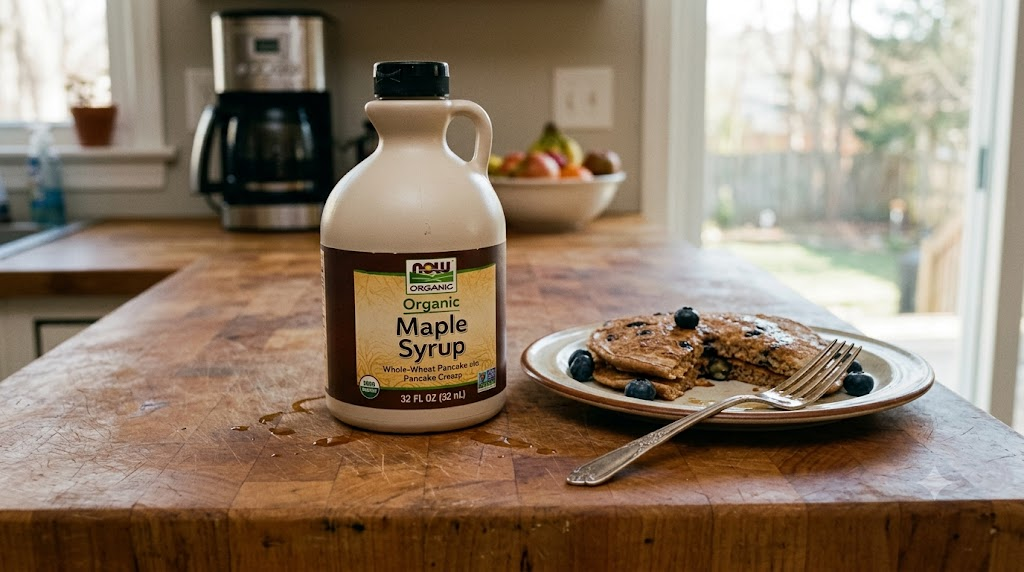
NOW Foods is a supplement and natural food brand with a long track record of third-party certification stacking. Their maple syrup carries USDA Organic plus Non-GMO Project verification, which is a small but real signal of additional accountability. The 4.6 star rating at 3,500+ reviews makes it the most-reviewed budget option on this list after 365.
The Non-GMO certification is technically redundant for maple syrup (maple trees aren’t a GMO crop) but it does mean a second certification body has reviewed the supply chain, which adds marginal confidence. Good pick for anyone who buys their supplements from NOW and wants to consolidate suppliers, or anyone who wants a budget-friendly organic option with a little more documented oversight than a store label.
Best for: Budget buyers who want a second certification layer, existing NOW Foods customers, anyone who wants solid everyday syrup without paying a premium.
The equipment problem nobody mentions on organic maple syrup labels
Here’s what USDA Organic certification actually covers for maple syrup: the trees themselves must be grown without synthetic pesticides or prohibited substances, and the farming inputs must meet organic standards. That’s it. The certification process doesn’t audit the physical equipment the sap moves through after it leaves the tree.
Maple sap travels through a specific path: metal spiles (taps) drilled into the tree, plastic or metal tubing running to a collection point, stainless steel (ideally) or older metal collection tanks, and then an evaporator where the sap is boiled down into syrup. The problem is that older operations, particularly multi-generational farms with infrastructure built before modern food safety standards, can still have lead-soldered components in that equipment chain.
Maple sap is slightly acidic, around pH 6.5 to 7.0. When it’s heated in the evaporator, it becomes more concentrated and slightly more acidic. The FDA and independent researchers have identified this combination of mild acidity, heat, and extended contact time with older metal components as a viable pathway for lead to leach into the finished syrup. Studies flagged elevated lead levels in maple syrup traced back to older equipment decades ago, and while the industry has modernized significantly, there’s no labeling requirement that confirms what equipment was used.
The organic seal won’t tell you this. The grade won’t tell you this. The only way to get any confidence here is to buy from an operation that has either disclosed its equipment is fully modern stainless steel, or is recent enough to have never used legacy infrastructure. Estate-grown single-source operations are your best bet because they control the full process and have reputational skin in the game. Distributed cooperative models are harder to audit because the equipment standards vary across contributing farms.
Of the five organic maple syrup brands on this list, Crown Maple is the one that specifically addresses this. Their facility is purpose-built and modern. The others are still solid choices, but if the equipment question matters to you, that’s where to spend the money.
The Grade A rebrand: what the label is actually telling you now
In 2015, the USDA introduced a new maple syrup grading system that eliminated the old Grade B category. Before 2015, Grade A was the lighter, milder syrup. Grade B was the darker, stronger, more mineral-rich syrup that professional bakers and serious cooks preferred specifically because it had more flavor and more antioxidant content.
The new system collapsed everything into Grade A and added a color/flavor descriptor instead. Here’s what that looks like now:
Current Grade Label
What It Actually Means
Old Equivalent
Worth Paying Premium For?
Grade A Golden Delicate
Lightest color, mildest flavor, lowest mineral content
Grade A Light Amber
Only if you want almost no maple flavor
Grade A Amber Rich
Medium color, classic maple flavor
Grade A Medium/Dark Amber
Yes, this is the everyday sweet spot
Grade A Dark Robust
Darker, stronger, more complex flavor
Old Grade B (partially)
Yes, most nutrition, best for cooking
Grade A Very Dark Strong
Darkest, most intense, highest mineral content
Old Grade B (darkest)
Yes, for baking where you want real maple flavor to survive heat
The problem with this rebrand is that “Grade A” now signals absolutely nothing about quality or nutritional density. Everything is Grade A. The grade tells you color and flavor intensity, not how good the syrup is. Most people reaching for “Grade A Amber Rich” are making the right call for general use. The people who bought Grade B before 2015 and are now grabbing “Grade A Amber” because it sounds premium are getting a milder, less nutritionally dense product than they used to.
If you want what Grade B used to be, you’re looking for Grade A Dark Robust or Grade A Very Dark Strong. Shady Maple Farms on this list stocks the Very Dark end of the spectrum. Coombs and Crown Maple both offer Dark Robust variants.
Which organic maple syrup brand should you actually buy?
If you want the safest overall pick: Crown Maple. It’s the only one on this list where the equipment question has a real answer. The price is higher but you’re paying for a controlled, modern, single-estate production chain. If the lead-leaching issue we covered above matters to you, this is where to spend the money.
If you want the best value for everyday use: 365 by Whole Foods. Seventeen thousand reviews don’t lie. It’s the most tested product on this list by pure volume, the price is honest, and it works for everything.
If you want the strongest flavor for baking: Shady Maple Farms Very Dark. This is what Grade B used to be. If you’re cooking with it, the flavor survives heat and actually comes through in the finished dish. Grade A Amber will mostly disappear.
If you want a farming story you can stand behind: Coombs Family Farms. Multi-generational Vermont operation, cooperative model, honest grade labeling. Good middle-ground pick if the 365 feels too anonymous and Crown Maple feels like too much.
If you want a budget pick with extra certification: NOW Foods. The Non-GMO Project verification adds a second set of eyes on the supply chain, and the price stays competitive. Good pick if you’re already buying from NOW and want to consolidate.
We also covered the same certification gap in our roundup of organic castor oil brands (where USDA Organic covers the bean, not the extraction process) and in our guide to organic turmeric powder brands (where the certification doesn’t test for lead chromate contamination added post-harvest). The pattern is the same across categories: the seal covers the farm, not the full production chain. Worth keeping in mind across everything you buy organic.
For a broader look at organic sweeteners, our organic honey brands roundup covers the same methodology applied to one of the most adulterated food categories on the market.