Soy wax became popular as a replacement for paraffin. The marketing comparison was always soy vs paraffin, and soy won on most measures: renewable source, cleaner burn, biodegradable. What never got compared was soy against what candles were made of before paraffin existed. That was beeswax.
That comparison looks different. Soy wax requires hexane for extraction. The EPA classifies hexane as a hazardous air pollutant and a neurotoxic industrial solvent. At commercial scale, soybean meal is flooded with hexane to release the oil, then the hexane is evaporated off and recovered. How much residue remains in finished wax is not tested or disclosed. No regulatory standard exists for hexane residue in candle wax because candles fall outside both FDA and CPSC chemical jurisdiction.
Beeswax skips that process entirely. The wax is a natural secretion rendered by melting and filtering comb. No solvents. That is the core difference, and it rarely appears in beeswax vs soy comparisons because those comparisons are still using paraffin as the reference point, not each other.
How Soy Wax Is Actually Made
Commercial soy wax starts as soybean oil, separated from the meal through solvent extraction. At industrial scale, that solvent is hexane. The process is efficient and cheap, which is why it dominates commercial production.
Hexane is a neurotoxic compound. Chronic occupational exposure damages peripheral nerves, a condition documented across industries where workers handled hexane over years, including shoe factories and food processing plants. The EPA lists it among 187 hazardous air pollutants under the Clean Air Act.
In finished soy wax, the hexane has been evaporated off during processing. The residue question (how much, if any, remains) is genuinely unanswered for candle wax specifically, because no testing standard applies. The soy candle label will not tell you, and no agency requires it to.
Additionally, more than 90% of US soy is genetically modified. That is not necessarily a health concern, but it complicates the “natural” framing that soy candle marketing routinely uses. “Soy” describes the plant source, not the processing steps that turn it into wax.
How Beeswax Is Actually Made
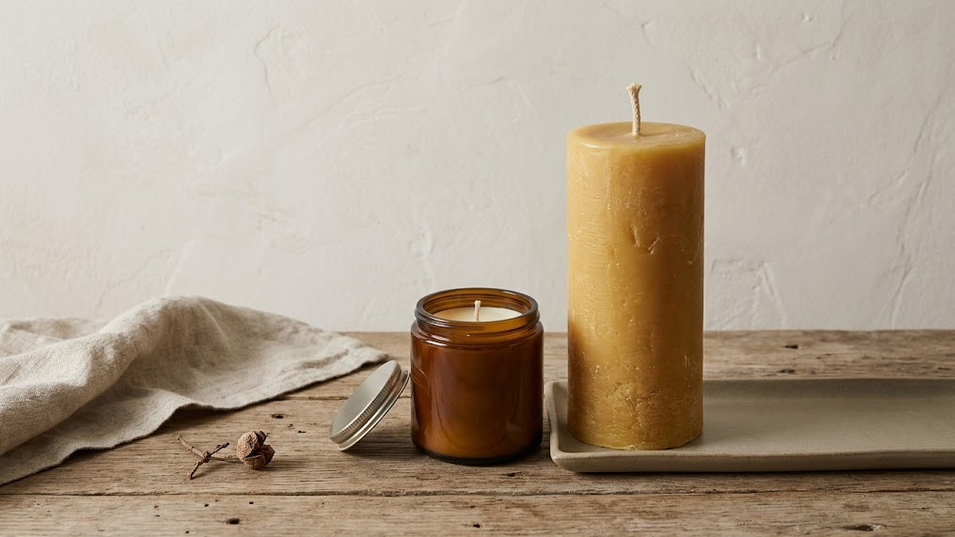
Honeybees secrete beeswax to build comb. To produce candle-grade wax, the comb is melted and filtered. No solvents. The process has not materially changed in centuries.
The result carries a faint natural honey scent from the wax itself, not from added fragrance. Beeswax also burns at a higher temperature than soy: roughly 145°F versus 115 to 135°F for most soy formulations. That higher melt point translates to a slower, longer burn per gram of wax.
One sourcing note worth knowing: “pure beeswax” is not a regulated label term. Blends of beeswax with paraffin or soy are common and sometimes sold under beeswax branding. The same label-reading caution that applies to fragrance applies here. Look for “100% beeswax” and verify the ingredient list rather than the product name.
Where Beeswax Wins
No solvent extraction. That is the clearest advantage, and it is not contested. Beeswax is a rendered natural product; soy wax is an industrial extract. For anyone concerned about what goes into the candle before it reaches a shelf, that difference is real.
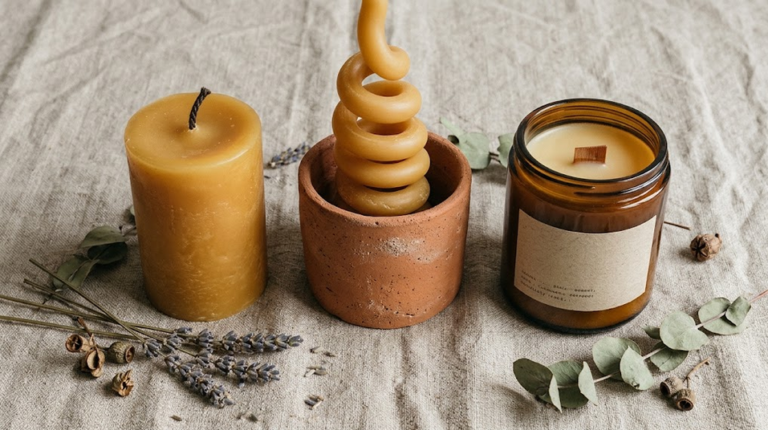
Beeswax also burns longer per gram. For unscented use (ambient light, long burns, meditative burning), that matters in practice. Pure beeswax candles like Candle by the Hour’s 80-hour coil and Bee Hive Candles’ single-ingredient pillar both significantly outlast soy candles of comparable weight.
For people with chemical sensitivities or concerns about indoor air quality, the simpler production process is a genuine advantage. Fewer processing steps means fewer potential residues to account for, even where specific testing is absent.
Where Soy Has a Point
Soy is renewable in a way beeswax is not at scale. Soybeans are an annual crop; beeswax production is constrained by colony health, harvest conditions, and the fact that bees produce wax as a byproduct of honey production, not as a primary output. As candle demand has grown, beeswax supply has not scaled proportionally, and prices reflect that.
Soy is also significantly cheaper. For households burning candles regularly, that cost difference is real. The accessibility of soy across price points is a genuine advantage, particularly given that most of the affordable, high-review candles on the market use soy as their base.
And soy is vegan. For people who avoid animal products, beeswax is not an option regardless of the extraction comparison. That is a straightforward constraint, not a minor footnote.
The Thing Both Miss
Neither wax solves the actual problem, which is fragrance.
A beeswax candle scented with synthetic fragrance compounds faces the same issue as a soy candle: under the Fair Packaging and Labeling Act of 1966, “fragrance” on a candle label is a legally protected trade secret. No manufacturer is required to disclose which compounds make up the blend. Phthalates, synthetic musks, and VOC-releasing aromatics can all be present and none need to appear on the label. The wax swap does not change that at all.
In other words, a beeswax candle with “fragrance” in the ingredients is not meaningfully safer than a soy candle with the same listing. The variable that matters is whether the fragrance source is disclosed : either specific named essential oils or no fragrance at all. Wax type is secondary to that question.
What to Actually Buy
If the hexane extraction concern matters to you, beeswax is the cleaner choice on that specific point. If you need a vegan option or a lower price, soy is the practical pick, with the hexane caveat noted.
But whichever wax you choose, the fragrance ingredient question applies to both. That is the check that narrows the field most effectively: not which wax, but what is listed as the scent source. Our non-toxic candles roundup covers which specific products from both categories actually pass that test, and which popular brands don’t.
For a wider look at how fragrance compounds show up across home products, see our piece on essential oil diffusers, which applies the same VOC question to a different delivery method.