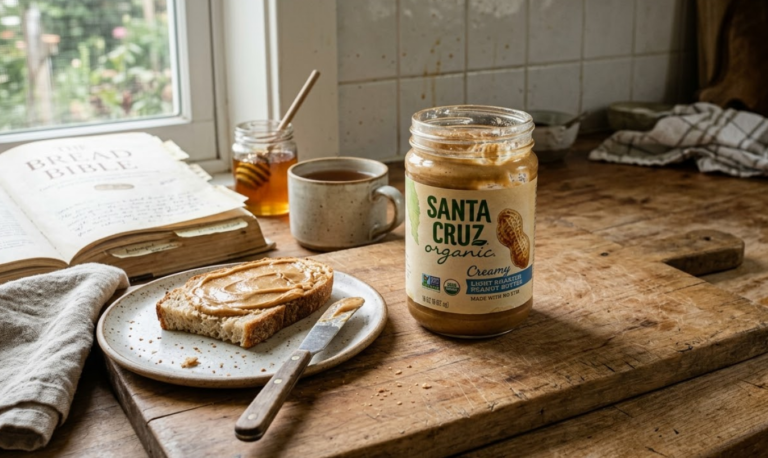
Most people buying peanut butter today are making a choice between three or four jars on a shelf, all claiming to be natural, pure, or wholesome. Almost none of them are certified organic. And the one labeled “natural” almost certainly contains ingredients you wouldn’t add yourself.
Here’s what actually separates conventional peanut butter from organic, why the distinction matters more than most labels suggest, and what to look for when you’re standing in that aisle.
How Peanut Butter Started

Peanut butter as a food goes back further than most people realize. The Aztecs and Incas were grinding roasted peanuts into paste long before it became a commercial product. The modern version traces back to the late 1800s, when Dr. John Harvey Kellogg patented a process for making it as a protein source for patients who couldn’t chew solid food.
It stayed a niche health food until the 1920s and 30s, when industrial production made it cheap enough for mass consumption. The Great Depression turned it into a staple. Shelf-stable, calorie-dense, inexpensive — it was exactly what families needed when money was tight.
Where It Went Wrong
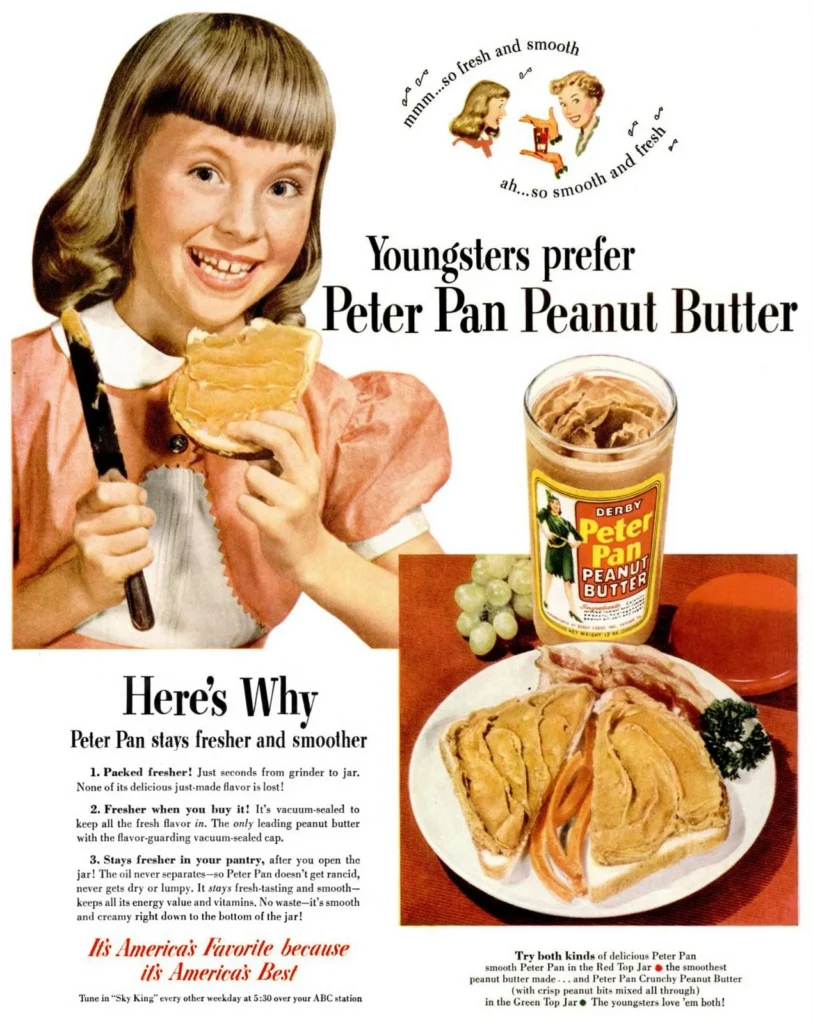
Scale changed everything. As brands grew, so did the pressure to extend shelf life, improve texture, and cut costs. By the mid-20th century, most commercial peanut butter contained hydrogenated vegetable oils to prevent separation, added sugar to improve taste, and salt in quantities that had nothing to do with flavor.
Hydrogenated oils are the biggest problem. The hydrogenation process creates trans fats, which the FDA has since determined have no safe level of consumption and banned from the US food supply as of 2020. Many brands reformulated. But the habit of adding stabilizers, emulsifiers, and fillers to what should be a two-ingredient product stuck around.
The “natural” label emerged as a response to growing consumer awareness. It means nothing. There is no legal definition of “natural” in US food labeling. A jar of peanut butter with added sugar, palm oil, and salt can legally call itself natural. Many do.
What Organic Actually Means for Peanut Butter

USDA Certified Organic is the only peanut butter label with legal teeth. To carry it, the peanuts must be grown without synthetic pesticides, synthetic fertilizers, or genetically modified organisms. The certification is verified by a third-party accredited certifier, not self-declared by the brand.
Why does that matter for peanuts specifically? Peanuts grow underground, which means they absorb whatever is in the soil. Conventional peanuts regularly test positive for pesticide residues, including fungicides applied to control the mold that naturally develops in soil crops. Organic certification eliminates that exposure.
What organic certification does not cover: aflatoxin. Peanuts are one of the crops most vulnerable to aflatoxin contamination, a naturally occurring mycotoxin produced by mold that forms during growing, harvesting, or storage. The mold doesn’t care whether the peanuts were grown organically. Aflatoxin risk is reduced by sourcing origin and storage protocols, not by the farming method. US-grown peanuts carry lower risk than many imported varieties due to stricter domestic testing requirements.
This is the gap in the organic story that nobody talks about. Organic is meaningfully better for pesticide exposure. It doesn’t solve every problem.
The Ingredient List Test
The fastest way to evaluate any peanut butter, organic or not, is the ingredient list. Good peanut butter has two ingredients: peanuts and salt. Sometimes just peanuts. That’s it.
Watch for these specifically:
Palm oil — added to prevent separation. It works, but palm oil production is one of the leading drivers of tropical deforestation. A jar that doesn’t separate is a jar with palm oil in it.
Sugar or molasses — common in conventional brands, less so in organic ones. Even small amounts shift the nutritional profile and mask lower quality peanuts underneath.
Hydrogenated or partially hydrogenated oils — largely phased out in the US but still present in some imported or older-formula products. If you see this, put it back.
Natural flavor — a catch-all term that can legally cover hundreds of compounds. In peanut butter it usually signals a brand trying to compensate for lower-quality peanuts with flavoring.
Oil separation at the top of the jar is not a flaw. It’s what happens when no stabilizers are present. Stir it once when you open it, store the jar upside down, and it stays mixed.
Organic Farming and the Wider Picture
Peanuts are actually one of the more sustainable crops in conventional agriculture, relative to others. They fix nitrogen in soil, which means they reduce the need for synthetic fertilizers compared to crops like corn or soy. Organic peanut farming takes that further, maintaining soil health without chemical inputs and supporting biodiversity on the farm.
The environmental argument for organic peanut butter is real, but it’s secondary to the personal health argument. Pesticide residue in the body is the more immediate concern. Soil health and carbon sequestration matter, but they matter to you in a different way and on a different timeline.
Which Organic Peanut Butters Are Actually Worth Buying
Not every jar with a USDA Organic seal is worth your money. Certification is the minimum bar, not the whole picture. Review volume, ingredient simplicity, format, and price per ounce all matter.
We put together a full breakdown of the best certified organic peanut butter brands available on Amazon right now, with real data and one finding about peanut butter that most buying guides completely miss. If you’re ready to buy, that’s the place to start.
Read our full guide: Best Organic Peanut Butter of 2026 (Why “Natural” on the Label Means Nothing)