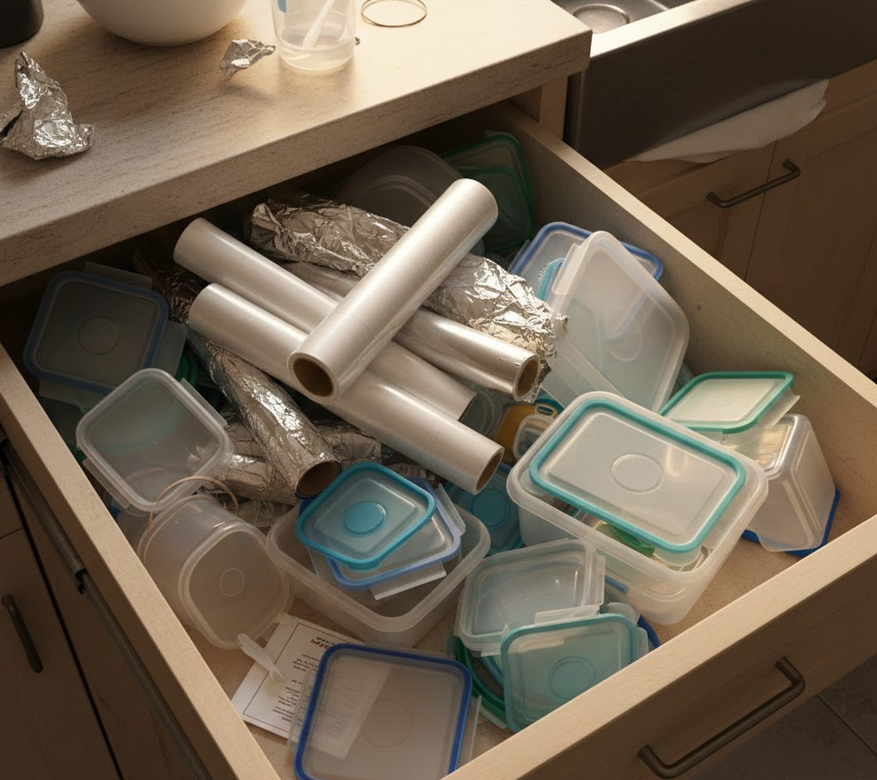
You know that drawer under the sink – the one stuffed with cling-film rolls, half-useless plastic tubs, and lids that vanish the second you need them? Every time I dig through it, there’s a small wave of irritation. Not full-on anger, just that little, nagging “again?” feeling.
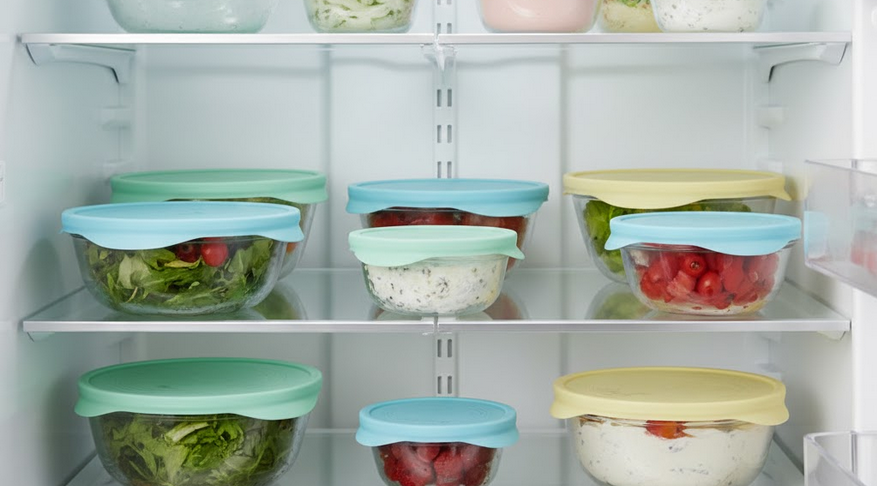
Then the fridge tells its own story. A lemon drying out on the shelf, a bowl of leftovers losing the fight, containers with lids that are almost right but never quite. Those tiny annoyances stack up, and before you know it you’re throwing food away that could’ve hung on if only something covered it properly.
Enter Silicone Stretch Lids: The Simple Swap That Changes Things
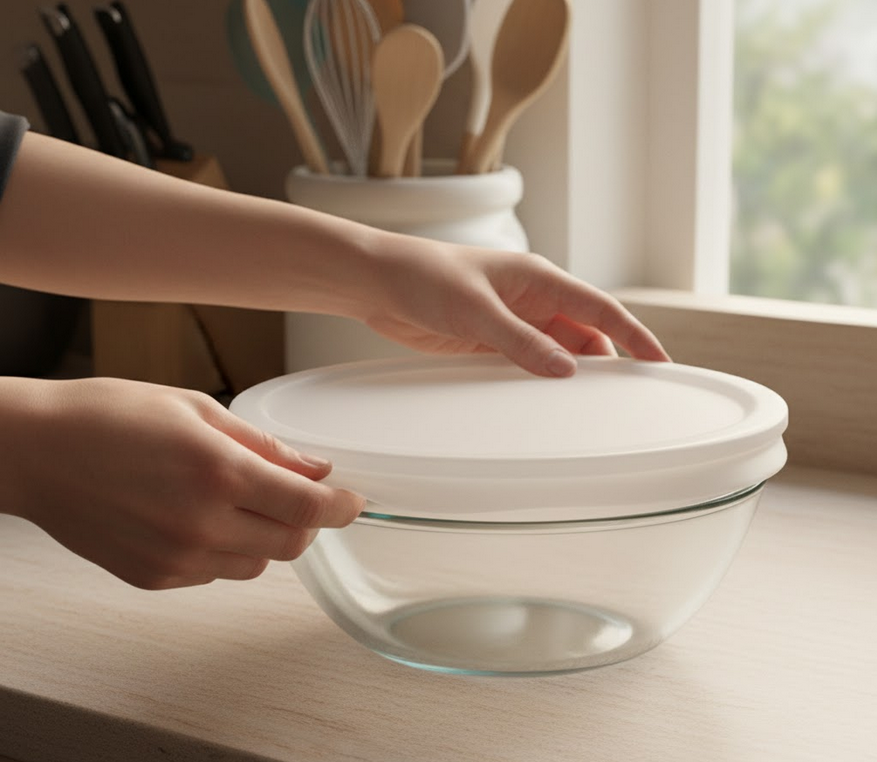
Once, someone handed me a stretchy silicone lid. Soft, a little tacky to the touch, the sort of thing that feels like it belongs in a modern kitchen. I stretched it over a bowl expecting it to pop off or look foolish. Instead, it sealed down and sat there like it’d always lived on that bowl. Strange little victory.
They work on bowls, jars, cans, cut fruit, even on weird, misshapen leftovers. No more hunting for a matching top or thinking, “Where did that lid even go?” The kitchen suddenly behaves a tiny bit better.
Are Silicone Stretch Lids Actually Safe?
Good silicone lids are food-grade and meant to handle heat, freezing and reheating without going odd. Cheap versions sometimes thin out quickly or pick up a faint smell after a microwave run, which can be a sign the material isn’t great. Look for mentions of how the silicone is cured or any food-safety standard the maker lists. When that’s done right, the lids won’t warp, stain or add any weird aftertaste.
What People Notice After a Few Uses
Give them three or four days and you’ll notice. Leftover pasta still smells like pasta. Berries stay nicer. Soup keeps its flavour, not that weird fridge residue. Even the simple act of opening the fridge gets a little less annoying. Bowls are stacked, lids sit where they belong. Small comfort, but it adds up.
Realistic Downsides (And How to Work Around Them)
They’re not magic. Stretch a lid too far and it can tear. If a surface is oily or wet, the seal slips. Some oddly shaped containers are just stubborn, and they’ll test your patience.
The trick: hook one edge first, then stretch slowly around the rim. Don’t yank. Wipe the container if it’s greasy. Also, and this is me being honest, sometimes I slap one on without thinking and it doesnt sit right. It happens.
Comparing Lids, Wraps, and Containers – Where Silicone Fits
Cling film is handy until it isn’t. Beeswax wraps are eco-friendly but often fussy on bowls. Plastic tubs are solid but their lids vanish. Glass is durable but heavy and unwieldy for quick jobs.
Silicone sits in the middle, light, flexible and usually forgiving. It won’t replace every container, but it fixes a lot of the leftover and lid chaos we just accept.
Picking the Right Silicone Lids
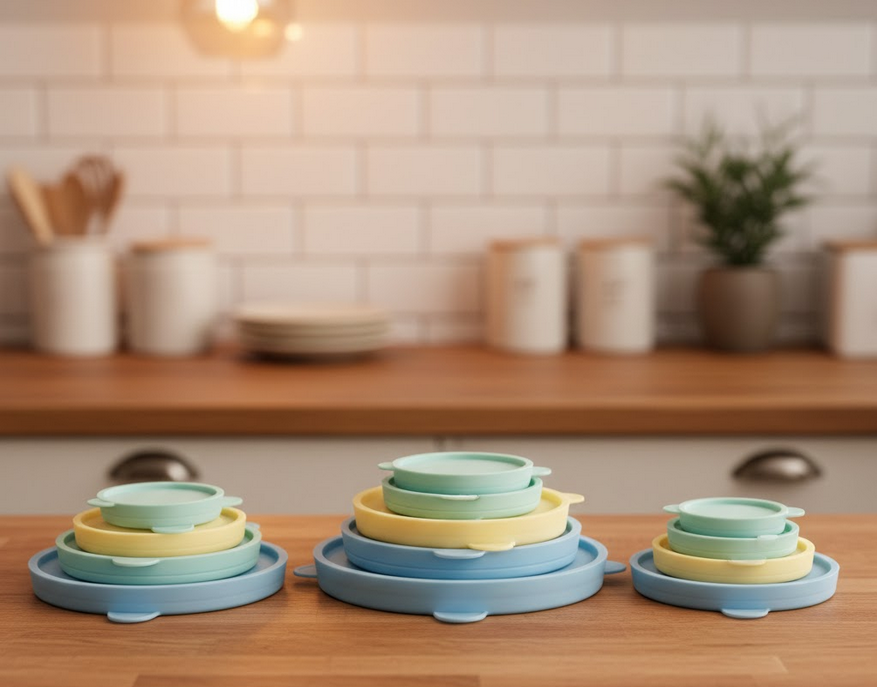
Thickness matters. If a lid feels flimsy, it probably is. Look for sets with varied sizes so you’ve got a tiny lid for jars and a big one for mixing bowls. Textured edges help grip the rim. Beware the cheapest sets, they often show their limits fast.
How to Use Them Without Getting Frustrated
Catch one side on the lip, then stretch around gently. Forcing them only makes things worse. Keep the rim dry-ish and store the lids flat after washing. A crumpled ball of silicone is a small tragedy. Flat lids stack nicely and save you time later.
Unexpected Uses That Often Surprise
Half an onion covered. Open can covered. Leftover half-melon covered. Once, I even used a lid as a quick coaster when I couldn’t find one. Not elegant, but it worked. These lids shine when you just want something covered fast without drama.
Worth Trying, Probably
If you’re tired of food spoiling too fast or sick of the lid chaos, silicone stretch lids are an easy, low-effort fix that genuinely helps day to day. They slip into your routine quietly, and one day you’ll realise you reach for them without thinking.
If you want, try a mid-range set first, not the cheapest, not the fanciest. See how they fit into your kitchen rhythm. You might be surprised how often you use them.