“USDA Organic” on a bag of acai powder tells you something real: no synthetic pesticides, no synthetic fertilizers, no irradiation. What it doesn’t tell you is whether the berries picked up lead or cadmium from the soil they grew in. Or the river silt they were processed near. Organic certification governs farming inputs. It says nothing about the finished product’s actual contaminant load. The USDA does not test acai powder for heavy metals as a condition of that seal.
That gap matters more for acai than for most powders on a pantry shelf. Açaí palms grow wild and semi-wild across the Amazon basin. Much of that is floodplain terrain with naturally elevated background levels of certain metals. The berries are also pulped and dried close to where they’re harvested, with far less standardized processing than a crop like almonds or cacao. Heavy metal testing of protein powders and cocoa has become routine over the last few years. Independent groups like Consumer Reports and the Clean Label Project drove that shift. Acai powder, as a category, has barely been tested by anyone outside the brands selling it.
So this roundup ranks brands by a different signal than the badge on the bag. Does the company actually run independent, third-party lab testing on its own initiative? And is that testing, or a documented failure on a related product, verifiable rather than just claimed?
Some links in this article are affiliate links. No brand paid to be included.
Comparison Table
| Brand | Certified Organic | Independent Testing | Price per Oz | Best For |
|---|---|---|---|---|
| Terrasoul Superfoods | USDA Organic | Third-party lab results shared on request, no red flags found | ~$4.25/oz | Best overall pick |
| KOS | USDA Organic | Third-party COA lookup by lot number, ISO-accredited labs | ~$2.13/oz | Best value with verifiable testing |
| Navitas Organics | USDA Organic | Claims third-party testing; a sister product (cacao) failed independent lead/cadmium testing in 2024 | ~$4.01/oz | Flagged, see below |
The Brands
Terrasoul Superfoods Organic Acai Berry Powder
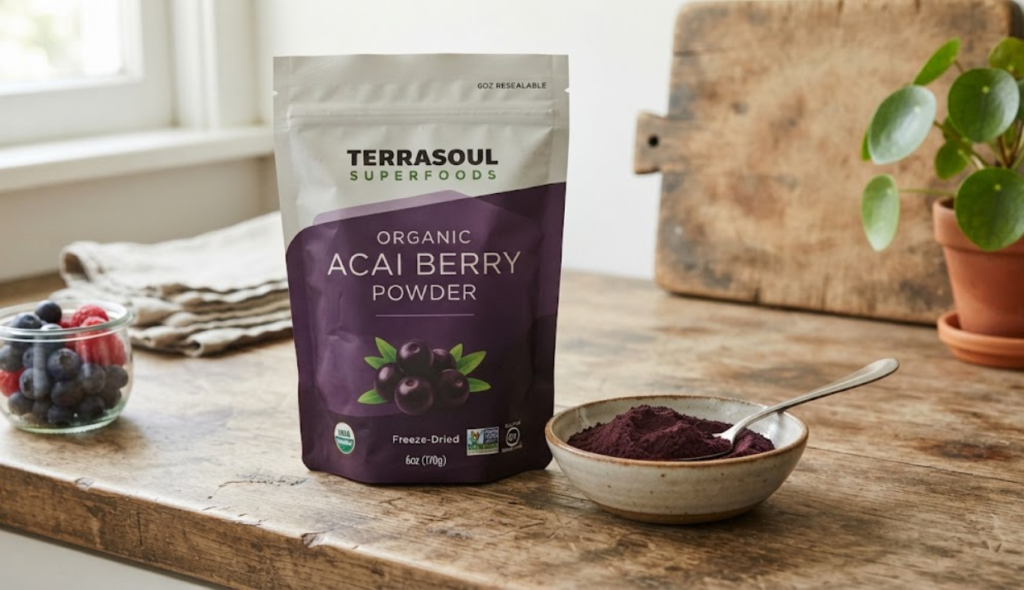
Terrasoul is one of the few brands in this category that says plainly, on its own quality and safety page, that it independently tests every ingredient it sells. The company also offers to share those results with anyone who asks, before or after purchase. That’s a real, checkable claim, not a marketing line: it publishes an email address specifically for lab result requests, rather than burying the offer in fine print. We found no independent test, from Lead Safe Mama or any comparable outside lab, flagging a Terrasoul product for heavy metal contamination. That’s not the same as a published, batch-specific COA sitting in front of you. But it’s a meaningfully more verifiable posture than a brand that simply prints “third-party tested” on the bag with nothing to check it against.
Best for: Buyers who want the most independently corroborated testing claim currently available in this category.
KOS Organic Acai Powder
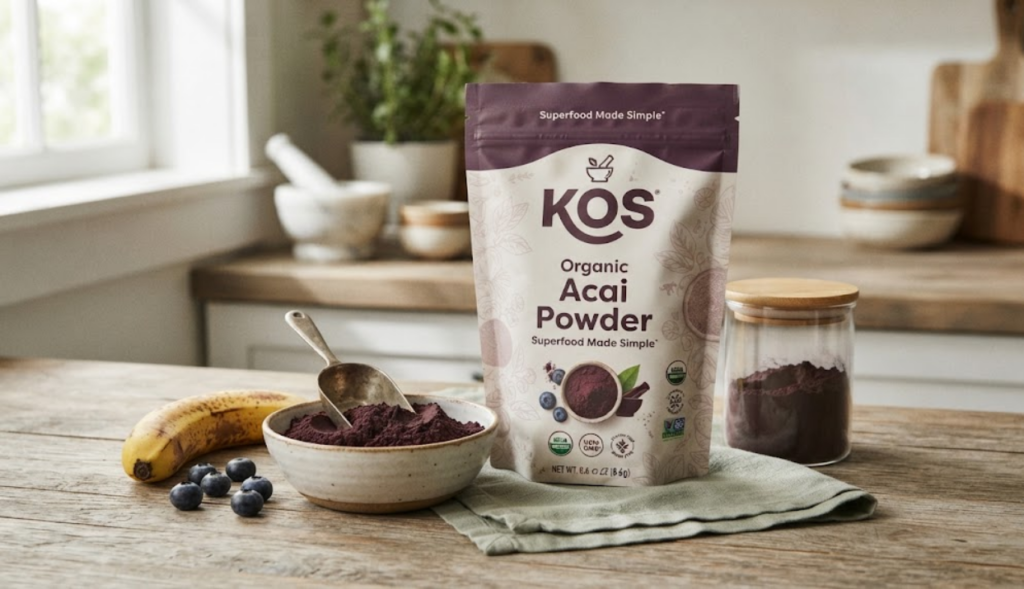
KOS runs its testing program through ISO 17025-accredited labs. That’s a genuine, verifiable accreditation standard, not a self-awarded one. The company also backs that claim with a public tool. Enter a product’s lot number and the last six digits of its UPC, and it pulls the matching Certificate of Analysis. We couldn’t confirm from the outside that acai powder specifically appears in that lookup tool’s product list. Treat this as a real system worth checking against your own bag’s lot number after purchase. It isn’t a guarantee the exact bag you buy already has a public COA waiting. Even with that caveat, a working batch-level lookup tool goes further than most competitors in this space do.
Best for: Buyers who want the lowest price per ounce among the verified options and are willing to check their own lot’s COA after purchase.
Navitas Organics Acai Powder (Flagged)
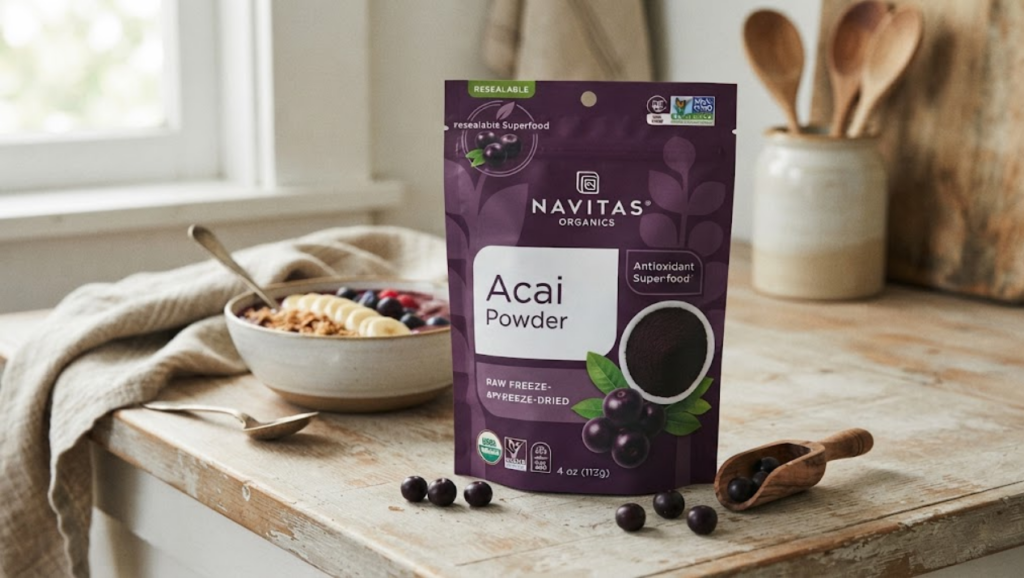
Navitas is the biggest name in this category. To its credit, its own testing page states specifically what it checks for: lead, cadmium, aluminum, arsenic, and mercury. It says failing batches get rejected and sent back to the supplier. That’s a more detailed public claim than most competitors make. It’s also a claim with a real crack in it. Lead Safe Mama (Tamara Rubin), a tester this site has cited before on other roundups, commissioned independent lab testing on Navitas’s Unsweetened Organic Cacao Powder. It came back positive for lead and cadmium. The report characterized the levels as unsafe, in an August 2024 test.
That result is about the cacao line, not the acai powder itself. We found no independent test of Navitas’s acai specifically showing the same problem. But cacao and acai from this brand pass through the same sourcing and quality-control system. That’s the same system Navitas’s own page describes as catching contamination before it reaches a customer. A real, independently verified failure on a sister product from that system is exactly the kind of documented issue that earns a flag here. That holds even without a matching result on the acai bag itself. If Navitas’s acai is your only accessible option locally, it’s not a product with a confirmed problem. But it is a product from a company whose quality claims didn’t hold up under outside testing once, on a related item. That’s worth knowing before you buy.
Best for: Nobody, until Navitas publishes an independently verified clean result for its acai line specifically. Choose Terrasoul or KOS instead.
The Thing Nobody Tells You
USDA Organic certification is an input standard. It restricts what growers can put into the soil and onto the crop. It does not test the harvested berry, the dried powder, or the final bag on a shelf. Heavy metals like lead and cadmium occur in soil regardless of whether a farm is organic or conventional. An organic acai farm on contaminated floodplain soil can still produce organic acai powder with real contaminant levels. The certification was never designed to catch that. This isn’t a flaw specific to acai. It’s true of every USDA Organic product. Acai just happens to be a category where almost nobody outside the brands themselves has bothered to check.
The honest takeaway isn’t to avoid acai powder. It’s to treat “USDA Organic” and “heavy-metal safe” as two separate claims that happen to sit on the same bag. Favor brands, like Terrasoul and KOS here, that back up the second claim with something checkable, rather than assuming the first one covers it.
Label Decoder
| What the label says | What it actually verifies | What it doesn’t cover |
|---|---|---|
| USDA Organic | No synthetic pesticides or fertilizers used in growing | Heavy metal content, contaminant testing of the finished product |
| “Third-party tested” | A lab outside the company ran some test, at some point | Which contaminants, how recently, on which batch, whether results are shared publicly |
| Non-GMO | No genetically modified ingredients (moot for a single-species wild-harvested fruit like acai anyway) | Contaminant levels, sourcing ethics, species accuracy |
| “Superfood” | Marketing term, not a regulated claim | Everything; it verifies nothing on its own |
Honest Recommendation
Terrasoul Superfoods is the strongest pick here. Real independent-testing claims, no contradicting outside test found, and a standing offer to share lab results on request. KOS is a close second, and the better value per ounce. It’s backed by a genuine ISO-accredited testing program and a public COA lookup tool. Check that tool against your specific bag’s lot number once it arrives. Navitas Organics remains the most recognizable name in the category. But a real, independently verified heavy-metal failure on its cacao line in 2024 is reason enough to look elsewhere. Wait until the company has a clean, verified result on its acai powder specifically.
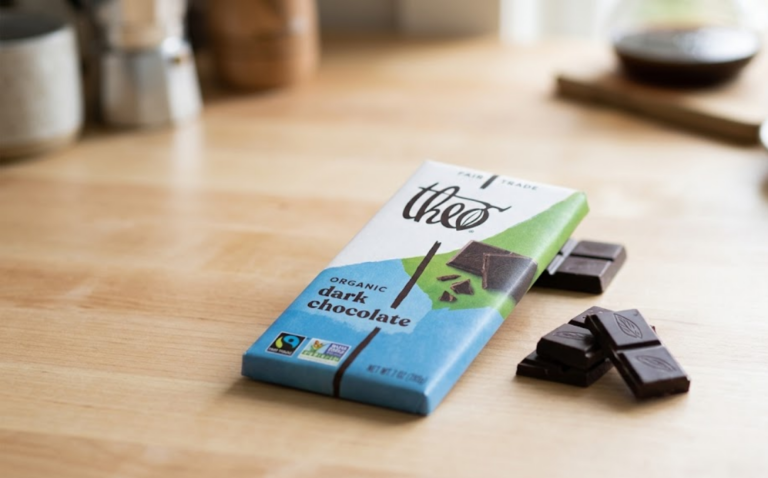
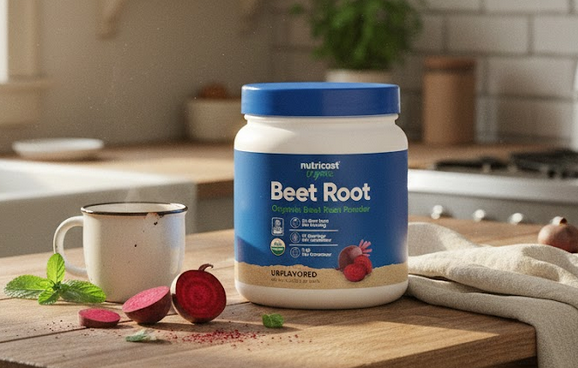
For more on where a familiar label quietly stops covering what people assume it does, see our breakdown of organic beetroot powder and organic dark chocolate.