Organic lucuma powder is the clean option. That’s the premise most people bring to the purchase. The USDA Organic seal on your lucuma powder certifies how the crop was grown, not what ended up in the finished powder. Federal regulations do not require heavy metals testing on organic finished products. Lucuma is grown almost exclusively in the Peruvian Andes, where peer-reviewed research has found lead levels in agricultural soils above natural background values. Organic certification does not screen for that. The only way to know whether a specific lot is clean is an independent third-party certificate of analysis. None of the brands in this guide publish one publicly.
The certification isn’t worthless. It does eliminate synthetic pesticides, prohibited fertilizers, and GMO inputs from the sourcing chain, and those exclusions matter. The gap is what it doesn’t cover: heavy metals in the finished product. That’s the gap this article works around. We looked at every organic lucuma powder on Amazon, ranked two that meet our standard, and flagged one popular option that doesn’t. The criteria: USDA Organic certification, a minimum 4.0-star rating across enough reviews to mean something, and at least some transparency about testing.
Some links in this article are affiliate links. No brand paid to be included.
✓ USDA Organic ✓ Vegan ✓ Gluten-Free ✓ Small Business Buy on Amazon
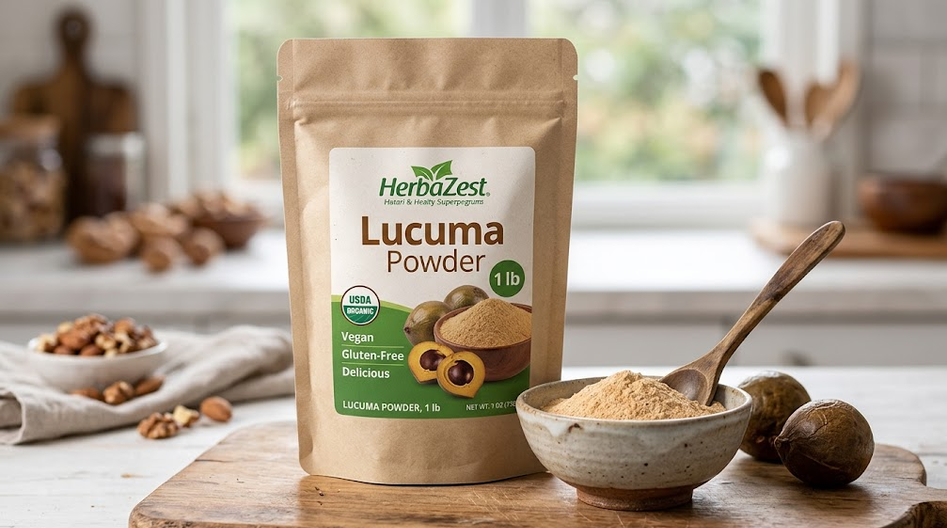
HerbaZest sells their lucuma powder in 1 lb ($14.99, $0.94/oz) and 2 lb ($28.50, $0.89/oz) sizes. The 1 lb has 396 reviews at 4.3 stars with 100+ units sold in the past month. That’s a consistent sales pattern, not a spike from a single promotion.
The brand doesn’t publish third-party lab results. No independent tester has surfaced concerns about this product either. Among the organic lucuma powders on Amazon, HerbaZest has the cleanest review signal relative to its volume. The complaints that do appear are mostly about flavor. Lucuma tastes distinctly of caramel and maple, which surprises people who expect something neutral. Taste is subjective. Quality complaints (gritty texture, off smell, inconsistent color) are a different category, and they’re not what you see here.
The trade-off for choosing HerbaZest over Terrasoul is straightforward: you get a cleaner brand history but no path to requesting lab data. If that matters to you, read the Terrasoul section before deciding.
Best for: buyers who want a reliable organic lucuma from a small-batch brand and are comfortable with the absence of published testing data, given the lack of any red-flag incidents.
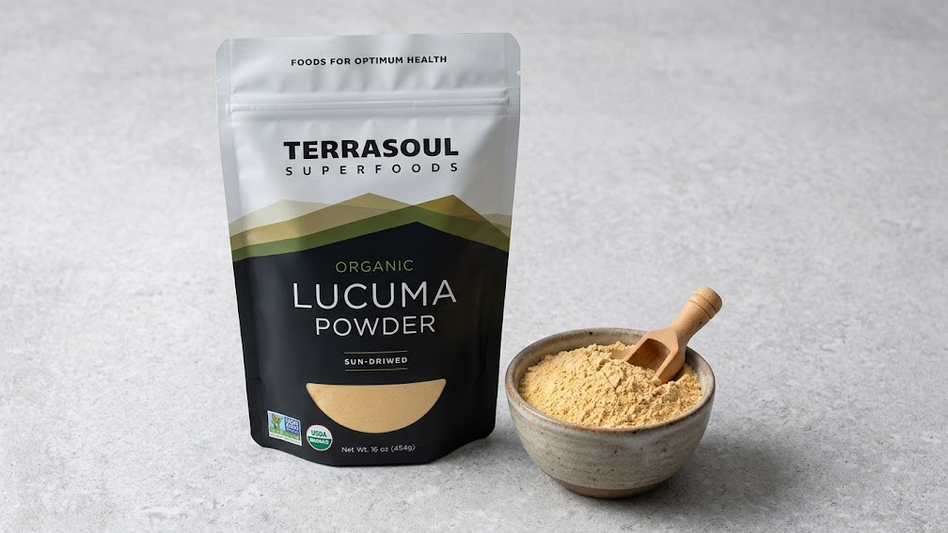
Terrasoul’s organic lucuma powder is the highest-volume pick in this category. At $17.99 for 16 oz ($1.12/oz), it has 1,400 reviews at 4.2 stars and 100+ bought per month. Terrasoul says they independently test every ingredient and will share lab results on request. To get the COA for your lot, email service@terrasoul.com with the lot number from the bottom left of your package.
One thing is worth naming directly. In 2024, independent tester Tamara Rubin found 146 ppb of lead in a batch of Terrasoul organic cassava flour. Cassava is a root flour, not a fruit powder. The risk profile for lucuma is not identical. But a brand that claims to test everything and then ships a product with that result is worth noting. If you buy Terrasoul lucuma, request the COA for your specific lot before using it. The process is one email.
Best for: buyers who want the most-reviewed option in the category and are willing to do one step of due diligence: email service@terrasoul.com for the COA before using it.
Food to Live Organic Lucuma Powder: Flagged
Food to Live’s lucuma powder comes in five sizes, from 8 oz up to 12 lbs, and it’s easy to find on Amazon. The reach makes it worth addressing.
The problem: the aggregate rating across all sizes is 3.7 stars across 104 reviews. That’s below the 4.0-star floor we apply to every brand in this guide. Food to Live is a bulk commodity operation, not a superfood specialist. The listings carry no transparency information, no COA mention, no testing claims. Multiple size listings show low-stock warnings, which suggests inventory inconsistency.
USDA Organic on a label says nothing about testing, storage consistency, or product quality. A 3.7-star rating in a category where both recommended brands sit above 4.1 is a real signal. We’re not recommending it.
What “Organic” Actually Covers
USDA Organic was built to verify farming inputs: no synthetic pesticides, no prohibited fertilizers, no GMO seed stock. It was not built to test finished food products for contaminants. Those are different problems, and the standard addresses only one of them.
The National Organic Program requires that certified land have no prohibited substances applied for three years before harvest. It does not require that the harvested crop, or the powder milled from it, be tested for heavy metals. Lead and cadmium can be present in Andean agricultural soil from natural geology and decades of atmospheric deposition, not from anything a farmer did or didn’t do. Organic certification has no mechanism for catching that.
ConsumerLab confirmed this directly: the USDA Organic seal does not guarantee a product is free of heavy metals, and they have found elevated lead levels in some certified organic products. The only way to know what’s in a specific lot is independent third-party testing. The same gap shows up across Peruvian and South American superfoods. We documented it for arrowroot in this breakdown and for turmeric in this one.
None of this makes organic lucuma powder unsafe to consume. It means “organic” doesn’t tell you what you probably think it tells you. The question is not whether the product is certified. It’s whether the specific lot has been tested, and whether you can see the result.
We cover the lead question specifically for lucuma in this breakdown.
Label Decoder
Label / Claim
What It Means
What It Doesn’t Cover
USDA Organic
Grown without synthetic pesticides, no GMO seed stock, 3-year clean-soil transition required
Heavy metals testing on the finished product
Non-GMO
Not produced from genetically modified seed
Pesticide residue, heavy metals, processing quality
Raw
Not heat-treated above ~115°F during processing
Contaminant levels of any kind
Vegan
No animal-derived ingredients
Sourcing transparency, testing, supply chain
Third-Party Tested
An external lab has tested the product
Which lab, what they tested for, or what the result was
COA Available on Request
The brand will share test results if you ask
Not the same as public results or lot-by-lot testing
Honest Recommendation
If you want organic lucuma powder and you’re comfortable with one follow-up step: buy Terrasoul, email service@terrasoul.com with your lot number, and request the COA. That’s the only option in this category where getting actual test data is part of the buying process.
If you’d rather skip the follow-up, HerbaZest is the cleaner pick. No independent testing has surfaced concerns about their product, the reviews are consistent, and complaints track to flavor preference rather than quality.
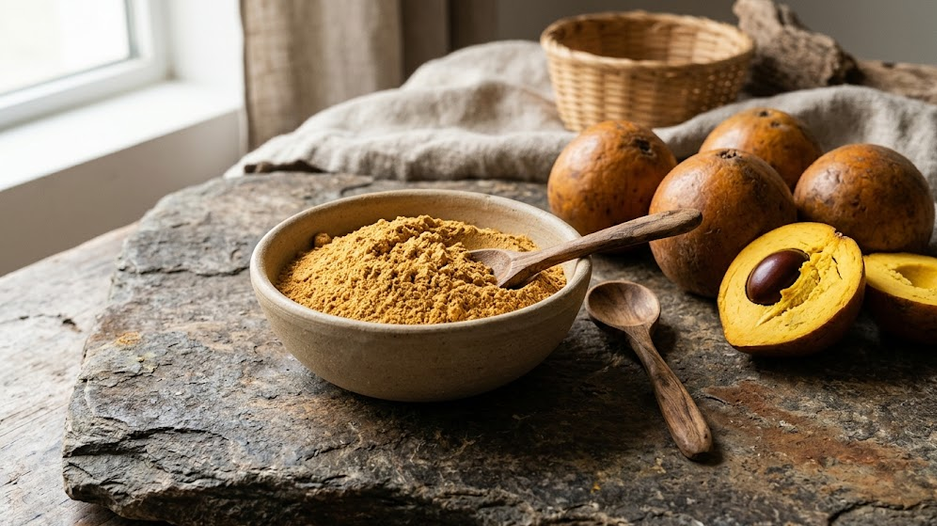
Lucuma powder is a mildly sweet, caramel-flavored fruit powder from Peru. It works well in smoothies, baked goods, and raw desserts, and it has a naturally low glycemic index. It is not a one-to-one sugar substitute at scale. It’s a flavoring with functional properties, and both brands above are reasonable for that use.
The question you probably arrived with: which organic lucuma powder is the clean option? The question that actually settles it is narrower: has this specific lot been tested by an independent lab, and can you see the result? The label on the front of the bag doesn’t answer that. The COA does. Terrasoul gives you a path to that answer on request. HerbaZest would require a direct ask with no guaranteed outcome. That’s the real variable. The certification is the starting point, not the answer.
For a deeper look at what the organic certification gap actually means in practice, see our piece on the USDA Organic blind spot on heavy metals. If you’re building out a superfood pantry more broadly, our organic acai powder guide covers a South American superfood category with a similar sourcing and certification dynamic.