Dark chocolate has quietly become one of the most trusted health foods on the shelf. Antioxidants, flavanols, magnesium, a lower sugar load than milk chocolate. Slap USDA Organic on the label and it feels like the healthiest possible way to eat something sweet.
Here’s the problem. In 2022, Consumer Reports tested 28 dark chocolate bars for lead and cadmium, two heavy metals linked to developmental issues in children, kidney damage, cardiovascular problems, and cognitive decline in adults. 23 of the 28 bars exceeded California’s Maximum Allowable Dose Level for at least one of those metals. Five exceeded the threshold for both. And here’s the part nobody talks about: some of the worst performers were the organic ones.
USDA Organic certifies how the cacao is grown. No synthetic pesticides, no prohibited fertilizers. It says nothing about the heavy metals the cacao tree absorbs from the soil, or the lead dust that settles on beans while they dry in the sun. The organic seal was designed for a problem that isn’t the problem here. It’s the same gap we flagged in organic spirulina, where the seal certifies growing inputs but doesn’t test what the algae absorbs from its water.
We ranked the best organic dark chocolate brands not on marketing claims, but on independent heavy metals testing, transparency about sourcing, and how each brand has responded when the data came out.
How We Ranked These Brands
USDA Organic was the starting point, not the finish line. Every brand featured here carries that certification. After that, the ranking factors were: performance in Consumer Reports’ 2022 and 2023 heavy metals testing, independent third-party testing where available, brand transparency about sourcing and processing (Fair Trade, direct trade, single-origin), and how the brand has responded to the heavy metals findings publicly. A brand that got flagged and reformulated ranks differently from a brand that got flagged and stayed silent.
Some links on this page are affiliate links. If you buy through them, we earn a small commission at no extra cost to you. It doesn’t change what we recommend : no brand paid to be on this list.
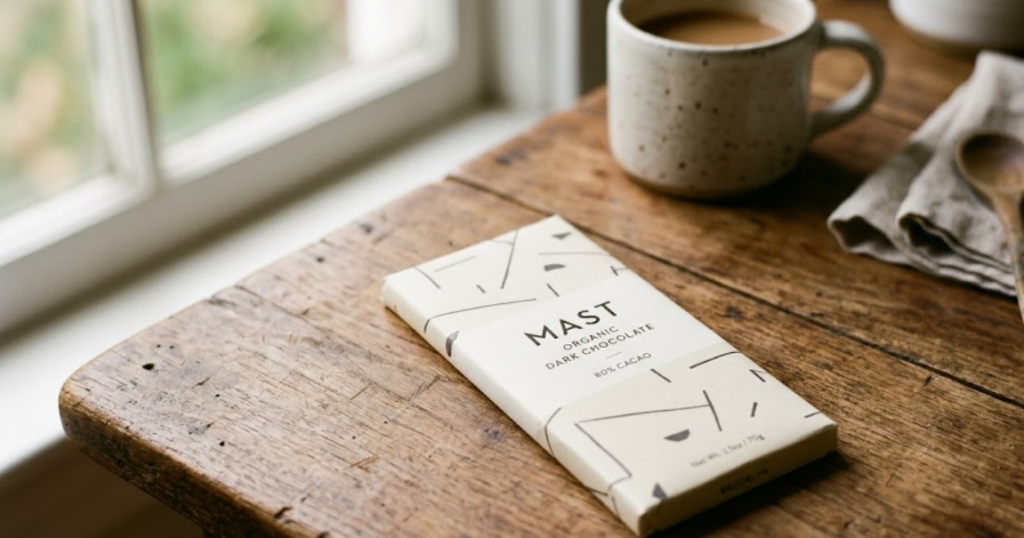
Mast’s Organic Dark Chocolate 80% was one of only five bars in Consumer Reports’ 2022 testing to fall below California’s Maximum Allowable Dose Level for both lead and cadmium in a one-ounce serving. That’s not a marketing claim. It’s independent laboratory data across 28 tested bars, and Mast is one of two USDA Organic bars that cleared both thresholds.
Beyond the test results, Mast is a Brooklyn-based bean-to-bar operation. They source their cacao directly and process everything in-house, which means they control the drying and handling stages where lead contamination typically enters the supply chain. That control is why bars from small bean-to-bar makers consistently test cleaner than mass-market brands buying pooled cacao from unknown drying yards.
The 6-pack runs $3.00 per ounce, which is premium territory. But you’re paying for the one thing nobody else on the mass market can offer: a specific bar that passed a specific independent test for the specific problem you’re trying to avoid.
Best for: Anyone who wants organic dark chocolate they can eat daily without worrying about heavy metals accumulation.
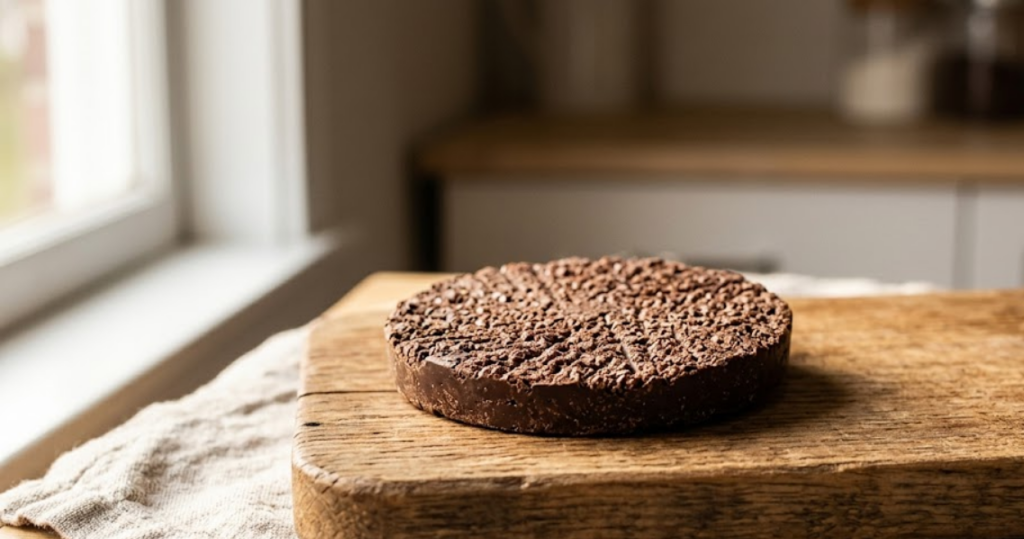
Taza is the second organic bar that passed Consumer Reports’ 2022 heavy metals testing. Their Organic Deliciously Dark 70% cleared both lead and cadmium thresholds, one of only five bars out of 28 to do so.
What sets Taza apart is what they publish. Every year they release a full transparency report covering where each cacao lot came from, what the farmers were paid, and how the beans were processed. Their Direct Trade Certified program is the first third-party verified direct trade cacao program in the industry. That’s the level of supply chain disclosure that actually explains why their bars test cleaner: when you know your farmer by name, you know how your beans are dried.
The 3.8-star rating deserves an explanation. Taza is stone-ground bean-to-bar, which means the texture is deliberately gritty compared to conventional chocolate. That’s not a defect. That’s what unrefined cacao actually tastes like. Reviewers expecting Lindt smoothness leave lower ratings; reviewers who want real chocolate consistently rate it 5 stars.
At $2.52 per ounce for the 10-count, it’s not cheap. But for the combination of passed heavy metals testing, published sourcing data, and USDA Organic certification, there is no other bar on this list that ticks all three boxes for this price.
Best for: Buyers who care as much about supply chain transparency as they do about heavy metals, and who don’t mind a rustic texture.
Here’s where things get more complicated, and more interesting.
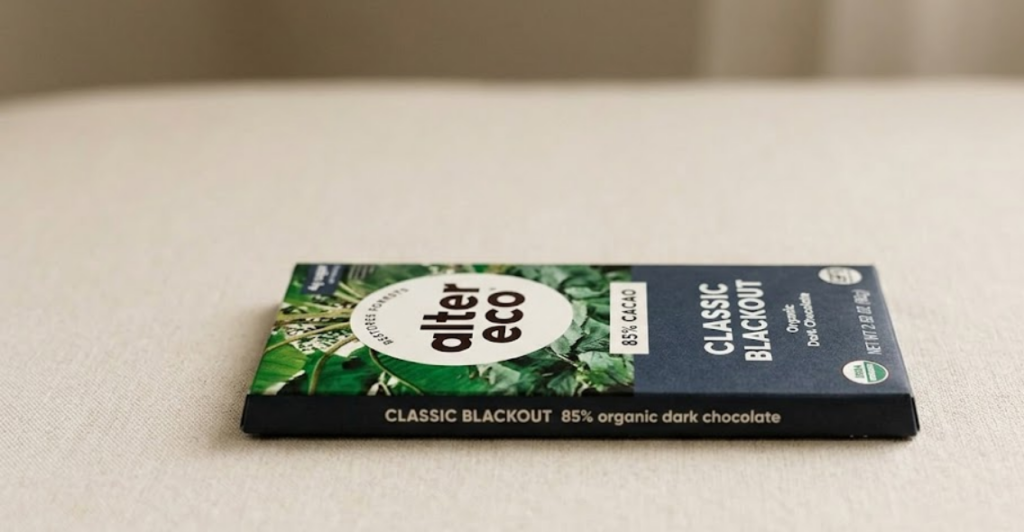
Alter Eco’s Classic Blackout 85% was one of the bars flagged in Consumer Reports’ 2022 testing. It came in at 204% of California’s cadmium MADL and 49% of the lead MADL. That’s a clear fail on cadmium.
What happened next matters. Alter Eco publicly acknowledged the finding, cited the 2018 As You Sow settlement thresholds as their compliance baseline, and then reformulated their cacao blend in 2024 to include more Dominican Republic cacao, which grows in soil with substantially lower cadmium content than the volcanic soils of Ecuador and Peru. They published a transparency statement explaining the sourcing shift and their ongoing testing regime. Most brands flagged in the CR testing did none of that.
We’re including Alter Eco because they responded to the data. That’s different from ignoring it, and it’s different from lying about it. Their reformulated product has not been independently retested by CR, so the improvement is a claim, not a verified result yet. But the direction is right, the transparency is real, and the brand is otherwise a genuine leader on Fair Trade and regenerative agriculture practices.
At $5.69 per single bar or $1.69 per ounce in the 12-pack, it’s the most accessibly priced pick on this list. Solid Fair Trade credentials, climate-neutral certified, non-GMO, gluten-free. If you’re buying organic dark chocolate weekly and want a brand that owned its mistake and moved to fix it, this is the pick.
Best for: Regular buyers who want an affordable, ethical option from a brand that responded to the heavy metals issue instead of denying it. Rotate with a CR-verified bar (Mast or Taza) if you eat chocolate daily.
4. Theo Chocolate : Failed the Test, Flagged
Rating: 4.6/5
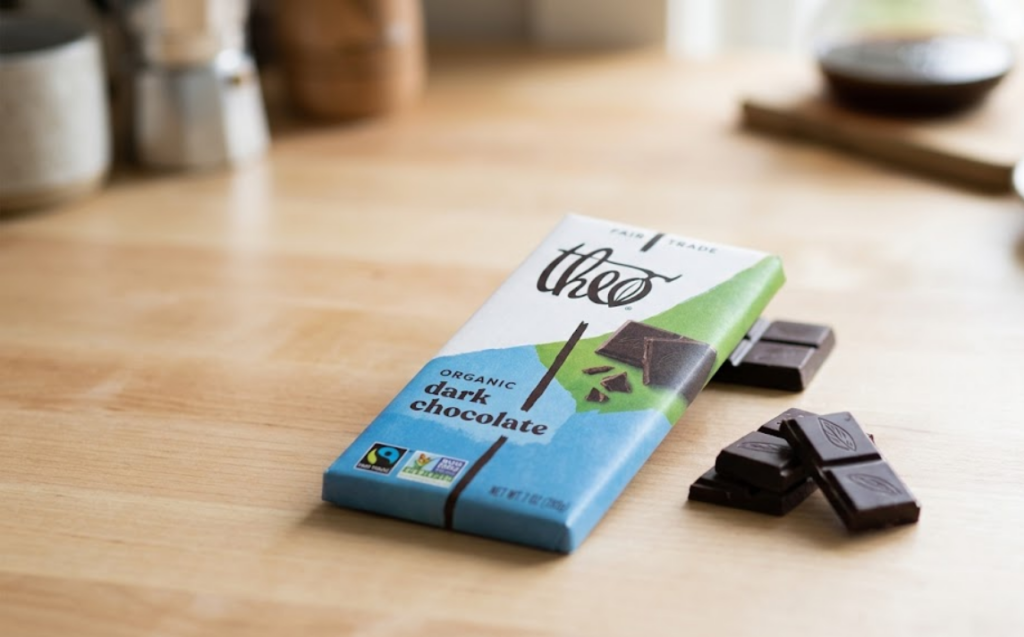
Theo is one of the most visible “organic” dark chocolate brands in US grocery. It’s Fair Trade Certified, USDA Organic, Non-GMO Project verified, and marketed as a clean, ethical option. It has 4.6 stars on Amazon and thousands of reviews.
Consumer Reports tested two of their bars in 2022. Both failed both heavy metals:
Theo Organic Pure Dark 70%: 120% of the lead MADL, 142% of the cadmium MADL
Theo Organic Extra Dark 85%: 140% of the lead MADL, 189% of the cadmium MADL
Consumer Reports also reported that Theo did not respond to their requests for comment on the findings. As You Sow, the nonprofit that pushed the original chocolate industry settlement, has named Theo among the brands that have not publicly committed to specific reduction targets since the 2022 report.
We’re not saying the product is unsafe in occasional amounts. Consumer Reports itself notes that eating one bar occasionally is not a health emergency. But if you’re buying “organic” specifically because you want to reduce your exposure to contaminants, Theo isn’t delivering on that expectation. And the brand’s silence on the findings is a real transparency issue.
Best for: We don’t recommend Theo when Mast and Taza exist at similar or lower prices with better test results.
5. Hu Kitchen : Clean Branding, Different Standard
Rating: 4.4/5
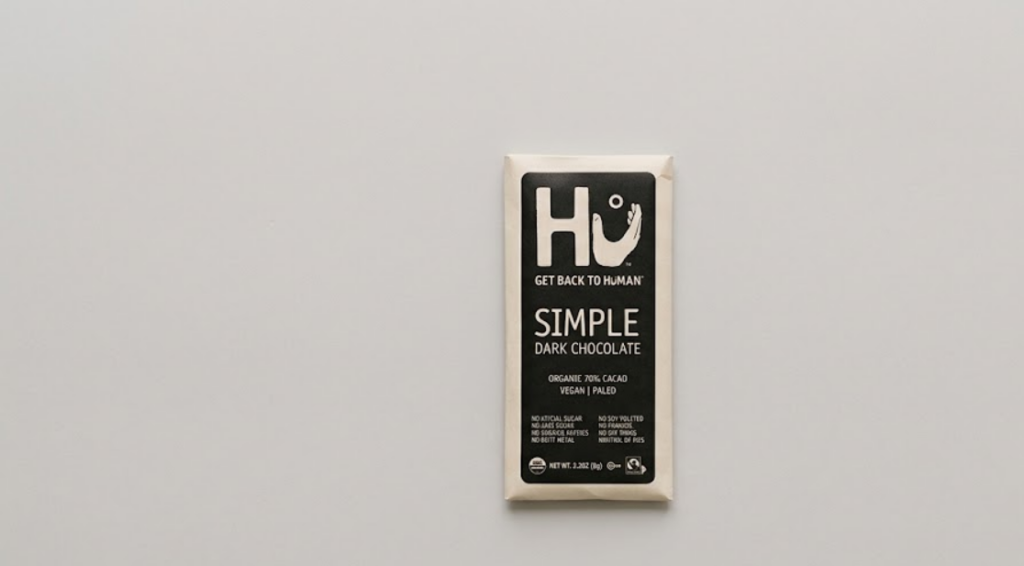
Hu Kitchen is one of the most heavily promoted “clean” chocolate brands on Amazon and in health-focused grocery. USDA Organic, paleo-friendly, no refined sugar, no soy, no dairy. The positioning is explicitly about being cleaner than everything else on the shelf.
Here’s the fine print. When asked about their heavy metals levels, Hu points to compliance with the 2018 As You Sow settlement thresholds. That settlement set tiered limits for lead and cadmium based on cacao percentage, and those limits are less strict than California’s Prop 65 MADL that Consumer Reports uses in its testing. In practical terms, Hu can say “we comply with industry standards” while still testing above the threshold most independent scientists and public health experts consider the appropriate ceiling.
In Consumer Reports’ 2023 follow-up testing of chocolate chips and other cocoa products, Hu’s Dark Chocolate Gems exceeded the MADL for lead. The bars weren’t retested in that round, but the chips came from the same supply chain.
The product isn’t unsafe by any regulatory standard. The problem is what the brand claims versus what the data shows. If you’re paying premium prices specifically for “clean” chocolate, you deserve to know the cleanliness claim is measured against a lower bar than most people assume.
Best for: We don’t recommend Hu over Mast, Taza, or Alter Eco at similar price points. The marketing is stronger than the evidence.
The Thing Nobody Tells You About Organic Dark Chocolate
Heavy metals get into dark chocolate through two different pathways, and understanding the difference explains most of what you see in the CR data.
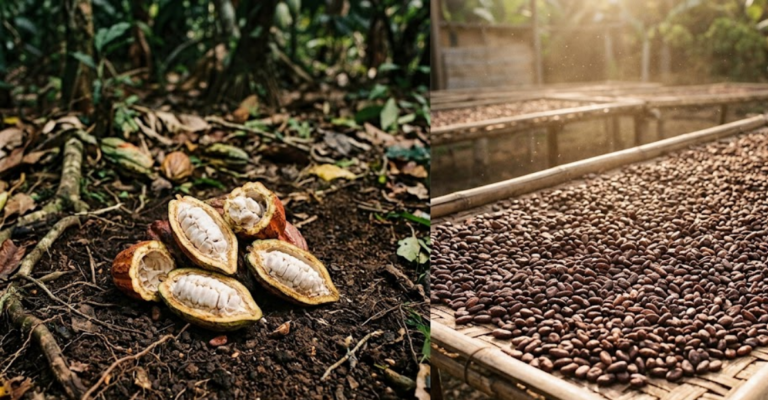
Cadmium is absorbed by the cacao tree through its roots from the soil. It’s a growing-side problem. Certain soils have more cadmium than others: volcanic soils in Ecuador, Peru, and parts of Central America tend to be high. Soils in the Dominican Republic, West Africa, and Madagascar tend to be lower. This is why Alter Eco’s 2024 reformulation focused on shifting the sourcing blend toward Dominican Republic cacao. It’s also why brands that source single-origin from lower-cadmium regions consistently test cleaner.
Lead is different. Cacao beans have almost no lead inside them when they’re removed from the pod. The lead contamination happens after harvest, when beans are laid out to dry in the sun for several days. Lead-containing dust and dirt settle on the sticky outer shells. The longer the drying process and the closer the drying yards are to roads or industrial areas, the more lead accumulates. Bean-to-bar makers who control their own drying (Mast, Taza) consistently test cleaner because they can require clean drying practices. Brands buying pooled cacao from unknown drying yards can’t.
USDA Organic certification does not test for either. It never has. It was designed to certify inputs, not outputs. A cacao tree grown organically in cadmium-rich soil still absorbs cadmium. Beans dried on lead-contaminated ground are still organic beans. The seal is doing exactly what it was designed to do. The problem is that consumers assumed it was doing something else.
Buying organic dark chocolate is a reasonable starting point. Buying from brands that either passed independent heavy metals testing (Mast, Taza) or responded to failing that testing by changing their sourcing (Alter Eco) is the standard actually worth using. For the wider context on how cocoa is grown and why sourcing matters environmentally, we cover that in our piece on organic chocolate and sustainable cocoa farming.
Label Decoder
What It Says
What It Actually Means
Worth Paying For?
USDA Organic
No synthetic pesticides or prohibited fertilizers during growing. Says nothing about heavy metals, drying conditions, or contamination.
Yes, as a baseline only
Fair Trade Certified
Ensures farmers were paid a minimum price and worked under certain labor standards. Does not test for contamination.
Yes, for ethical sourcing, not for heavy metals
Direct Trade
Chocolate maker sourced cacao directly from farmers, cutting out middlemen. Usually correlates with better processing control.
Yes, especially for heavy metals reasons
Bean-to-Bar
The maker processes cacao beans into finished bars in-house. They control drying, roasting, and grinding.
Yes, significant quality signal
Single-Origin
Cacao came from one region or farm, not blended. Enables traceability and consistent testing.
Yes, if paired with a low-cadmium region
“Complies with industry thresholds”
Usually refers to the 2018 As You Sow settlement thresholds, which are less strict than California’s Prop 65 MADL.
No, this is a weaker standard than most consumers assume
Honest Recommendation
If you want organic dark chocolate you can eat daily without thinking about it, buy Mast. It’s one of two USDA Organic bars that passed independent heavy metals testing, and the bean-to-bar structure explains why. The price is premium but the certainty is real.
If you want the same test-passed status with published supply chain transparency and don’t mind a rustic stone-ground texture, Taza is the pick. Direct trade with named farmers, annual transparency reports, and cleaner test results at a mid-tier price.
If you want an affordable option from a brand that owned its mistake and reformulated, Alter Eco is the daily-driver pick. Their 2024 sourcing shift hasn’t been independently retested yet, so if you eat chocolate every single day, rotate it with Mast or Taza rather than eating Alter Eco exclusively.
Avoid Theo and Hu until either brand publishes independent post-2022 test data showing bars below MADL for both lead and cadmium. High Amazon ratings, Fair Trade certifications, and “clean” marketing are not substitutes for laboratory results, and with heavy metals that gap matters.