“Fragrance” is a legally protected trade secret. Under the Fair Packaging and Labeling Act of 1966, candle manufacturers have zero obligation to disclose what chemicals make up their fragrance blend. Not to the CPSC, not to the FTC, not to you.
In practice, that soy candle with the cedar-and-linen scent can legally contain phthalates, synthetic musks, and VOC-releasing aromatic compounds. The label will never say so, because no agency requires it to. The FDA has no jurisdiction over candles (not food, not cosmetics). The CPSC governs fire safety only.
This is the part every other candle roundup skips. They talk about paraffin. They recommend soy. Neither framing, however, gets at the actual problem.
Some links in this article are affiliate links. No brand paid to be included.
Paraffin does release trace VOCs at burning temperatures. But the conversation has been so dominated by wax type that it misses what is actually driving most of the concern: the fragrance.
Here is why the soy framing misleads: “soy candle” describes the wax only. In other words, a candle can be 100% soy wax and loaded with synthetic fragrance compounds, including phthalates, and still be marketed as natural. The wax swap happened; the fragrance problem did not.
And then there is the soy itself. More than 90% of US soy is GMO, and soy wax is extracted using hexane, a neurotoxic industrial solvent. “Soy = natural” is a marketing claim, not a regulated standard. The term is completely unprotected.
What the Science Actually Shows
Fragrance compounds: Phthalates (DEP, DBP, BBP) work as fixatives and solvents in synthetic fragrance blends. The EPA classifies them as endocrine disruptors with documented effects on estrogen and testosterone pathways. Synthetic musks like galaxolide and tonalide bioaccumulate in human tissue and have been detected in breast milk in multiple studies. Because “fragrance” is a legal trade secret, no regulation therefore requires manufacturers to disclose which compounds are present.
Wicks:The CPSC banned lead core wicks in 2003. What replaced them, zinc and tin core wicks, are still legal and widely used. Additionally, studies have measured zinc particulate emissions of 1.2 to 124 micrograms per hour from burning metal-core wicks.
Paraffin VOCs: Unlit paraffin candles emit trace VOCs at room temperature. At burning temperatures, emissions increase. The key variables are ventilation and duration of exposure.
The Honest Concession
Work from EPFL’s HOBEL lab and similar indoor air quality research shows that VOC levels from burning candles typically fall below WHO indoor air quality thresholds in well-ventilated rooms. Light a candle occasionally in a large space, and acute risk is likely low.
That said, the real concern is cumulative, chronic exposure: burning candles daily in small or unventilated spaces, particularly bedrooms. People with asthma, hormone sensitivities, or infants in the household face proportionally higher risk.
What to Look For
The label will not tell you everything, but these five criteria narrow the field considerably.
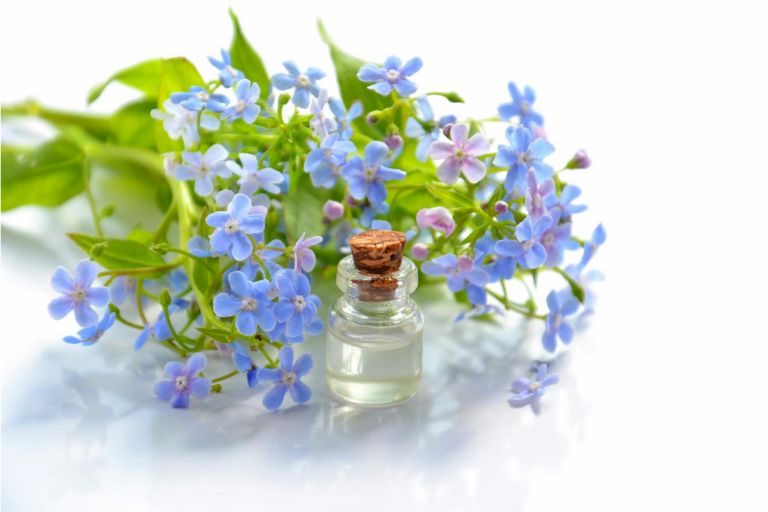
1. Fragrance-free or essential-oil-only. “Natural fragrance” is not a regulated term and can mean anything. Look for candles that either use no fragrance at all, or list specific essential oils. If the label says “fragrance” or “natural fragrance,” you do not know what is in it.
2. Cotton or wood wicks. Both are free of metal cores. Wood wicks have the added benefit of being visually obvious.
3. Wax: coconut, beeswax, or rapeseed over soy. Coconut wax is slow-burning and does not require hexane extraction. Beeswax burns cleanly and carries a faint natural scent from the wax itself. Rapeseed is a cleaner European alternative. Soy is not disqualifying, but it is not the differentiator brands claim it is.
4. Third-party certifications.EWG Verified covers ingredient screening. MADE SAFE runs a broader chemical assessment against 6,500+ substances of concern. Prop 65 compliant means the brand meets California’s chemical disclosure standard. B Corp covers company practices, not formula, so it is not a substitute for any of these.
5. Ingredient transparency. For example, some brands voluntarily publish their full fragrance ingredient list even when not legally required. That willingness is itself a signal.
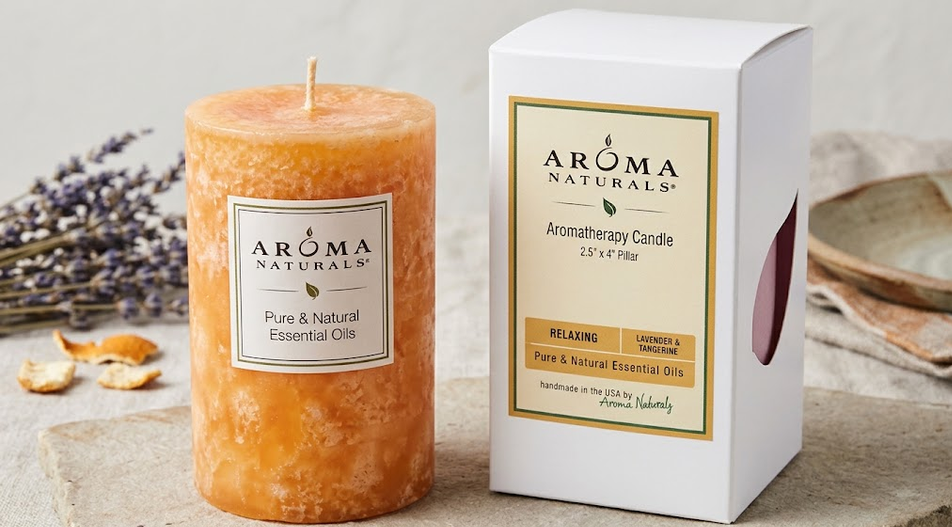
✓ Soy wax ✓ Cotton wick ✓ Essential oils only (lavender + tangerine named on label) ✓ 863 reviews, 4.3 stars Buy on Amazon
The ingredient list on Aroma Naturals names lavender and tangerine essential oils directly. No “fragrance” catch-all. That is a rarer thing than it should be, and it is the entire reason this candle makes the list over dozens of better-reviewed competitors.
Even so, the soy wax base is not the strongest point here, but the wick is cotton and the scent load is verifiable. For a household that wants a scented candle and needs to know what is producing the scent, this is the budget pick that actually passes.
Best for: a scented candle you can actually vet without a chemistry degree.
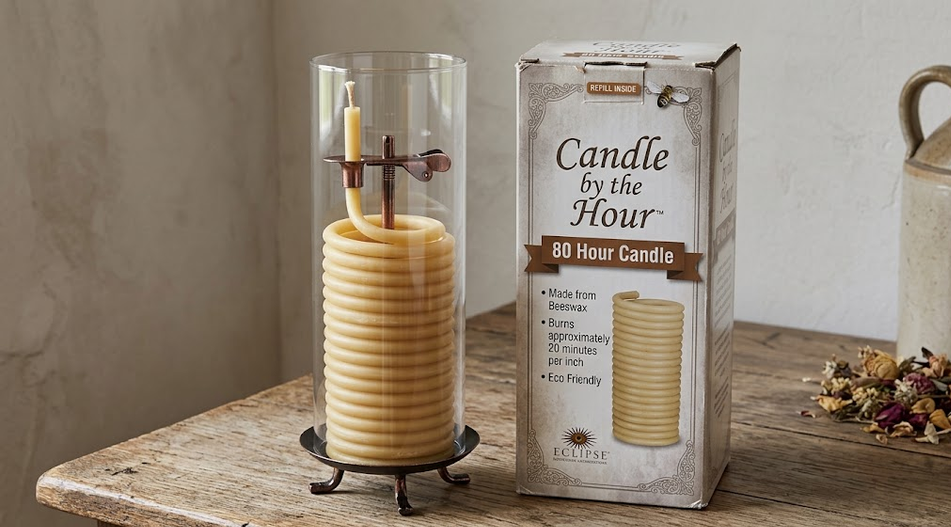
No fragrance risk at all. Beeswax carries a faint natural honey note when burning, which comes from the wax itself rather than any added fragrance. There is no trade-secret ingredient here because there is no fragrance ingredient.
The coil runs for 80 hours and fits a standard terracotta holder. 2,600+ reviews at this volume suggests real, sustained use, not a one-week spike. For a household that wants ambient candlelight without any chemical guesswork, this is the most straightforward option on the list.
Best for: fragrance-sensitive households, people with asthma, and homes with young children.
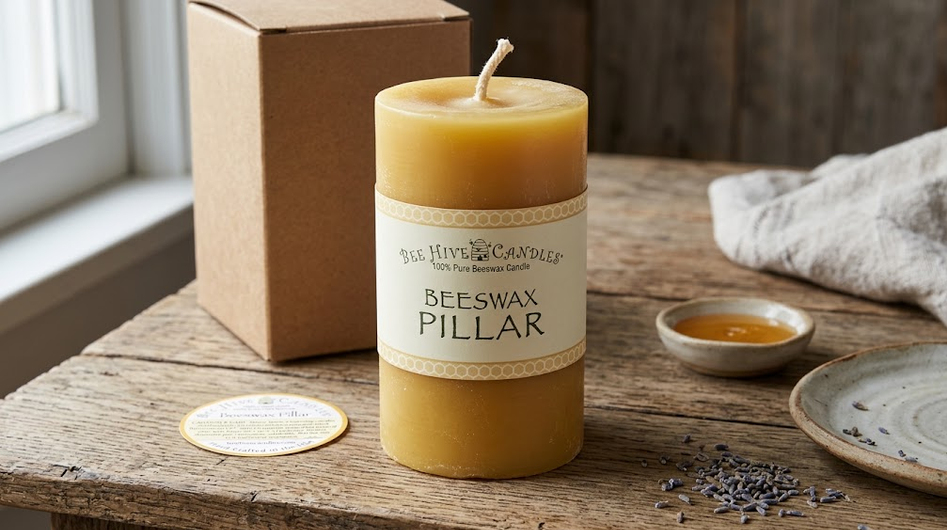
✓ 100% pure beeswax (not a blend) ✓ Cotton wick ✓ Unscented ✓ Handmade ✓ 563 reviews Buy on Amazon
One ingredient: beeswax. One wick: cotton. That is the entire list. The “100% pure” label here refers to the wax being beeswax only, not a beeswax-soy or beeswax-coconut blend, which is how most beeswax candles are sold. The difference matters if you are specifically buying for the properties of pure beeswax.
Smaller review count than Candle by the Hour. The trade-off is a pillar format versus a coil, and slightly less review validation. Neither is a disqualifier.
Best for: anyone who wants maximum simplicity and zero guesswork on what is in the candle.
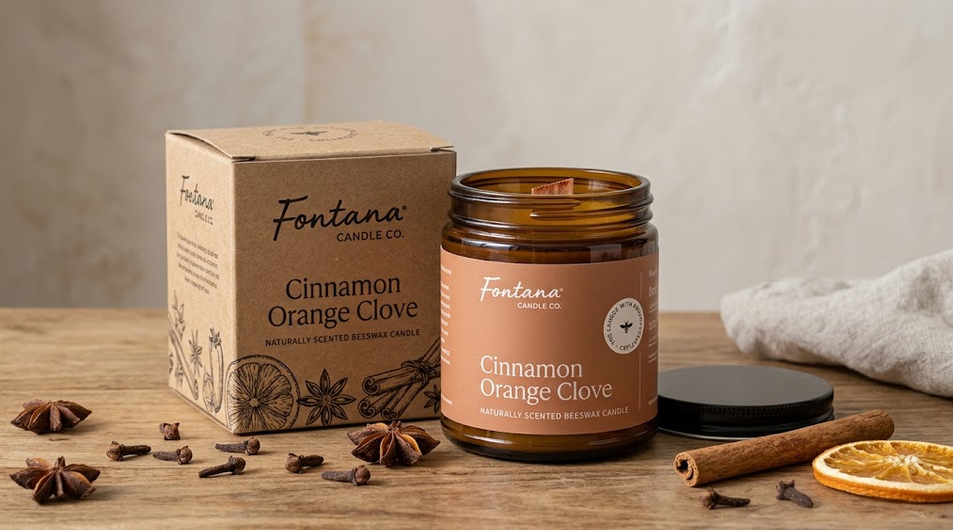
The only pick on this list independently certified through MADE SAFE, a third-party programme that screens products against a database of 6,500+ chemicals of concern. That is a different category of claim from “we use essential oils” because a third party has actually looked at the formula, not just the marketing language.
Not on Amazon, so there is no affiliate link here. The direct site link above is the only way to buy. Worth stating plainly: we do not earn anything from that click, which is why we include it anyway.
Best for: anyone for whom third-party certification is the deciding criterion.
The One to Skip
Voluspa
Voluspa sells through Sephora and Nordstrom, makes products that smell genuinely good, and has built one of the more recognizable aesthetics in the natural candle category. That positioning is not dishonest about what the product is. It is just not a disclosure about what is in it.
Every scented Voluspa product we checked lists “fragrance” in the ingredients. Under FPLA that is a legally protected trade secret. By the standard this article uses, that disqualifies a candle regardless of how well it sells or how premium the retail channel is. The word “fragrance” on the label means you do not know what is producing the scent.
The Thing Nobody Tells You
Switching to a cleaner candle formula does not eliminate combustion byproducts. Every burning candle produces ultrafine particles and carbon monoxide from incomplete combustion. Beeswax. Coconut wax. Soy. All of them.
In fact, the variable that controls soot output most is not the wax type. It is wick length. A wick trimmed to 1/4 inch before every burn produces dramatically less soot than the same candle lit with a long, mushroomed wick. Incomplete combustion produces the soot and particles. Wick length is the primary variable controlling how efficiently the flame burns.
Still, the picks in this article buy you certainty about fragrance ingredients and wick material. They do not buy you zero combustion byproducts. Trim the wick. Ventilate the room. Those two things matter more than which wax you chose.
Label Decoder
Term
What it means
What it does not mean
“Fragrance”
A legally protected trade secret blend
Anything about which chemicals are present
“Natural fragrance”
No regulatory definition
That synthetic compounds are absent
“Essential oils”
Accurate only if listed as the sole fragrance source
That no synthetic fragrance is also present
“Soy wax”
The wax base only
Anything about the fragrance ingredients
“Non-toxic”
No regulatory definition for candles
An independently verified claim
“Clean burning”
A marketing term
A regulated or tested standard
“Paraffin-free”
Accurate if stated
Anything about the fragrance ingredients
Honest Recommendation
If you burn candles occasionally in well-ventilated rooms, the acute risk from most commercial candles is likely low. The concern is chronic exposure: daily burning in bedrooms or small, closed spaces, particularly in households with young children, asthma, or hormone sensitivities. That is the population for whom the fragrance ingredient question is not academic.
The four picks above pass the two criteria that actually matter: no trade-secret fragrance blend, and no metal-core wicks. If you want a scented candle where you can read the actual fragrance source on the label, Aroma Naturals is the budget pick that passes. Unscented households are better served by Candle by the Hour or Bee Hive Candles. And for the most rigorous third-party vetting available, Fontana Candle Co is the only independently certified option on the list.
One thing none of these picks can do for you: trim the wick. 1/4 inch before every burn. No product required.
If you are thinking about fragrance sources more broadly, our piece on essential oil diffusers covers the same VOC question applied to a different delivery method. For a wider look at chemical exposure from cleaning products, see our natural disinfectants roundup.