Organic cacao powder carries a strong health halo. The USDA seal is on the bag. The brand says “raw,” “single-origin,” “superfoods-grade.” Most people assume that means clean.
The certification exists for a real reason. Conventional cocoa is heavily sprayed, and organic farming does meaningfully reduce pesticide exposure. That part is not disputed.
But USDA Organic does not test for heavy metals. Not even once. The certification covers whether the crop was grown without synthetic pesticides and fertilizers. Cadmium contamination (the primary heavy metal concern in cacao) is a soil absorption problem. Organic farming does not change the soil. A cacao tree grown organically in high-cadmium soil produces an organically certified, cadmium-laden bean.
That gap is not theoretical. Consumer Lab, Lead Safe Mama (Tamara Rubin), and the independent resource inonaround.org have all tested cacao powder products sold on Amazon. Some organic brands came back high. One brand we checked carries a California Attorney General Prop 65 enforcement notice for lead and cadmium on its cacao powder. That notice is a matter of public court record.
What actually separates the safer options from the rest is not the certification on the front. It is whether the brand can produce an independent, third-party Certificate of Analysis with a named lab and a cadmium number. Most cannot. A handful can.
Some links in this article are affiliate links. No brand paid to be included.
How we chose
We started with the top-selling organic cacao powders on Amazon and ran each one through a single question: does a real, independently-sourced third-party COA exist for heavy metals, with a named laboratory and an actual cadmium number? Not a Prop 65 disclosure page. Not a claim of “exceeds safety standards.” A document from a named accredited lab.
That standard eliminated most of the page-one results. Three cleared it.
✔ Third-party COA published proactively ✔ Prop 65 compliance stated as an explicit company goal Buy on Amazon
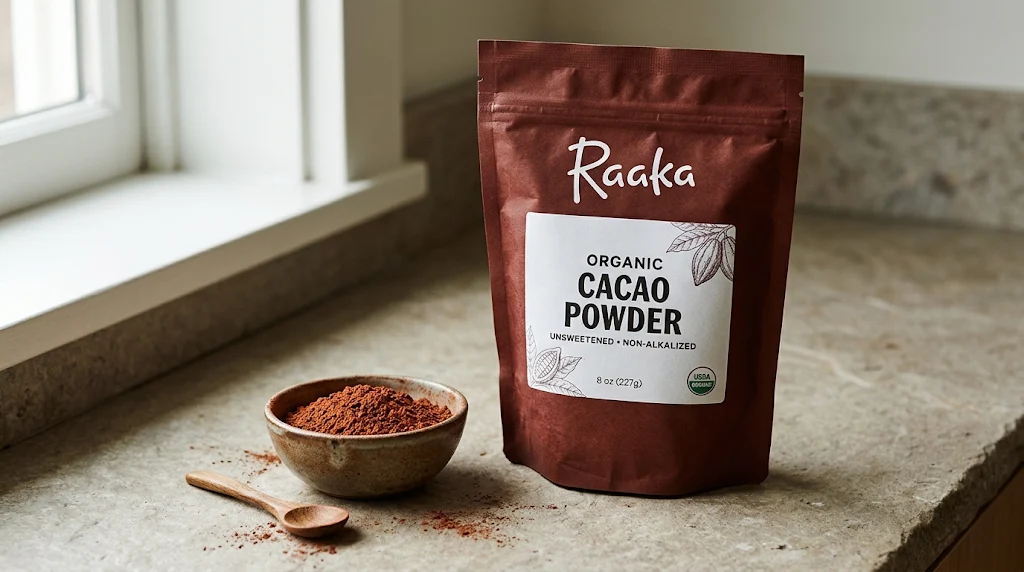
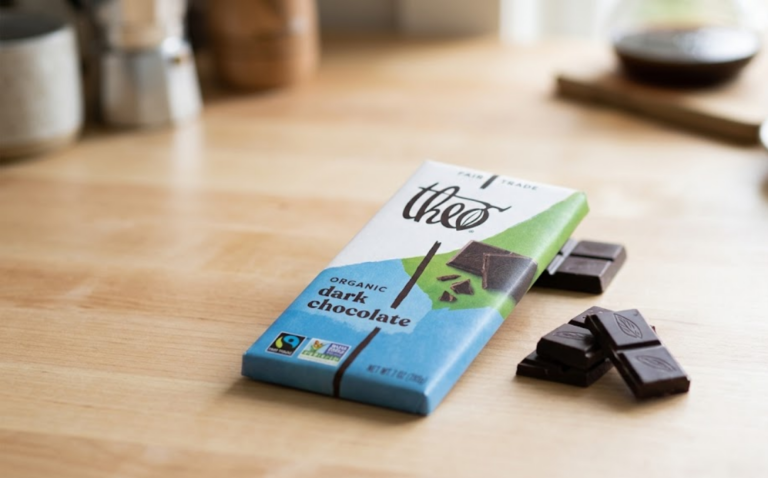
A Brooklyn-based chocolate maker, Raaka publishes its testing results without being asked. That is unusual. Most brands in this category either refuse to produce a COA or provide one only when an independent tester pushes for it. Some bury a Prop 65 disclosure page so deep on their site it functions more as legal cover than transparency. Raaka treats heavy metals testing as part of the brand story, not a liability to manage.
Their cacao powder is unroasted, single-origin, USDA Organic certified. The Prop 65 compliance commitment means they test against California’s threshold: not a federal safety limit, but one of the more conservative public benchmarks available in the US market. No, Prop 65 compliance is not a guarantee of zero cadmium. But a brand that publicly states that goal and publishes supporting data is demonstrably ahead of one that doesn’t.
Raaka’s primary product line is chocolate bars, not bulk cacao powder. The powder is a secondary SKU. That does not change the testing picture, but availability can be spottier than a dedicated supplement brand.
Best for: Anyone who wants the most transparent option on the market and is comfortable with a small-brand supply chain.
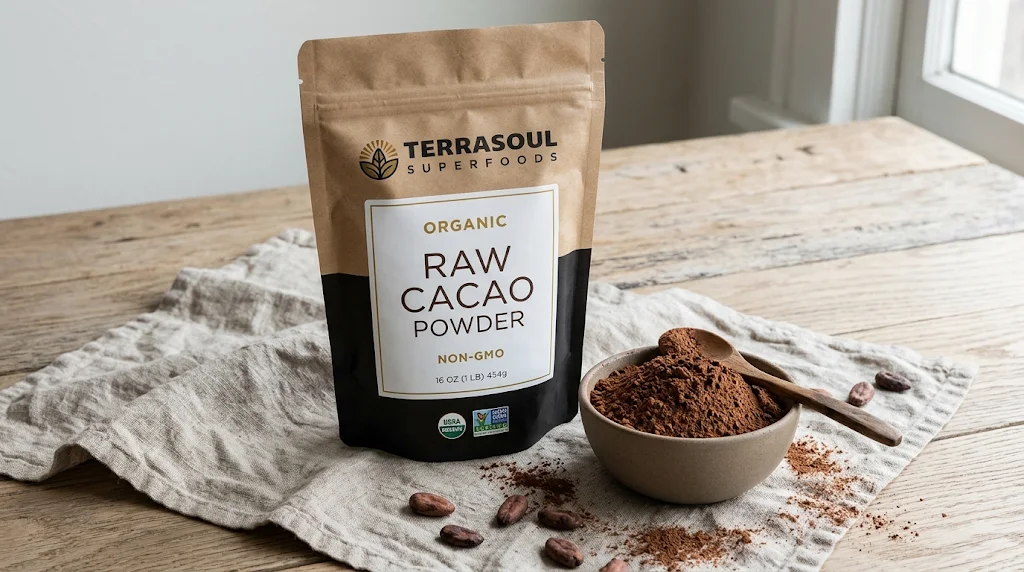
Among the high-volume options on Amazon, Terrasoul has the strongest documented heavy metals position. The measured cadmium result of 0.675 ppm is a real number from a real COA. Not a detection-limit ceiling. Not a vague “below safety thresholds” claim. That specificity matters. A number you can check is worth more than a reassurance you cannot.
The COA is not publicly posted on their website, but inonaround.org reviewed and confirmed it as authentic. Terrasoul will produce it on request. That is the second-best outcome after a brand that publishes proactively. The document exists and an independent reviewer has confirmed it.
Cadmium at 0.675 ppm is not zero. The EU regulatory limit for cocoa powder is 0.60 ppm. Terrasoul’s result sits just above that. So if you are using cacao powder daily in large quantities, that context belongs in your decision. A tablespoon a few times a week is a different picture than two tablespoons every morning.
Best for: High-volume buyers who want a documented cadmium number and the best price per ounce on this list.
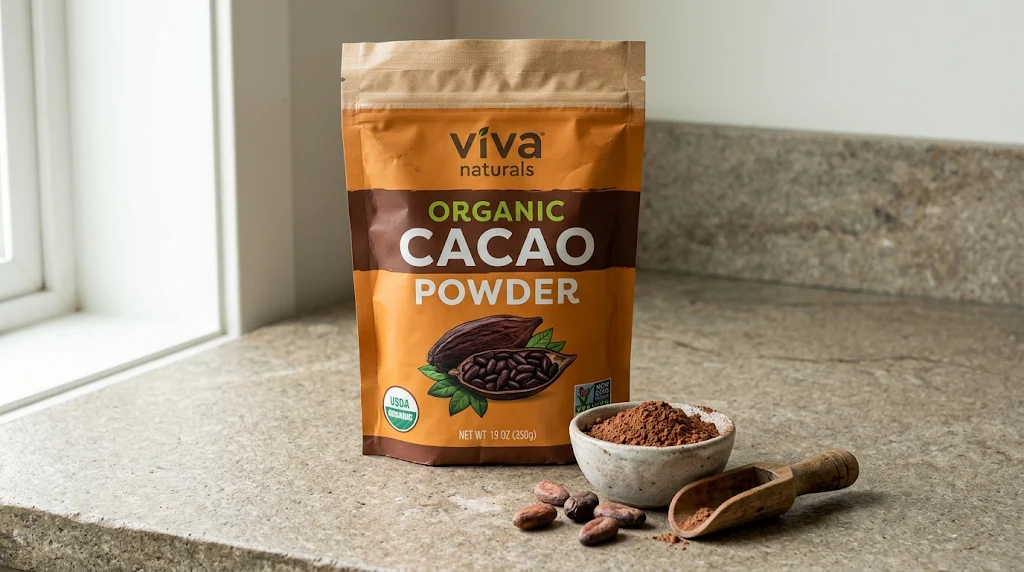
One of the highest-selling organic cacao powders on Amazon, Viva Naturals clears the basic bar: they produced a COA for independent review, and inonaround.org lists them alongside Terrasoul as a recommended brand. Their cadmium result came back below the instrument’s detection limit, written as <1.0 ppm.
The phrasing matters. “<1.0 ppm” means the lab could not detect cadmium above that floor. In other words, it does not mean cadmium is absent. It means the amount, if present, is small enough that the instrument could not resolve it. Terrasoul has a measured number; Viva Naturals has a ceiling. Both are legitimate results. The ceiling is weaker evidence, not bad evidence.
One gap: the specific lab that produced Viva Naturals’ COA is not publicly disclosed. inonaround.org reviewed the document and found it legitimate. We could not independently confirm the lab name. For most buyers, however, that will not be a deal-breaker. We name it because the standard should be transparent.
Best for: Anyone who wants a widely available option with independent verification and can work with a detection-limit ceiling rather than a measured number.
Brands we cannot recommend
Most people encounter Navitas Organics first. It is in Whole Foods, it has a clean aesthetic, and its USDA Organic certification is real. And yet when Tamara Rubin tested it in August 2024, it came back positive for unsafe levels of both lead and cadmium. Navitas declined to provide the full independent report when contacted. The organic certification does not cover this. The clean packaging does not cover this.
ORA Ceremonial Cacao lists “Heavy Metals Tested” on its Amazon listing. That part is true: their testing is real, run by Purity Labs. What the listing does not say is that “tested” and “clean” are different things. ORA’s own published data shows cadmium at 412 ppb in their Belize-origin cacao and 105 ppb in their Tanzania-origin batch. Marketing a product as “No Heavy Metals” while your own lab data shows detectable cadmium is a documented misrepresentation. We flagged it because readers deserve to know what “tested” means on a label.
⚠ Flagged: Antler Farms Organic Cacao Powder
Strong Amazon reviews and clean marketing make Antler Farms look like a safe choice. In 2023, the California Attorney General filed a Prop 65 enforcement notice against the company specifically for lead and cadmium in their cacao powder product. That notice is a matter of public court record.
Prop 65 enforcement does not mean a product is dangerous in every context. It means detected levels exceeded California’s specific thresholds without required consumer warning. A formal enforcement action from a state attorney general is a different category of evidence than a failed label claim. We name it. The enforcement notice is public record.
The thing nobody tells you about organic cacao
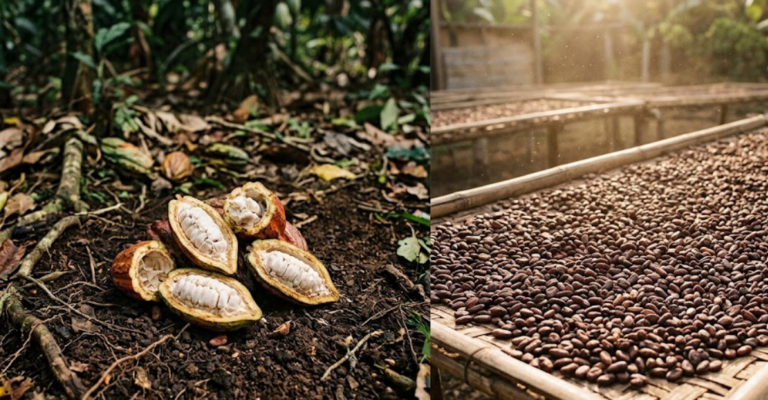
Cadmium gets into cacao through the roots. Plants pull it from the soil the same way they take up water and nutrients. No certification changes what the soil contains. It is not a pesticide residue. It is not a processing contaminant. Well, it is geology.
Peru and Ecuador, two of the most common origins for “premium” organic cacao, are both documented as high-cadmium regions. FoodNavigator reported in 2017 on high cadmium levels in Peruvian cacao specifically. The EU responded by tightening limits on cocoa powder imports. The US has not set a binding federal limit for cadmium in cacao products as of this writing.
Single-origin Peruvian cacao sounds like the premium choice. It is not automatically the safer one. Origin matters, but not in the direction most marketing implies.
Dosing matters too. The paired article on cadmium vs. lead in chocolate goes deeper into how daily intake compounds, but the short version: a COA number means more once you know how much you are actually using.
Label decoder
Label claim
What it covers
What it does NOT cover
USDA Organic
No synthetic pesticides or fertilizers during growing
Heavy metals, cadmium, lead, soil contamination
Non-GMO Verified
Genetic modification only
Everything else, including contaminants
Fair Trade Certified
Farmer payment and labor conditions
Product purity or heavy metal levels
Raw / Unroasted
Processing temperature claim
Heavy metal content is unaffected by roasting
Third-Party Tested
Only as good as what was tested and whether the lab was named
Nothing, if the document does not exist or is not from a named accredited lab
Prop 65 Compliant
Below California’s threshold for the specific metals listed
Not a federal limit; not the same as zero
Honest recommendation
Buy Raaka if transparency is the main criterion. They publish. That is worth something.
Buy Terrasoul if you are buying in volume and want a measured cadmium number to anchor your decision. The 0.675 ppm result is real, inonaround.org reviewed it independently, and the per-ounce price is the best on this list. Know the EU limit is 0.60 ppm and decide what that means for your use pattern.
For anyone who wants something easier to find at retail, Viva Naturals is a reasonable third option. The detection-limit result is not as informative as a measured number, and the lab name is not publicly disclosed, but the COA exists, inonaround.org reviewed it, and that puts it ahead of most of what is on page one of Amazon.
Skip Navitas unless Whole Foods access is the deciding factor and you have read the August 2024 test results and made your own judgment. Skip Antler Farms. The enforcement notice is public record.
No cacao powder is completely cadmium-free. The organic seal tells you how the crop was grown. It does not tell you what the soil put into it. The only question that changes your actual exposure is whether the brand knows its number, and whether they will show you.