Switching to organic coffee beans is one of the smarter swaps you can make in your daily routine. Coffee is one of the most heavily pesticide-sprayed crops on the planet. That’s not a fringe claim. It’s documented by the EWG. The problem is what “organic” actually covers, and what it doesn’t.
The USDA Organic stamp confirms the beans were grown without synthetic pesticides and fertilizers. It says nothing about mold, mycotoxins, roasting temperature, or processing conditions. And here’s the thing most brands won’t put on their packaging: coffee beans are one of the most mold-prone crops in the supply chain. Stored in humid conditions, shipped across oceans, held in warehouses. The window for contamination is wide open. The organic label closes none of those windows.
We went through five of the best organic coffee beans on Amazon, checked certifications, read thousands of real reviews, and looked at what each brand actually does beyond the organic stamp. The results say something different than the packaging.
How We Ranked These Organic Coffee Beans
We looked at Amazon star ratings, review volume, USDA Organic certification status, third-party testing transparency, sourcing origin, and what real buyers said about flavor, consistency, and how the coffee made them feel. No brand paid to be here.
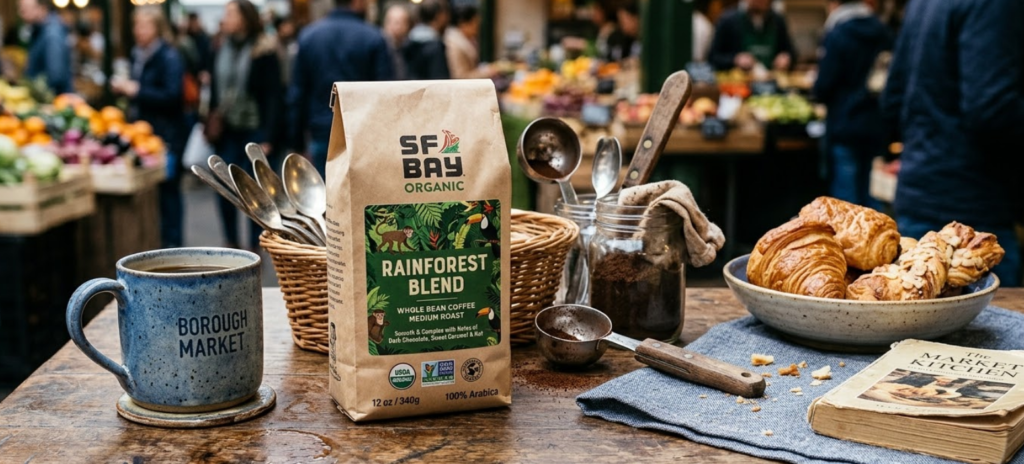
With over 23,000 reviews, SF Bay is the most purchased organic coffee beans on Amazon by a significant margin. It’s a medium-dark roast from Central American beans, 100% Arabica, family-owned, and priced at a level that makes it a realistic daily option. A 2lb bag runs around $27, roughly $0.85 per cup, competitive for certified organic.
The flavor is smooth and low-acid, with notes of dark chocolate and a mild bitterness on the finish. Reviews consistently describe it as reliable. Not flashy, not complex, just a solid cup that shows up the same way every time. That consistency across 23,000 purchases says something.
What SF Bay doesn’t do: third-party mycotoxin testing. There’s no disclosed mold testing program, no publicly available lab results. For most daily drinkers that’s a non-issue. For buyers specifically concerned about mold or mycotoxins, it’s worth knowing.
Best for: Budget-conscious daily drinkers who want verified organic without the premium price.
Kicking Horse is a Canadian brand roasting in the Rocky Mountains, and Three Sisters is their most popular blend, a medium roast combining light, medium, and dark beans into one bag. The result is a cup with more complexity than a single-roast blend usually delivers: notes of sweet tobacco, stone fruit, and cocoa, with low acidity and a clean finish.
The certifications stack up well: USDA Organic, Fairtrade, Kosher, shade-grown Arabica. Fairtrade is meaningful here. It covers labor standards and community reinvestment in a way the organic label doesn’t. Kicking Horse is transparent about paying fair prices to their farmers.
The consistent criticism in reviews is price. It’s risen significantly over the past few years. At around $16–18 for a 2.2lb bag in bulk the value holds up, but single-bag pricing can sting. No disclosed mycotoxin testing. The certifications cover farming and trade ethics, not contamination screening.
Best for: Flavor-first buyers who want ethical sourcing and genuine complexity in the cup.
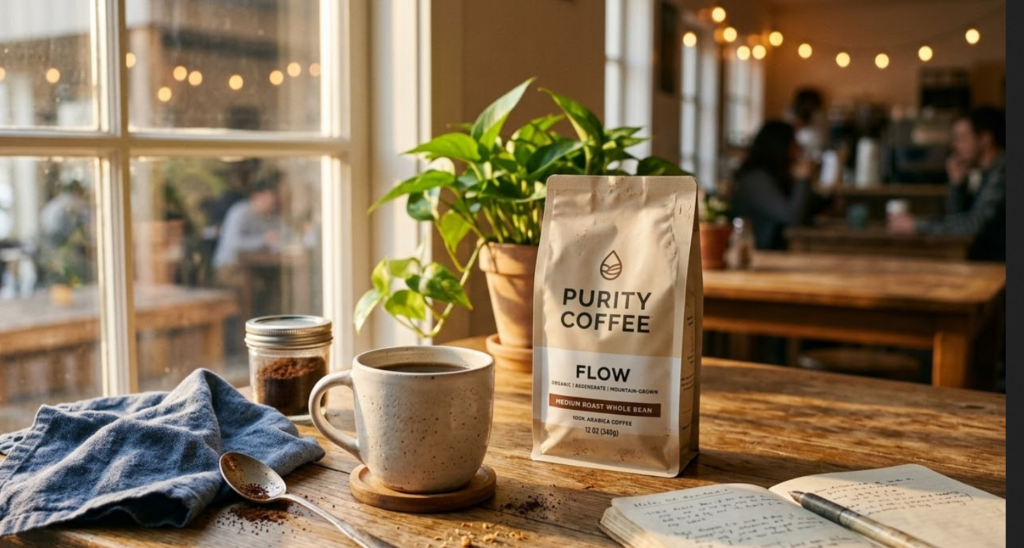
Purity is the only brand on this list built entirely around a health-first thesis. It was founded specifically to create coffee that performs better on measurable health markers (antioxidant content, mycotoxin levels, pesticide residue), not just one that’s grown organically.
Every batch is third-party tested for mold, mycotoxins, pesticides, and heavy metals. The lab results are publicly available on their website. That level of transparency is rare in this category. They also test for chlorogenic acid (CGA) retention, the primary antioxidant compound in coffee, and optimize their roasting process specifically to preserve it.
The FLOW roast is smooth and chocolatey with a mild nuttiness and low acidity. People who’ve had acid reflux or jitteriness from other coffees often specifically mention Purity as the brand that fixed it. The price is the friction point: around $29 for 12oz, roughly $2.40 per cup. But if you’re drinking coffee daily for health reasons, the difference in what you’re actually consuming is real.
Best for: Health-focused buyers who want verified clean coffee with transparent lab testing, not just an organic label.
Lifeboost was founded by a physician specifically for coffee drinkers who had given up the habit due to acid reflux, digestive issues, or sensitivity. The beans are single-origin from Nicaragua, grown at high altitude, shade-grown, and third-party tested for mycotoxins and pesticides.
What sets it apart from most organic options is the low-acid positioning, genuinely lower pH than most coffees, confirmed by reviews from people with GERD and sensitive digestion who can drink it without symptoms. Single-origin sourcing also means greater traceability: one country, one altitude range, one farming context.
The flavor is mild and clean rather than bold. Light on bitterness, low on acidity, smooth finish. Buyers who want intensity in the cup will find it underwhelming. Priced around $26–30 for 12oz, similar premium territory to Purity.
Best for: Sensitive stomach buyers, acid reflux sufferers, and anyone who’s been told to cut back on coffee for digestive reasons.
Pachamama is structured differently from every other brand on this list. It’s a farmer-owned cooperative: the people who grow the beans also own the company. Sourced from five farmer co-ops across Nicaragua, Honduras, Peru, Mexico, and Ethiopia, with a regenerative farming model that goes beyond organic standards.
The dark roast is bold, full-bodied, and smoky. It’s the most intense cup on this list. Reviews describe it as genuinely complex, with notes of dark chocolate and earth. The finish is long. Not for mild-preference drinkers.
The review count is lower than the other brands, which makes it harder to draw firm conclusions about consistency. But the 4.4 rating across 900+ verified buyers is solid, and the ownership model is the most meaningful sustainability story here. When you buy Pachamama, a larger share of the purchase price flows directly to the farmers, not through a fair trade intermediary, but because they own the business.
Best for: Ethics-first buyers who want the most direct possible connection between their purchase and farmer income, and prefer a bold dark roast.
The Thing Nobody Tells You About Organic Coffee
The USDA Organic certification covers how the coffee is grown. It does not cover what happens after harvest.
Most of the options on the market are processed at high temperatures to speed drying and extend shelf life. The result is a product that is certified organic, smells like coffee, and tastes like coffee. But it may have been exposed to mold at some point in the supply chain before roasting ever happened.
Coffee beans are prone to mold contamination during processing, storage, and shipping. Mycotoxins (toxic compounds produced by mold) can form on beans before they’re roasted. Roasting kills the mold, but it doesn’t necessarily destroy the mycotoxins already present. Studies have found mycotoxin contamination in commercial coffee samples, including some labeled as premium or specialty grade.
The organic label confirms clean farming. It says nothing about whether mycotoxins are present in the final product. Most organic coffee brands don’t test for them at all. Of the five brands on this list, only Purity Coffee and Lifeboost have disclosed, publicly available third-party mycotoxin testing.
The practical implication: if you’re switching to organic coffee primarily for health reasons, knowing what you’re not getting with the organic label matters. USDA Organic is the floor, not the ceiling.
Independently tested for mold toxins, results disclosed.
✅ Yes, if health is the primary motivation
Specialty Grade
Top 1% of global coffee by quality standards.
✅ Yes for flavor and bean quality
Shade Grown
Grown under forest canopy. Better for birds and biodiversity.
⚠️ Minor plus, relevant to eco buyers
Farmer-Owned
Company owned by growers. More income flows to origin.
✅ Yes for ethics-first buyers
Honest Recommendation
For daily drinking on a budget: SF Bay Organic Rainforest Blend. 23,000 people reorder it for a reason. Smooth, reliable, genuinely USDA Organic, priced like a staple rather than a luxury. Don’t overthink it for everyday use.
For flavor and ethics combined: Kicking Horse Three Sisters. The Fairtrade certification is real and the flavor is the most complex on this list. Buy in the 2.2lb bulk format to manage the price.
For clean coffee with proof: Purity Coffee FLOW. The only brand here that treats mycotoxin testing as a standard practice rather than a marketing claim. The lab results are public. Pay the premium or don’t, but understand what you’re trading off.
For sensitive stomachs: Lifeboost. Single-origin, third-party tested, genuinely low-acid. If other coffees have been hurting you, this is the most likely fix.
For the ethics buyer: Pachamama. Farmer-owned means money goes where the work is. Bold dark roast, strong sustainability model, and the most direct supply chain on this list.
The honest caveat: If you’re switching to organic coffee beans because you’ve heard it’s healthier, that’s partially true. Pesticide-free farming is better for you and for the soil. But if mycotoxins are your specific concern, organic alone doesn’t cover it. Go Purity or Lifeboost, or accept that organic is better than conventional but not a guarantee of a contamination-free cup.