When you switch from a petroleum-based degreaser to a citrus one, the assumption is reasonable: you are getting away from harsh chemical solvents. Plant-derived, biodegradable, VOC-free. That is the story citrus cleaning products tell, and most of them tell it well.
Here is what the labels leave out. D-limonene, the compound that makes citrus degreasers work, is a VOC. The EPA’s complete VOC exemption list does not include it. So if you have been counting on “natural citrus” to get you below a VOC threshold or into a cleaner chemical category, that calculation may not hold.
That said, d-limonene is not just rebranded acetone. It is plant-derived, it biodegrades faster than most synthetic solvents, and it leaves no chlorinated byproducts. The distinction is real. It is just different from the one the labels imply.
For this roundup, we pulled ingredient lists for five heavily-sold citrus degreasers. Three delivered genuine d-limonene at working concentrations. One used it only at fragrance level while surfactants did the actual cleaning. One contained no d-limonene at all, despite carrying a full EWG Verified badge and leading search results for “natural citrus degreaser.”
Some links in this article are affiliate links. No brand paid to be included.
✅ D-limonene listed first ✅ Orange peel oil as secondary citrus ingredient ✅ Short, readable ingredient list Buy on Amazon
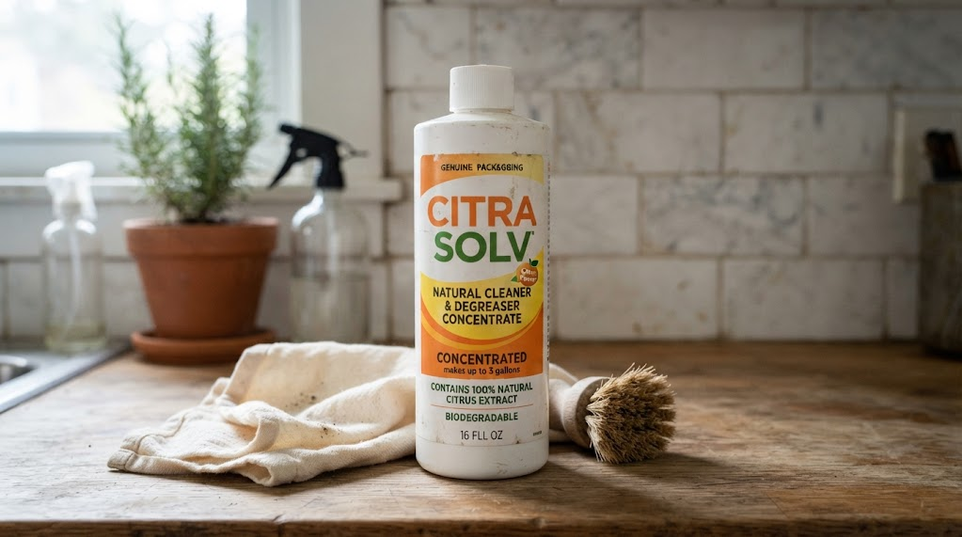
Citra Solv lists its ingredients plainly: limonene, C10-16 Pareth-1 (a mild surfactant), and Citrus Aurantium Dulcis peel oil. Three ingredients. No fragrance blend buried at the bottom, no filler. D-limonene appears first, which means it is present at the highest concentration of any ingredient in the formula.
It is a concentrate, so a small amount goes a long way diluted in water for general surface cleaning, or used closer to full strength on grease buildup. The surfactant helps lift residue so the limonene does not have to do all the work alone. In practice it performs on stovetop grease, adhesive residue, and oily handprints on painted surfaces without leaving the sticky orange residue some citrus cleaners leave behind when not fully rinsed.
The main caveat: no third-party certification on the formula. That is not a deal-breaker, but it means you are taking the ingredient list at face value rather than having an audited verification behind it. For a product this ingredient-transparent, that is a reasonable trade.
Best for: All-purpose kitchen and surface degreasing where you want genuine d-limonene chemistry and a short, clean ingredient list.
✅ Explicitly claims “Natural d’Limonene Terpenes Formula” from citrus peels ✅ Water-based, no harsh solvent carriers ✅ Safety Data Sheet publicly available on manufacturer site Buy on Amazon
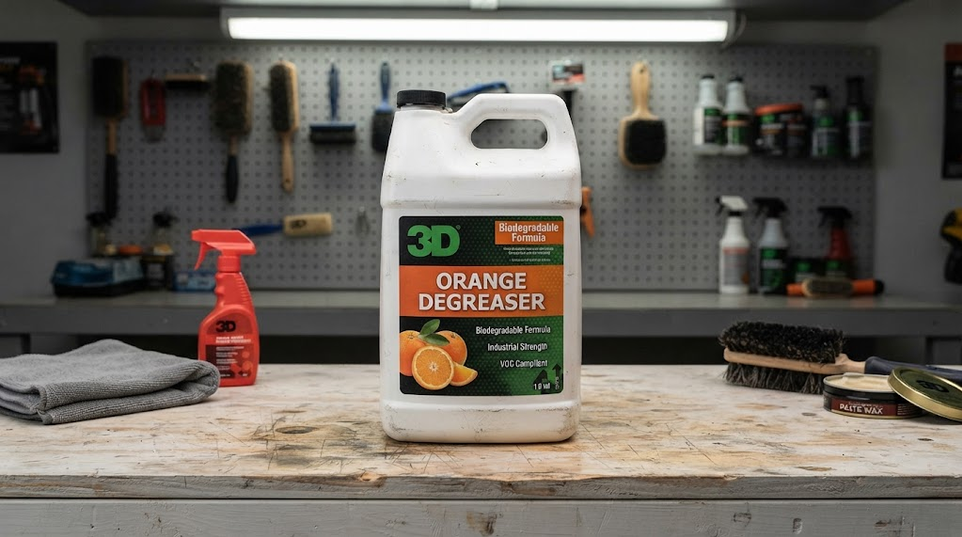
3D is an auto detailing brand, which means this formula is built for grease that kitchens rarely see. Engine bay contamination, brake dust residue, undercarriage buildup. If you are pulling out a citrus degreaser for those jobs, 3D Orange is worth looking at seriously.
The company’s own product page names natural d-limonene terpenes from citrus peels as the active mechanism, and the formula is water-based, which matters for residue. A water carrier means the limonene is held in suspension rather than delivered in a petroleum or glycol base, so the rinse is cleaner. The product SDS is publicly available on their site, which is more than most consumer brands offer.
For household use, the formulation is heavier than you need for routine kitchen cleaning. However, it dilutes well, and for periodic deep cleaning of range hoods, drip pans, or garage floors, the citrus-forward formula holds up. The scent is strong and genuine, which tracks with the stated terpene concentration.
Best for: Heavy grease removal, auto detailing, workshop surfaces, and any job where Citra Solv starts to feel underpowered.
✅ Single ingredient: 100% d-limonene (CAS 5989-27-5) ✅ No surfactants, no additives ✅ Food-grade purity level Buy on Amazon
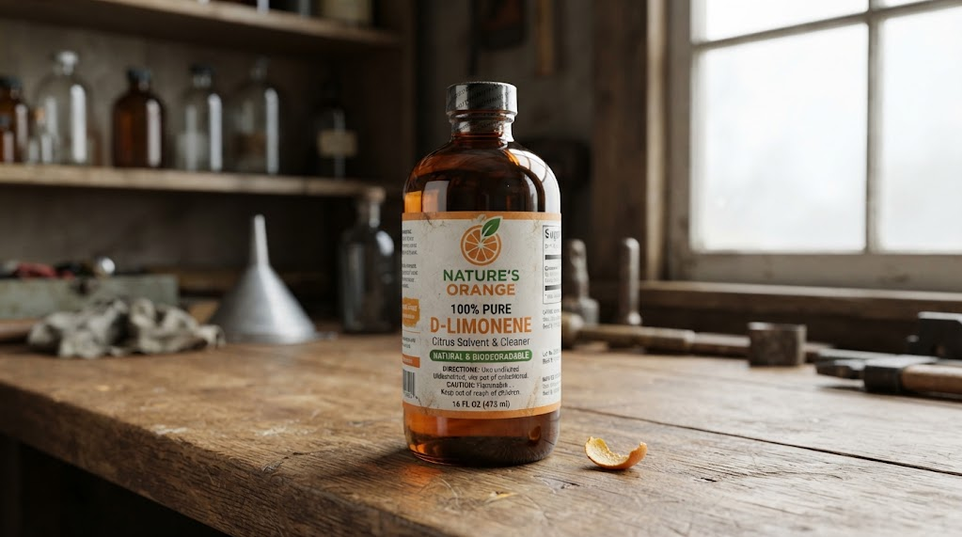
This is the only product in this list that is literally just d-limonene. No water, no surfactant, no additional ingredients. If Citra Solv and 3D Orange are finished cleaning products built around d-limonene chemistry, Nature’s Orange is the raw material itself. That changes how you use it.
At 100% concentration, it is not a spray-and-wipe surface cleaner. It is a solvent. On adhesive residue, tar, grease buildup on cast iron, or sticky residue from price tags and labels, a small amount applied directly, left for a few minutes, then wiped off does work that diluted formulas cannot. Because there is no surfactant, it does not emulsify and rinse as cleanly as Citra Solv, so wipe-off technique matters.
For people who want to make their own diluted citrus cleaners at home, this is the starting point. You control the concentration, the carrier, and any additional ingredients. The trade-off is that it requires more thought per application than a finished product does. Used wrong on painted surfaces or certain plastics, concentrated limonene can cause damage, so read the surface compatibility notes before applying.
Best for: DIY dilution projects, stubborn adhesive and grease spot treatment, and any use case where you want to control concentration yourself rather than working with a pre-formulated ratio.
⚠️ Limonene present as fragrance allergen, not primary active ⚠️ Primary mechanism: betaine and glucoside surfactants ✅ Widely available, well-priced, strong track record for light grease Buy on Amazon
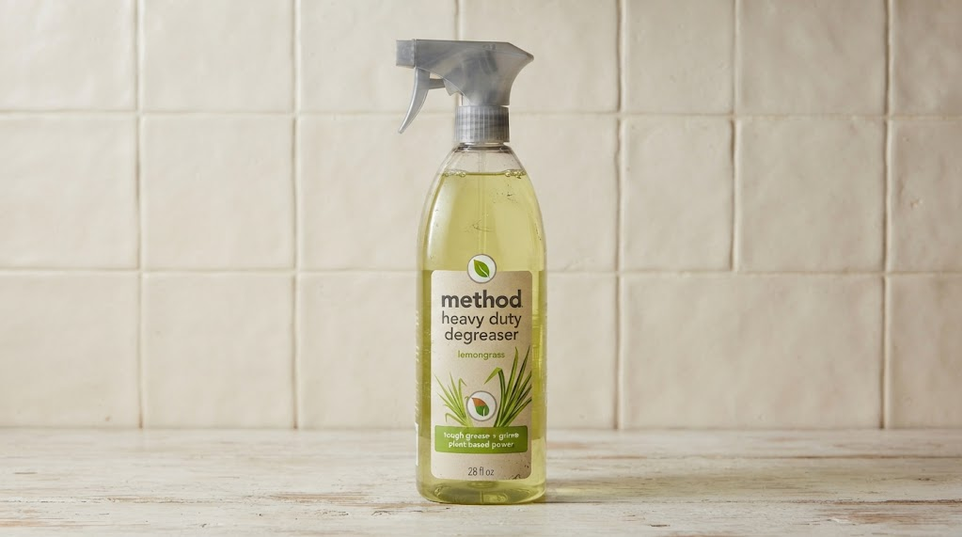
Method sells roughly 6,000 units of this product per month. It is one of the most-bought “natural degreaser” products on Amazon. That deserves an honest answer about what it is and what it is not.
The ingredient list includes limonene, but Method’s own CA ingredient disclosure classifies it as a fragrance allergen, not a primary active. The degreasing is done by cocamidopropyl betaine and decyl glucoside, which are surfactant compounds, plant-derived but functionally unrelated to d-limonene chemistry. The lemongrass scent contains limonene as a fragrance component. That is not the same as using limonene as a solvent.
The formula also contains benzisothiazolinone and methylisothiazolinone as preservatives, which some people want to avoid, particularly in spray products used in enclosed spaces. EWG rates those compounds as moderate-concern on skin sensitization.
As a light-duty kitchen spray it performs well. It handles greasy stovetop splatter and counter residue without much effort, and the scent is pleasant. But if your reason for buying a citrus degreaser is to get d-limonene’s solvent action on real grease, Method is the wrong tool. The label implies one thing. The ingredients do another.
Best for: Light kitchen spray cleaning where convenience and scent matter more than d-limonene chemistry. Not a substitute for a real citrus degreaser on heavy grease.
❌ Zero d-limonene in the ingredient list ✅ EWG Verified ⚠️ Marketed under “citrus zest” scent and shelved next to citrus degreasers Buy on Amazon
ATTITUDE carries more credibility signals than almost any other product in this roundup. It is EWG Verified, which requires full ingredient disclosure and meeting EWG’s health standards. It shows up in searches for citrus degreasers. It buys more than 3,000 units per month. If you were picking a “safe natural citrus degreaser” by authority signals alone, ATTITUDE would be at the top of the list.
The ingredient list contains no d-limonene. The active cleaning agents are caprylyl glucoside, myristyl glucoside, lauryl glucoside, sodium citrate, and sapindus mukorossi extract. Those are glucoside surfactants and a plant-derived cleaner. The scent is called “citrus zest” and likely includes citrus-derived fragrance, but the ingredient list does not show limonene in any form.
ATTITUDE is a genuinely good kitchen cleaner. EWG Verified means the ingredients have been reviewed and meet a real standard. For light kitchen cleaning where you want a verifiably clean formula, it is a defensible choice. However, buying it expecting citrus degreaser performance on grease is mismatched. The surfactants clean, but they are not solvents. Caked-on grease or adhesive residue will not respond the way it would to genuine d-limonene.
We flag it here not because it is a bad product. We flag it because it leads search results for terms this category owns, and most buyers do not read past the EWG badge and the scent name.
Best for: Light kitchen surface cleaning with a verified-clean ingredient list. Not a citrus degreaser in the d-limonene sense.
The Thing Nobody Tells You About Citrus Degreasers
D-limonene is a VOC. The EPA’s VOC exemption list names compounds that are excluded from VOC-related regulations because they have low reactivity in the atmosphere. D-limonene is not on that list. It is classified as a reactive VOC.
That does not mean d-limonene is the same as a petroleum solvent. The relevant difference is what happens after the compound is released. D-limonene biodegrades faster than most synthetic VOCs. It does not produce chlorinated byproducts. Its toxicology profile in occupational exposure studies is meaningfully better than many conventional degreasers.
However, “it biodegrades faster” is not the same claim as “it is VOC-free.” If VOC content matters for your situation, whether for indoor air quality, regulatory compliance, or personal preference, the answer is that real citrus degreasers contain VOCs. The ones that do not contain real citrus chemistry.
The reframe is this: the right filter is not natural versus synthetic. It is biodegradation profile and residual chemistry. D-limonene wins on those measures against most conventional alternatives. It loses on the “free of VOCs” claim because that claim was never true.
Label Decoder
What the Label Says
What It Means
d-Limonene / Limonene (first ingredient)
The solvent chemistry is real. This is a citrus degreaser in the d-limonene sense.
Limonene (listed under “fragrance” or “fragrance allergen”)
Present for scent, not degreasing. Surfactants are doing the work. Not a citrus degreaser by mechanism.
Natural d’Limonene Terpenes Formula
Manufacturer is claiming citrus-derived limonene as the active. Verify with the SDS if the job is heavy.
Citrus scent / citrus zest / orange-scented
Fragrance claim only. Tells you nothing about whether d-limonene is the active ingredient.
EWG Verified
Full ingredient disclosure and meets EWG health standards. Does not mean citrus-powered or d-limonene-based.
Plant-derived / plant-based
True of d-limonene, glucosides, betaines, and dozens of other ingredients. Not a useful filter for identifying actual citrus degreaser chemistry.
VOC-free
Incompatible with containing d-limonene at working concentrations. If a label says both, one of those claims is wrong or uses a non-standard VOC definition.
Honest Recommendation
If you want a natural citrus degreaser that does what the name implies, start with Citra Solv. The ingredient list is short, limonene is first, and the formula handles most household grease without fuss. For heavier jobs, step up to 3D Orange Degreaser, which brings real d-limonene terpene chemistry to dirtier work. If you want control over concentration and are comfortable working with a neat solvent, Nature’s Orange lets you build your own formula from the ground up.
Skip Method if you want d-limonene chemistry. Use it if you want a convenient spray that works on light grease and you are not specifically attached to citrus-solvent action. Skip ATTITUDE for degreasing; it is a well-formulated kitchen cleaner that happens to be next to the citrus degreasers on the shelf and in search results.
On the VOC question: you are not choosing between VOC-laden and VOC-free. You are choosing between VOCs that biodegrade quickly with a clean residue profile and VOCs that do not. That is a real distinction. It just is not the one the labels usually make.