Most people buying organic turmeric are protecting against one thing: pesticide residue. That’s a reasonable concern. It’s also not the most urgent one for this particular spice.
Organic certification exists for a reason: for most spice categories, it’s the most useful label on the package, and it does eliminate the chemical exposure most buyers are trying to avoid.
Turmeric is different. It carries one of the worst heavy metal contamination records of any spice sold in the US. Not because of soil. Because of lead chromate, a synthetic yellow dye deliberately added to turmeric powder at the processing stage to deepen its color and increase its apparent weight. It goes in after harvest, often after import. USDA Organic certification tracks what happens to a crop while it’s growing. That’s not where this contamination enters.
Between 2010 and 2016, thirteen US brands of lead-contaminated turmeric landed on the FDA’s voluntary recall list. The 2016 wave alone pulled seven Gel Spice Inc brands off shelves, plus 337,000 pounds of curry powder from Oriental Packing Company. Public health departments in Arizona, California, Colorado, Connecticut, and New York each documented childhood lead poisoning cases linked to turmeric consumption. Stanford researchers traced the practice back to the 1980s, when processors in Bangladesh began adding lead chromate after flooding dulled their harvests and buyers still expected bright yellow product.
That changes what you’re filtering for. The question isn’t “is this turmeric organic?” It’s “where did this turmeric come from, and who checked it after it was ground?”
Some links in this article are affiliate links. No brand paid to be included.
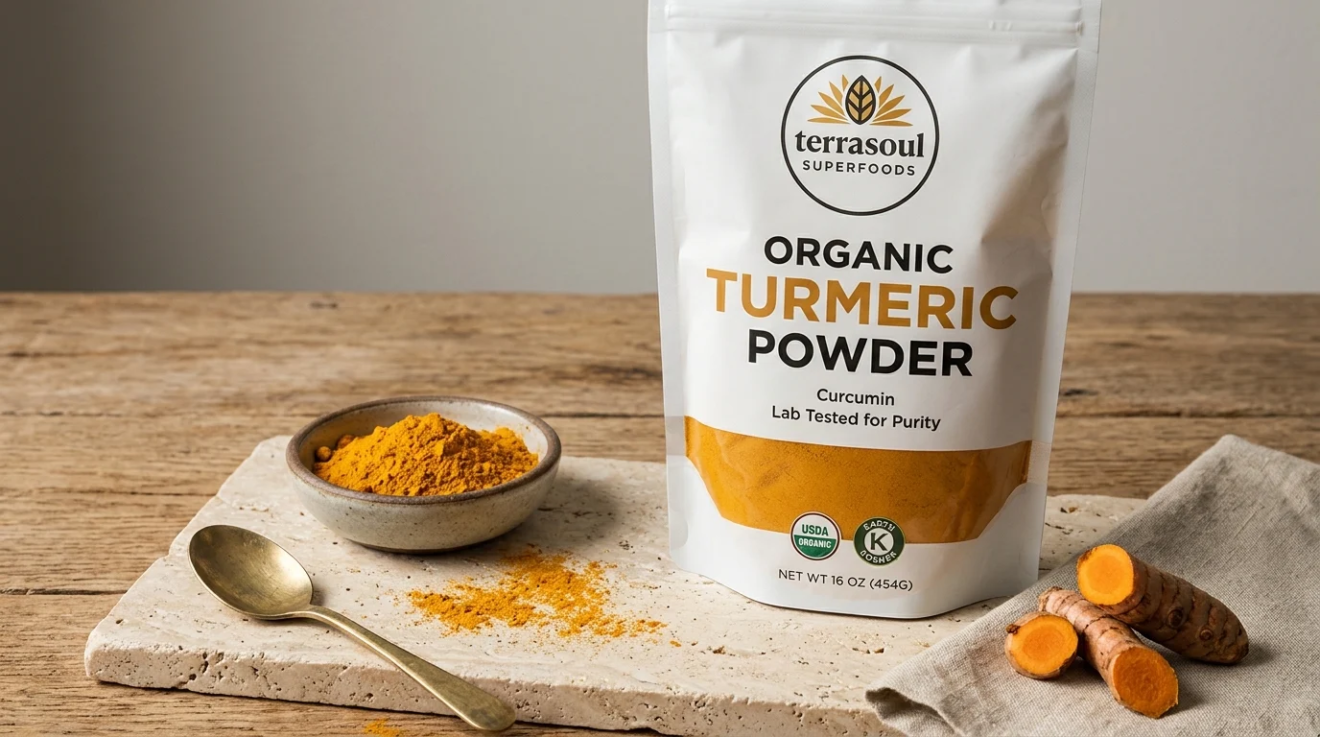
✔ USDA Certified Organic ✔ ICP-MS heavy metal testing ✔ Hand-selected turmeric roots ✔ Low-temperature drying | Buy on Amazon
Terrasoul names the testing method on the product page. ICP-MS, inductively coupled plasma mass spectrometry, is the standard independent food labs use for precise heavy metal detection. It’s also what the FDA uses when it tests for enforcement. Naming that specific method instead of writing “third-party tested” is a meaningful distinction: any buyer who calls a food testing lab will recognize ICP-MS as the actual protocol. That kind of claim doesn’t survive being fabricated.
The organic turmeric powder uses hand-selected roots, dried at low temperatures to preserve color and nutrition. Origin is India. Terrasoul has built a following among natural food buyers who compare testing notes, so quality inconsistencies tend to surface quickly in this customer base. The brand is widely available, and the price per ounce holds up well in bulk sizes.
The one gap: Terrasoul doesn’t publish batch-level ppm numbers publicly. Naming the method is the strongest claim here; seeing the actual results would be stronger still. But for buyers who want a verifiable method at a reasonable price, Terrasoul is the clearest combination in this category.
Best for: Buyers who want a named, verifiable testing method at a competitive price and are comfortable without published ppm figures.
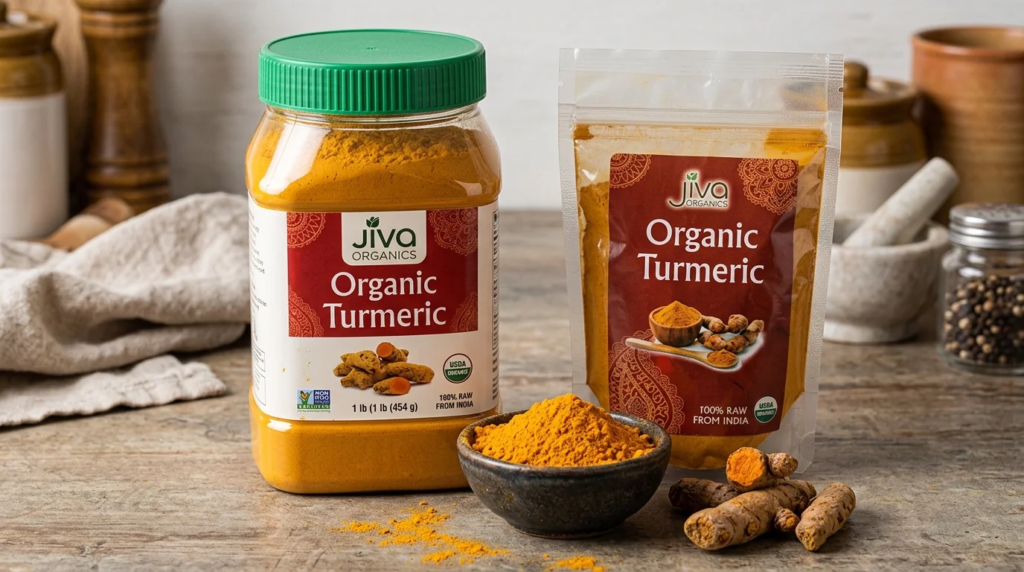
✔ USDA Certified Organic ✔ Test reports listed as available ✔ Widely available on Amazon ✔ Competitive price per ounce | Buy on Amazon
Jiva Organics lists test reports as available on their Amazon product page. That puts them a step above brands that say nothing about testing, and a step below Terrasoul, which names the method. What “reports available” means in practice depends on how accessible those reports actually are. Before buying, it’s worth messaging the seller through Amazon to request a COA for the current batch.
Jiva earns the budget position here because a testing claim that you can follow up on is meaningfully different from no testing claim at all. USDA Organic certification checks out, the product is widely available, and the price per ounce is the most competitive in this roundup.
So: if you’re buying turmeric primarily for cooking and your priority is certified organic status at a good price, Jiva is a defensible choice. If you’re buying for health reasons and want the numbers before they go into your body, start with Terrasoul instead.
Best for: Budget buyers who want certified organic turmeric and are willing to request test reports directly if the numbers matter to them.
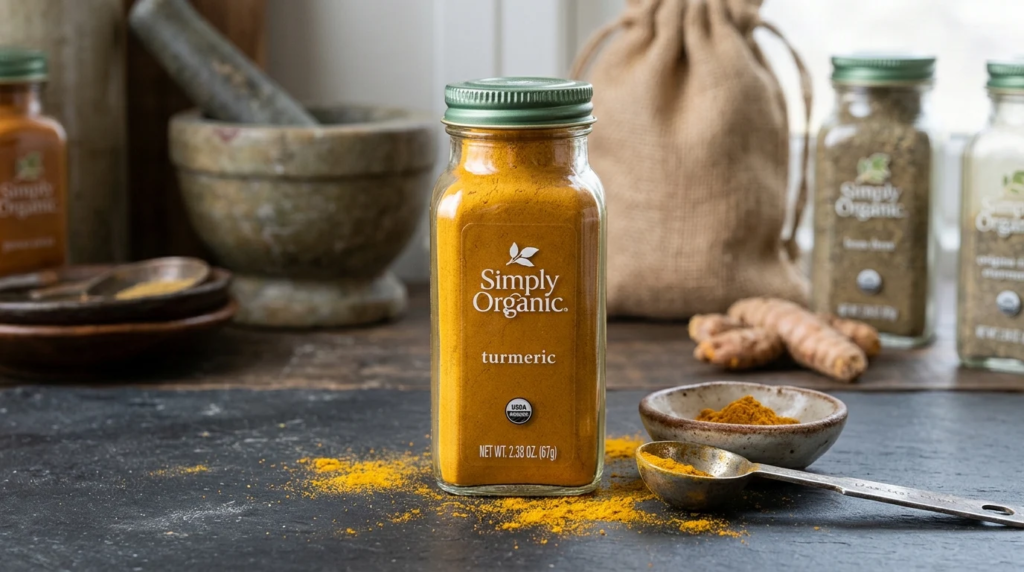
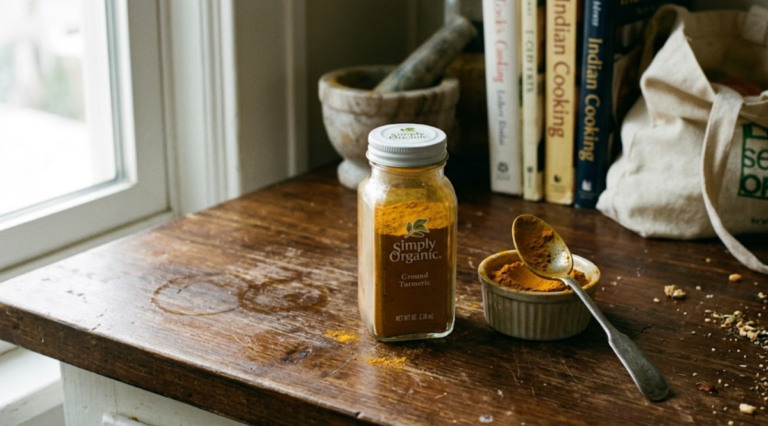
⚠ Flagged: Simply Organic Ground Turmeric
Simply Organic is probably the most recognizable name in organic spices. It’s in Whole Foods, it’s on Amazon, and it’s the brand a lot of people default to when they want to do better than the standard grocery store option. That’s why it has to be flagged here.
In 2022, CHOICE Australia tested 70 dried herbs and spices from popular brands through an external accredited lab. Simply Organic’s turmeric returned detectable arsenic. The levels fell within Australian regulatory limits, but zero arsenic is achievable in organic turmeric, as the brands in this roundup that test for it demonstrate. Simply Organic does not publish third-party COAs for heavy metals on their US-facing product pages, so there’s no way to track whether that result was a one-batch anomaly or a consistent pattern.
This brand is Frontier Co-op’s retail line. Frontier is a large cooperative with significant volume and supply chain complexity, which is exactly the environment where contamination events are harder to catch and control consistently. The company has the resources to publish comprehensive COA data. They haven’t.
We’re not claiming their turmeric is currently contaminated. We’re saying they haven’t provided the evidence to rule that out, in a category where that evidence matters.
Best for: Nothing on this list. Skip it.
The Thing Nobody Tells You About Turmeric and Lead
When people talk about heavy metals in food, the assumption is usually that contamination comes from soil: cadmium absorbed by roots in mining regions, arsenic in groundwater. Those are real problems in some categories. Turmeric’s lead problem works differently.
How Lead Gets Into Turmeric
Lead chromate is a synthetic pigment. Yellow-orange, dense, and cheap. Flooding and poor handling dull turmeric root. Lead chromate restores the color buyers expect. It also adds weight, and processors sell turmeric by weight. The incentive is financial, not accidental. Stanford researchers traced the practice to Bangladesh in the 1980s and published their findings in 2019 in Environmental Research, by which point the contamination had already caused childhood lead poisoning cases documented across five US states.
Lead chromate also means you’re not just getting lead. You’re getting hexavalent chromium, the same compound at the center of the Hinkley groundwater case. Lead and chromium both accumulate in the body, and neither has a safe exposure threshold that research has established. Both fall outside USDA Organic standards, which cover what farmers apply to growing crops, not what happens to commodities after harvest.
The FDA has not established a maximum lead level for spices in the United States. Bangladesh and India, the two largest turmeric exporters, have their own limits, but export enforcement is inconsistent. The practical implication: a bag of organic turmeric certified under USDA rules, grown without prohibited pesticides, can still carry elevated lead from post-harvest adulteration. No US regulatory check will catch it before it reaches your kitchen. The only system that catches it is brand-level testing, by an independent lab, with results that go somewhere visible.
No synthetic pesticides, no synthetic fertilizers, no GMOs during cultivation
Post-harvest adulteration; heavy metal testing; lead chromate; processing conditions
“Third-party tested”
Depends entirely on what was tested and who tested it — this phrase alone means nothing
Heavy metals unless the brand specifies heavy metal testing as part of the protocol
ICP-MS tested
Inductively coupled plasma mass spectrometry — the method independent labs and the FDA use for precise heavy metal detection in food
Doesn’t tell you the results unless numbers are also published
“Lab tested for heavy metals”
Some testing occurred for heavy metals
Which metals, at what sensitivity, by which lab, with what results — none of that is stated
Published ppm limits
The brand has results specific enough to put actual numbers on a page — the most transparent claim short of a full public COA
Doesn’t substitute for a full COA with batch-level data, but far more useful than a phrase
COA Available
A Certificate of Analysis exists for the specific batch, showing actual lab results
Nothing if the numbers aren’t accessible — “available on request” with no follow-through is marketing
Single-Origin
The turmeric came from one identified source, reducing multi-supplier blending risk
Not a substitute for testing; a contaminated single source is still contaminated
Honest Recommendation
Buy Terrasoul if you want a named, verifiable testing method at a competitive price. ICP-MS is the right standard. They’ve named it, and the price is fair for what you’re getting.
Buy Jiva Organics if budget is the main constraint and you’re willing to request a COA before buying. The testing claim is real, the price is right, and USDA Organic certification checks out.
Organic certification answers the question it set out to answer: what happened to this crop while it was growing. The question it never set out to answer, what happened to the turmeric after the farmer’s work was done, is the one that maps to the actual risk in this category. That question has a simple proxy: what did the brand find when they tested it, and are those numbers somewhere you can read them?
Related reading: Does Turmeric Contain Lead? — a full breakdown of the contamination research, what the FDA’s current position is, and what blood lead thresholds mean for regular culinary use.