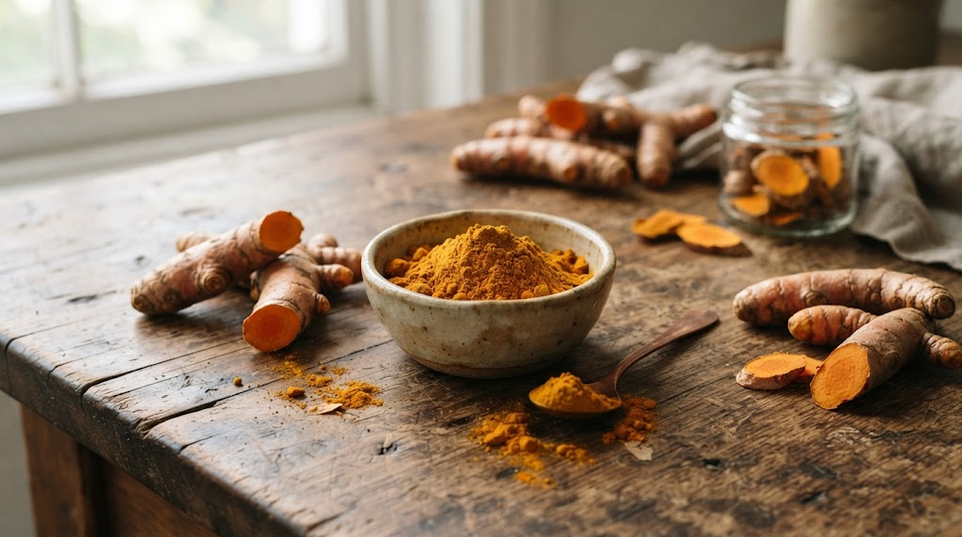
Turmeric gets sold as one of the most studied anti-inflammatory foods available. That reputation is real. Curcumin, the active compound that makes up roughly 2 to 5 percent of the root by weight, has a legitimate research base behind it. The problem has nothing to do with what turmeric does in your body. It has to do with what gets added to it before it reaches your spice drawer.
Lead contamination in turmeric is not a fringe concern or a hypothetical. Since 2011, the FDA has recalled more than 15 brands sold in the United States for excessive lead levels. The FDA has tested products and found results as high as 48 parts per million. For context: the FDA caps lead in food color additives at 10 ppm. There is no official limit specifically for spices, which is part of the problem.
The contamination does not come from the soil. Some processors add it deliberately, after harvest.
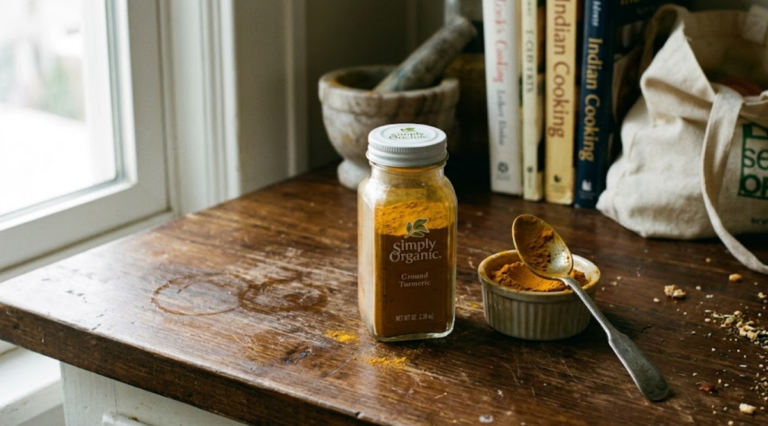
USDA Organic certification does what it was designed to do. The gap here is not a failure of the standard. It is a gap the standard was never built to close.
Some links in this article are affiliate links. No brand paid to be included.
Why Lead Gets Added to Turmeric
Processors in Bangladesh traced the practice back to the 1980s. After a series of floods left turmeric crops wet and dull-colored, some began adding lead chromate, an industrial yellow pigment used in paints and toy coatings, to restore the root’s bright appearance. It was cheap, it worked, and the habit never stopped.
A 2019 Stanford-led study published in Environmental Science & Technology traced lead isotope ratios in turmeric samples directly to elevated blood lead levels in Bangladeshi populations. More than 30 percent of pregnant women in the surveyed rural districts had elevated blood lead. The districts where researchers found the practice produce nearly half of Bangladesh’s turmeric output.
Lead chromate is not an agricultural contaminant. It does not drift in from nearby fields or leach up through the soil. Someone adds it. That distinction matters because it means no amount of organic farming practice prevents it.
What the FDA Has and Has Not Done
The FDA has issued import alerts on specific turmeric suppliers and tested products that prompted recalls. Pran brand turmeric powder came back at 48 ppm in one documented FDA test. But the agency has not set a maximum allowable lead level for spices as a category.
For food color additives, the FDA applies a 10 ppm lead cap. Food manufacturers use turmeric as a color additive, which is where that figure becomes relevant. The recalled Pran product tested at nearly five times that level.
Periodic import checks have pushed larger Bangladeshi exporters to reduce lead in turmeric bound for regulated markets. The Stanford researchers warned that those checks catch only a fraction of adulterated product moving through global trade. A single clean import record does not guarantee batch-to-batch consistency.
Why Organic Certification Does Not Cover This
USDA Organic certification was built to verify how a crop is grown: what goes into the soil, what pesticides are permitted, how the land is managed. Post-harvest adulteration sits outside its scope entirely. Lead chromate added after harvest sits completely outside what organic certification tracks.
None of the major certifying bodies have added heavy metal testing as a standard requirement for organic spice certification.
What Actually Signals a Clean Product
The signal that matters is a Certificate of Analysis (COA) from an independent third-party lab, covering heavy metals specifically, and publicly accessible for the batch you are buying.
A COA produced by the brand’s own internal lab does not meet that standard. Neither does a vague “batch tested” claim with no published results. The document needs to come from an outside laboratory. It should name the specific heavy metals tested (lead, arsenic, cadmium, mercury) and show results for the actual lot in the product you are buying.
Some brands publish these. Most do not. “Lab tested” on packaging almost always refers to internal quality checks, not independent verification.
Source origin matters too. Turmeric from India and Bangladesh carries a higher documented risk than turmeric from other growing regions, based on where researchers have confirmed the lead chromate adulteration practice. That does not make all Indian or Bangladeshi turmeric contaminated. It means the supply chain requires more scrutiny, not less, when sourcing from those regions.
The brands that have made independent testing verifiable are covered in detail in our guide to organic turmeric powder brands, including which ones publish real results and which popular picks do not hold up under scrutiny.
The Thing Nobody Tells You
The brands most visibly marketed as premium organic turmeric are, in many cases, the ones with the least transparent testing records. High review counts and household-name status do not correlate with published independent lab data. Several of the most-purchased turmeric powders on Amazon have no publicly available COA for heavy metals whatsoever.
The ask is specific and small: before buying, look for a COA on the brand’s website. Search “[brand name] certificate of analysis heavy metals.” If you cannot find one in two minutes, that absence is the answer.