Natural fiber rugs have a reputation as the eco-friendly choice. Sustainable, earthy-looking, all roughly interchangeable within the category. Most people shopping for one treat jute, sisal, and seagrass as variations on the same product.
That’s not entirely wrong. Jute is genuinely good in a dry bedroom: soft underfoot, affordable, and appropriate for low-traffic spaces. But put it in a living room or hallway and you’re replacing it in three years. The fiber type is the decision.
The lifespan gap across natural fibers is bigger than most guides acknowledge. According to Edward Martin’s rug lifespan guide, jute lasts 3 to 5 years under proper care and sisal runs 5 to 10. By the end of this guide, you’ll know which fiber works where and why.
Quick Comparison: Jute vs Sisal vs Seagrass vs Hemp
| Fiber | Durability | Moisture resistance | Feel underfoot | Best room |
|---|---|---|---|---|
| Jute | Low (3–5 yrs) | Poor | Soft | Bedroom, home office |
| Sisal | High (5–10 yrs) | Moderate | Scratchy | Living room, hallway |
| Seagrass | Very high (15–20 yrs) | Good (waxy coat) | Smooth | Living room, dining room |
| Hemp | High (10+ yrs) | Good | Medium, softens with use | Any room |
Jute: The One Everyone Buys (And Replaces)
Among the four fibers on this list, jute gets the most shelf space at mainstream retailers. And it’s the most fragile. Cheap for a reason.
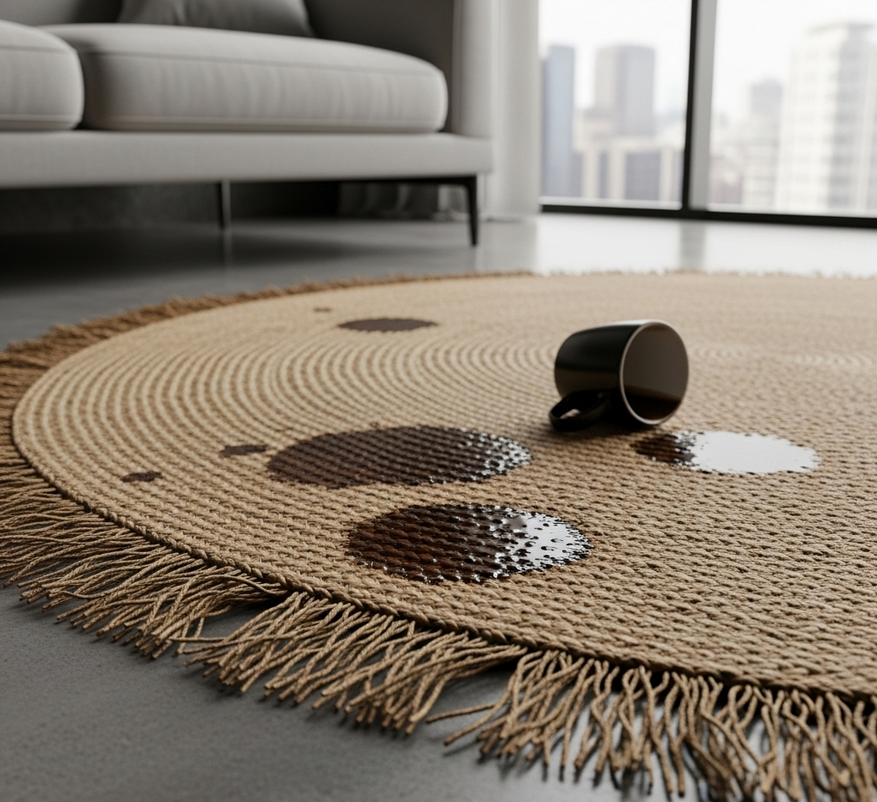
The fiber absorbs moisture readily. In a humid climate, near a back door, or in a kitchen, a jute rug will start to smell, discolor, and break down from the backing up. Spills that sit for more than a few minutes stain permanently. The fiber has no natural resistance.
Where jute actually works: dry bedrooms, home offices, low-traffic reading nooks. Somewhere it stays dry and doesn’t take daily foot traffic. In those spots, the soft texture and warm earthy look are genuinely good. It’s also the cheapest natural fiber option, which makes the shorter lifespan a reasonable trade in the right context.
What most guides don’t say clearly: jute is not a living-room or hallway rug unless you’re prepared to replace it every few years.
Sisal: The Durable One With a Trade-Off
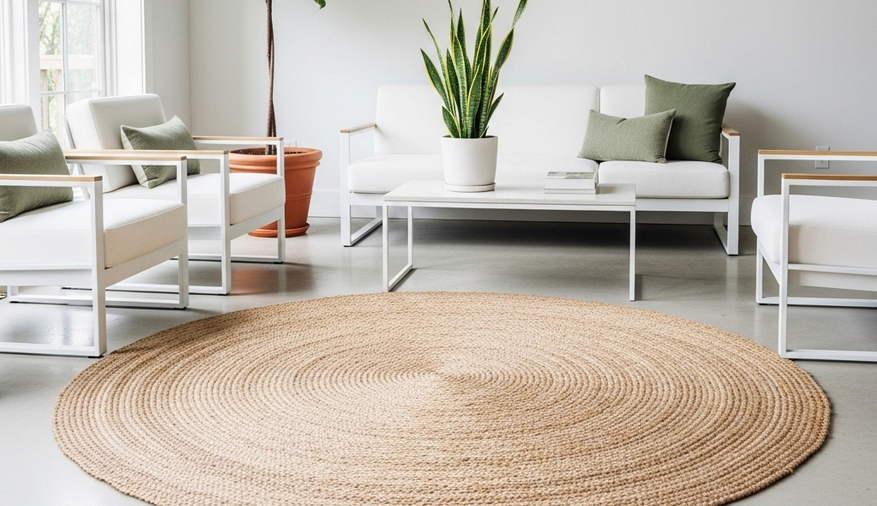
Extracted from the agave plant, sisal is significantly tougher than jute. It handles foot traffic, resists crushing, and doesn’t break down quickly. A well-maintained sisal rug in a living room or hallway runs 5 to 10 years under normal use.
The trade-off is texture. Sisal is scratchy underfoot. Noticeably so. Children and pets often dislike it. It also stains if liquid sits on the surface; the fiber doesn’t repel water, it just doesn’t absorb it as aggressively as jute. Blot spills fast and you’re usually fine. Let them sit and you’re not.
If you have a hallway, dining room, or living room that gets real daily use and you want a natural fiber rug that earns its price over time, sisal is the right answer. The texture is the cost of admission.
Seagrass: The Most Practical Option Most People Overlook
Seagrass grows in coastal marshes and naturally develops a waxy coating that makes it the most moisture-resistant natural fiber on this list. Spills bead rather than immediately soak in. It’s the only natural fiber rug that isn’t immediately compromised by a humid environment.
The limitation is color. Seagrass cannot be dyed. The waxy surface that protects it also prevents dye from bonding. The color is natural: green tones when new, aging to warm gold over time. If you want color options or patterns, seagrass isn’t it.
Where seagrass excels: dining rooms, living rooms, any space where spills are a realistic risk and you want a rug that holds up for 15 to 20 years without babying. It’s smoother underfoot than sisal, which makes it more livable day to day.
Hemp: The Underrated Option
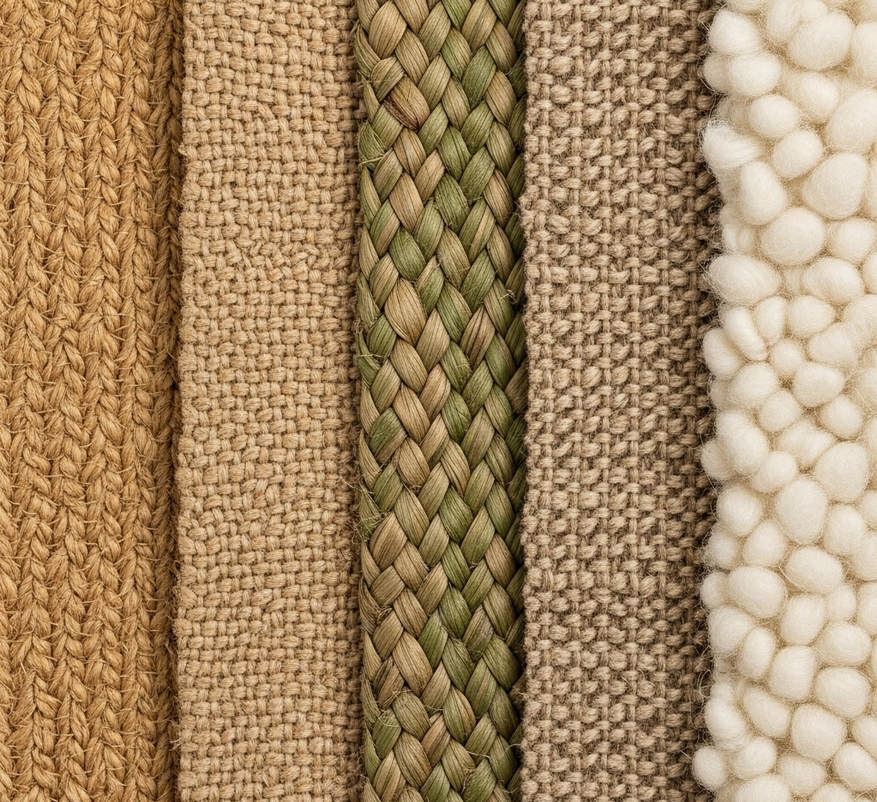
Unlike jute, hemp resists mildew and is stronger fiber-to-fiber. It starts coarser but softens significantly with use, noticeably more comfortable after a year or two than it was when new. It’s also one of the more sustainable crops in this category: hemp requires no pesticides and very little water to grow.
The practical issue is availability. Hemp rugs are harder to find than jute or sisal, and the selection is narrower at most retailers. Where you can find them and the design works for your space, they’re worth the look. Longevity and mildew resistance put them in the same tier as sisal.
Which Fiber for Which Room
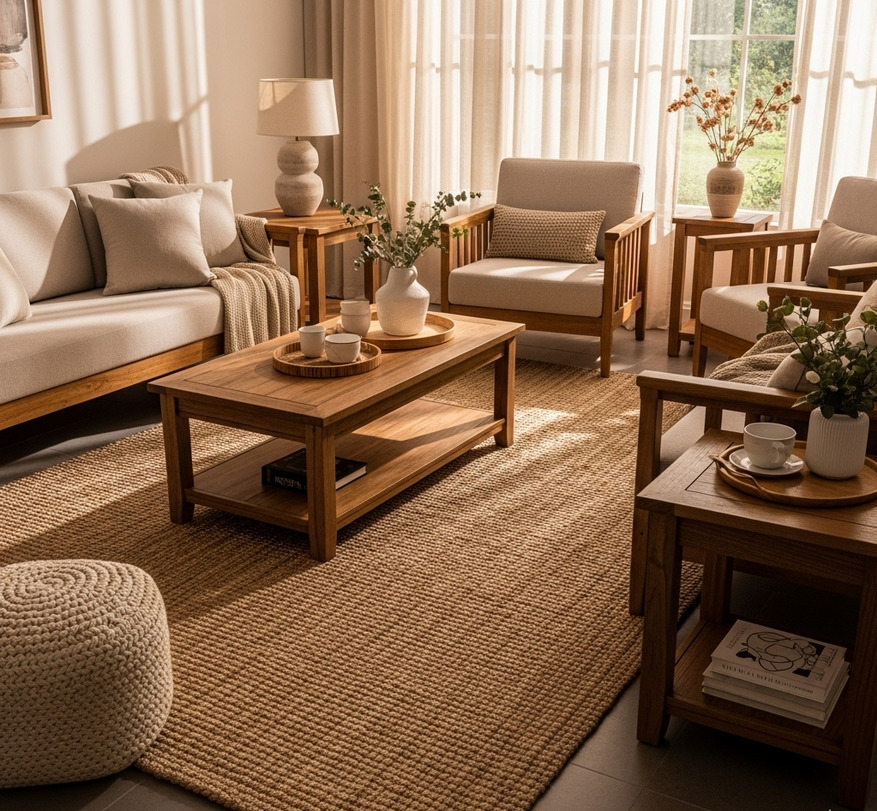
Living room: Sisal or seagrass. Both handle traffic and have the longevity to justify the price. Choose seagrass if you have kids or pets. Choose sisal if you prefer the texture and are quick with spills.
Bedroom: Jute works well here. Low traffic, usually dry, and the softness is an asset underfoot next to the bed. Hemp is also a good choice if you want longevity without sacrificing feel.
Hallway: Sisal. Jute won’t survive daily hallway traffic. Seagrass works but can get slippery in long runners without a grippy rug pad underneath.
Dining room: Seagrass. Food and liquid spills are inevitable. The waxy coating makes it the only sensible natural fiber choice for under a table.
Kitchen: None of the above without accepting a shorter lifespan. If you want natural fiber near a kitchen, a small jute accent rug in a genuinely low-spill area is as far as it goes. Even then, check it regularly.
Bathroom: Skip natural fiber entirely. Sustained moisture will destroy any of them.
Three Care Rules That Actually Matter
Three things matter more than anything else in a natural fiber care routine:
- Vacuum without a beater bar. Suction only. Beater bars pull at the fibers and accelerate breakdown. This is true for all natural fiber rugs, not just jute.
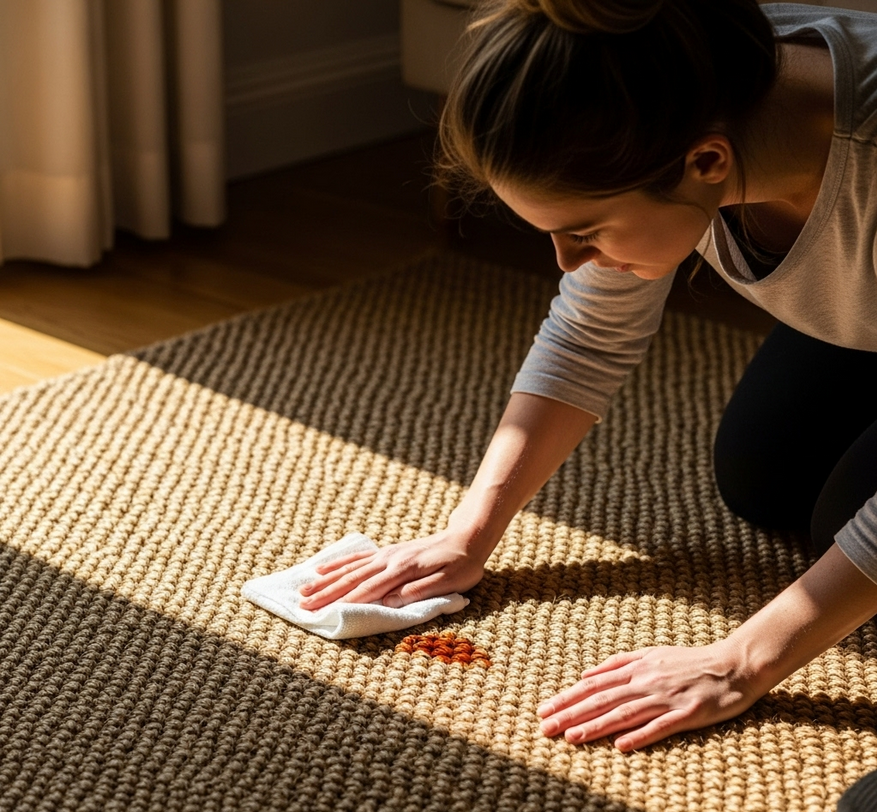
- Blot spills immediately, don’t rub. Rubbing spreads the liquid further into the fiber. Blot with a dry cloth from the outside in. For seagrass, the waxy coat gives you a decent window. For jute, that window is very short.
- Control humidity in the room. Natural fibers absorb moisture from the air, not just from spills. In humid climates or seasons, a dehumidifier does more for rug longevity than any cleaning product.
What “100% Natural Fiber” Doesn’t Tell You
A tag reading “100% natural fiber” doesn’t guarantee what you think it does. Two things worth checking before you buy:
Synthetic blends. Some rugs marketed as natural fiber use synthetic yarn blended in for stability or texture consistency. The label “natural fiber” can legally apply to blended products if the declared fiber content meets a threshold. Check the full materials breakdown, not just the headline label.
Latex or synthetic backing. Many natural fiber rugs are finished with a latex or synthetic rubber backing for grip. That backing off-gasses differently from the fiber itself and isn’t biodegradable. If a fully natural product matters to you, check the backing as carefully as the fiber content. Rugs with a cotton canvas backing are the cleaner option.
The Short Answer
Seagrass for wet-risk areas, sisal for high-traffic dry rooms, jute only in low-traffic dry spaces. Hemp anywhere you can find it in a design you like.
The “natural fiber” label works the same way “natural fabric” does on a clothing tag: it places you in a category, not a decision. Jute and seagrass are as different from each other as wool is from linen. So the choice that matters isn’t natural versus synthetic. It’s which plant, in which weave, for which room.
If you’re using jute in another form around the home, here’s what jute plant pots actually hold up to outdoors. The same moisture sensitivity applies.