Most plastic plant pots carry a recycling symbol on the bottom. Landfills take most of them anyway. A 2015 industry report found that 98% of plastic plant containers ended up in landfills. The reason is mechanical, not a lack of trying. Most nursery pots are black, and the near-infrared scanners recycling facilities use to sort plastic can’t detect that color. Workers pull the pots out by hand instead. They land in the landfill whether or not the pot carries a recycling symbol.
Woven jute plant pots sidestep that problem by being made from something that never needed sorting in the first place. Here’s what they actually do well, what they don’t, and how to tell a good one from a flimsy one.
What Woven Jute Plant Pots Actually Are
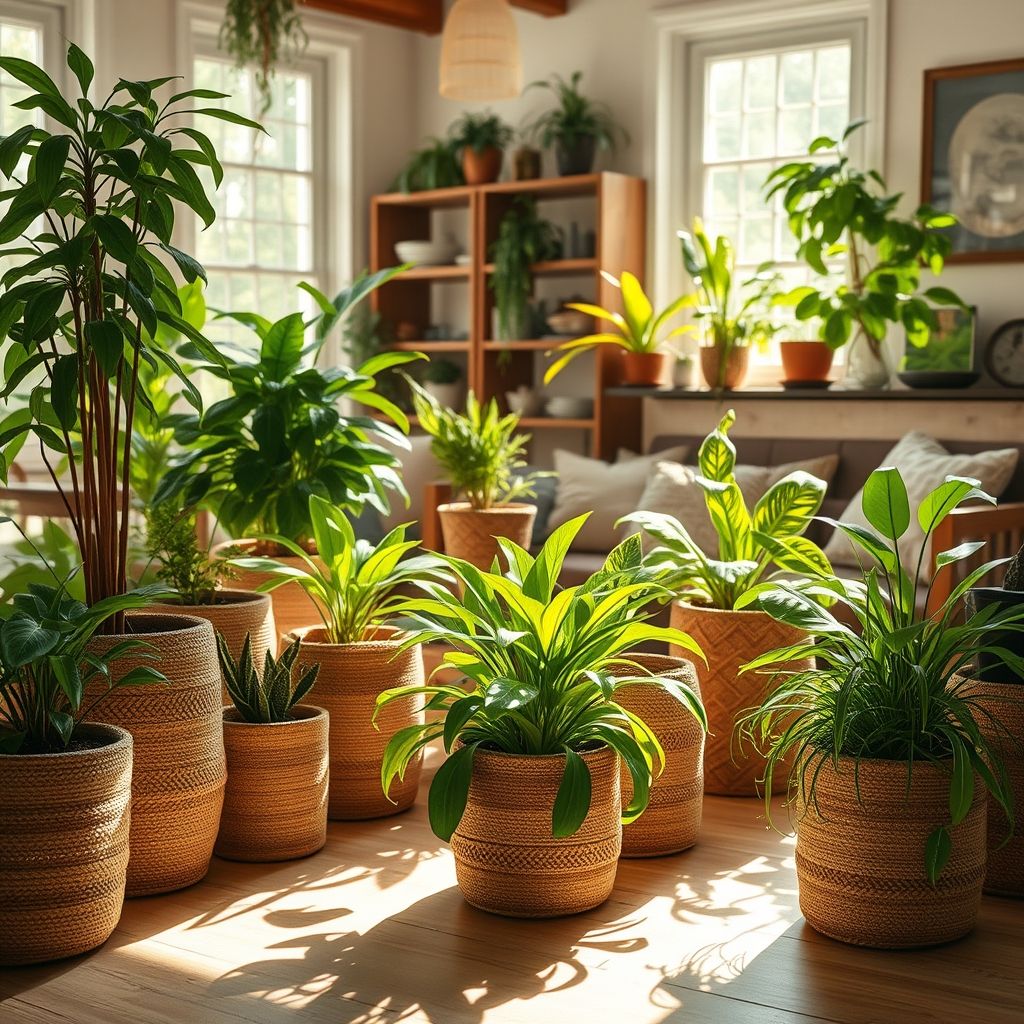
Jute is a natural plant fiber grown mainly in India and Bangladesh. Woven tightly, it forms a container sturdy enough to hold soil but porous enough to let air and excess water pass through the walls. That porousness is the whole reason it behaves differently from plastic or ceramic once a plant is actually growing in it.
The Real Benefit: What Happens to Roots Inside a Jute Pot
In a solid plastic or ceramic pot, roots that reach the wall keep growing along it, since there’s nowhere else to go. Over time they spiral, and a spiraling, girdling root system pulls water and nutrients less efficiently than a branching one. The University of Washington’s plant propagation program documents what happens instead in a breathable container. Roots that reach the porous wall hit open air and stop extending outward, a process called air pruning. The plant responds by branching into new roots instead of circling, which produces a denser, more efficient root system.
This is the actual mechanism, not a vague “breathability” claim. It’s also the reason fabric grow bags exist as a separate product category from decorative pots. Jute pots get the same benefit, in a fully natural material instead of woven synthetic fabric.
Where Jute Pots Fall Short
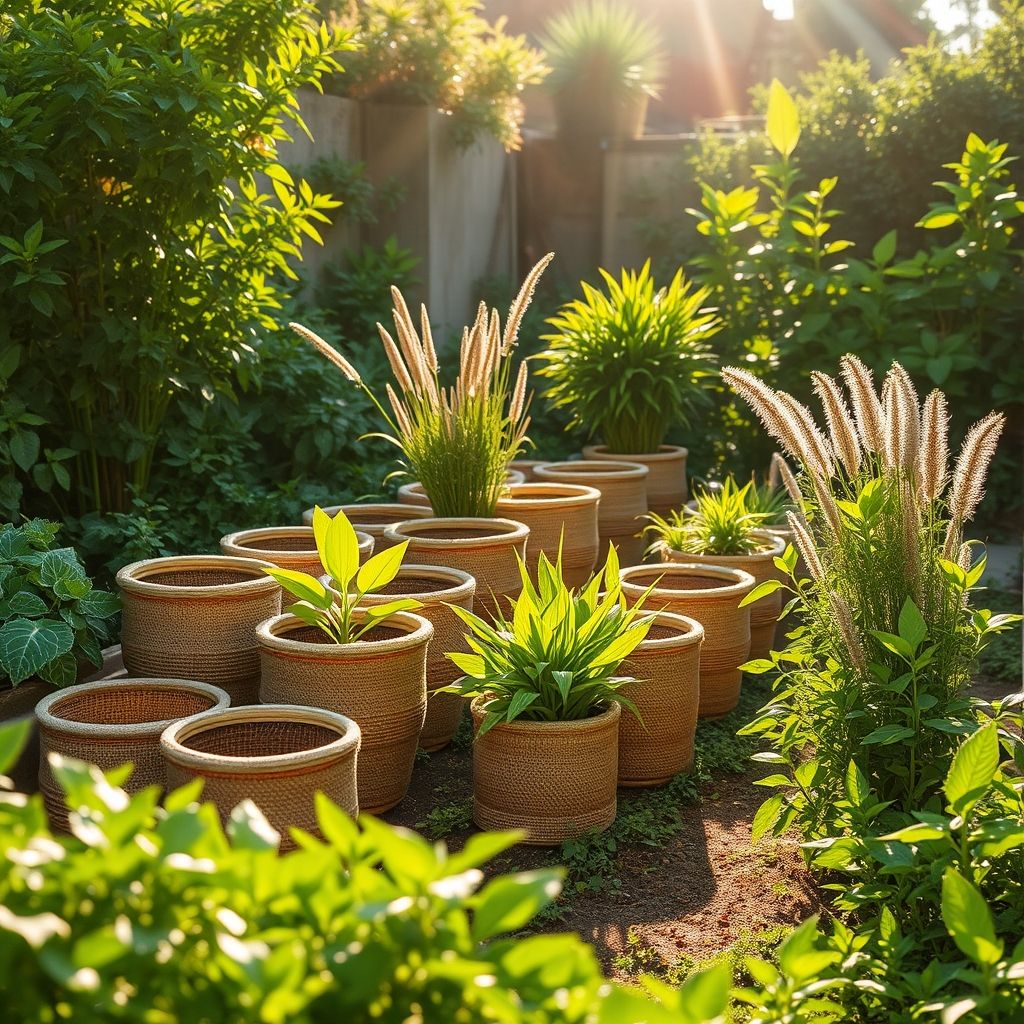
Jute doesn’t hold water the way a sealed pot does. It’s porous by design, so it dries out faster and needs more frequent watering, especially outdoors in full sun. It’s also not permanent. Woven jute erosion-control products offer a close industry comparison: manufacturers typically rate them to last six months to two years in the ground, depending on thickness and how wet they stay. A plant pot lands somewhere in that same range. That same property makes jute compostable instead of landfill-bound, but it also means budgeting for eventual replacement rather than treating it as a one-time buy.
Jute pots also typically cost more upfront than a plastic pot of the same size. Plastic won’t biodegrade the way jute does. It does crack and degrade under sun and weather over the years, though, and a real share of it still ends up landfilled at end of life regardless. That’s the actual tradeoff. Pay more upfront for something that breaks down on a known timeline, or pay less for something that lasts longer but has a real chance of following the same 98% into a landfill anyway.
How to Care for a Jute Pot
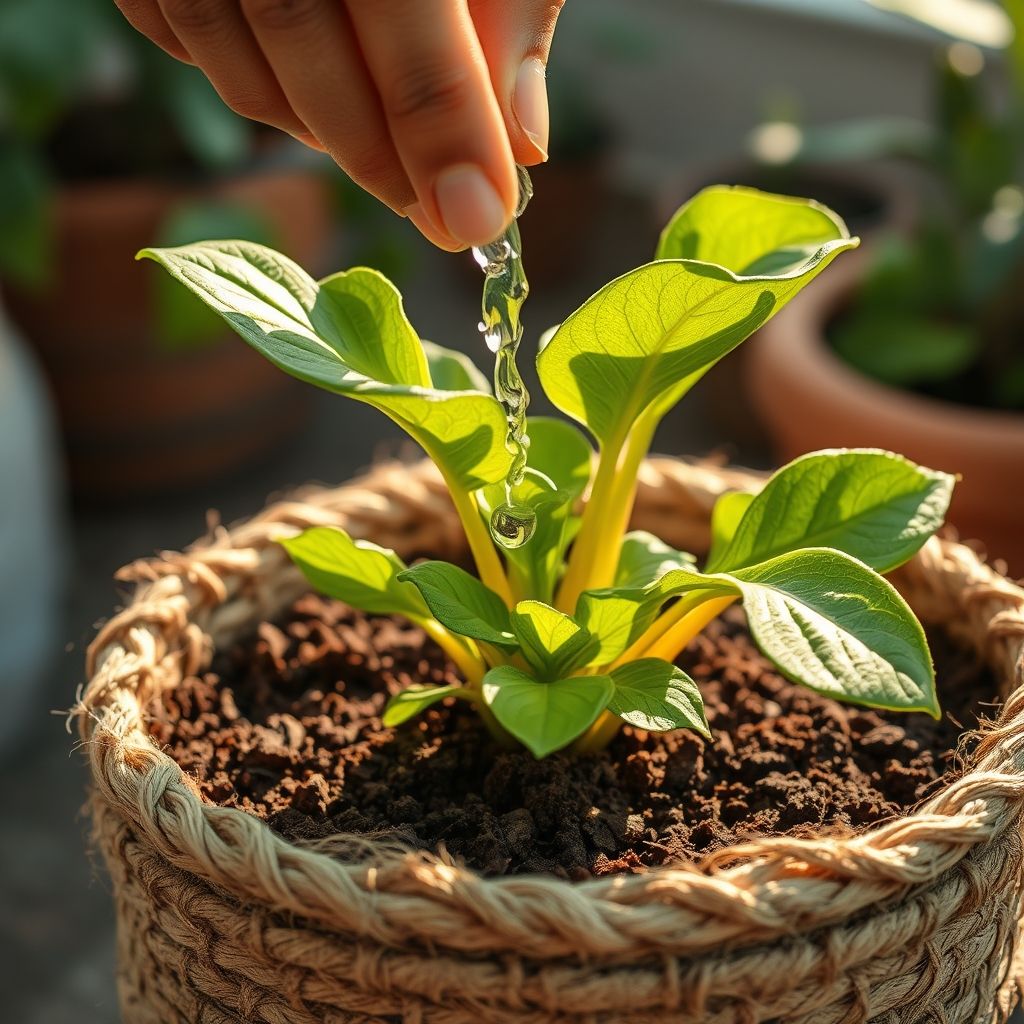
Water gently and less often than you would a sealed pot. The fiber wicks moisture out through the sides as well as the bottom. Well-drained-soil plants do best here: succulents, herbs, and most small houseplants suit jute pots better than moisture-loving species. During heavy rain, move outdoor jute pots under cover. Let them dry out between waterings rather than staying saturated. Constant dampness is what pushes the pot toward the shorter end of the six-months-to-two-year breakdown range.
How to Spot a Well-Made One
Weave density is the main quality signal. Tight, even weaving with thick fiber strands holds soil in and resists tearing longer than loose, thin weaving. Check the stitching at the base and seams specifically, since that’s where a cheaply made pot fails first. Artisan-made pots tend to hold up better than mass-produced ones for this reason. Price alone isn’t a reliable stand-in, though, for actually checking the weave yourself.
Styling With Jute Pots
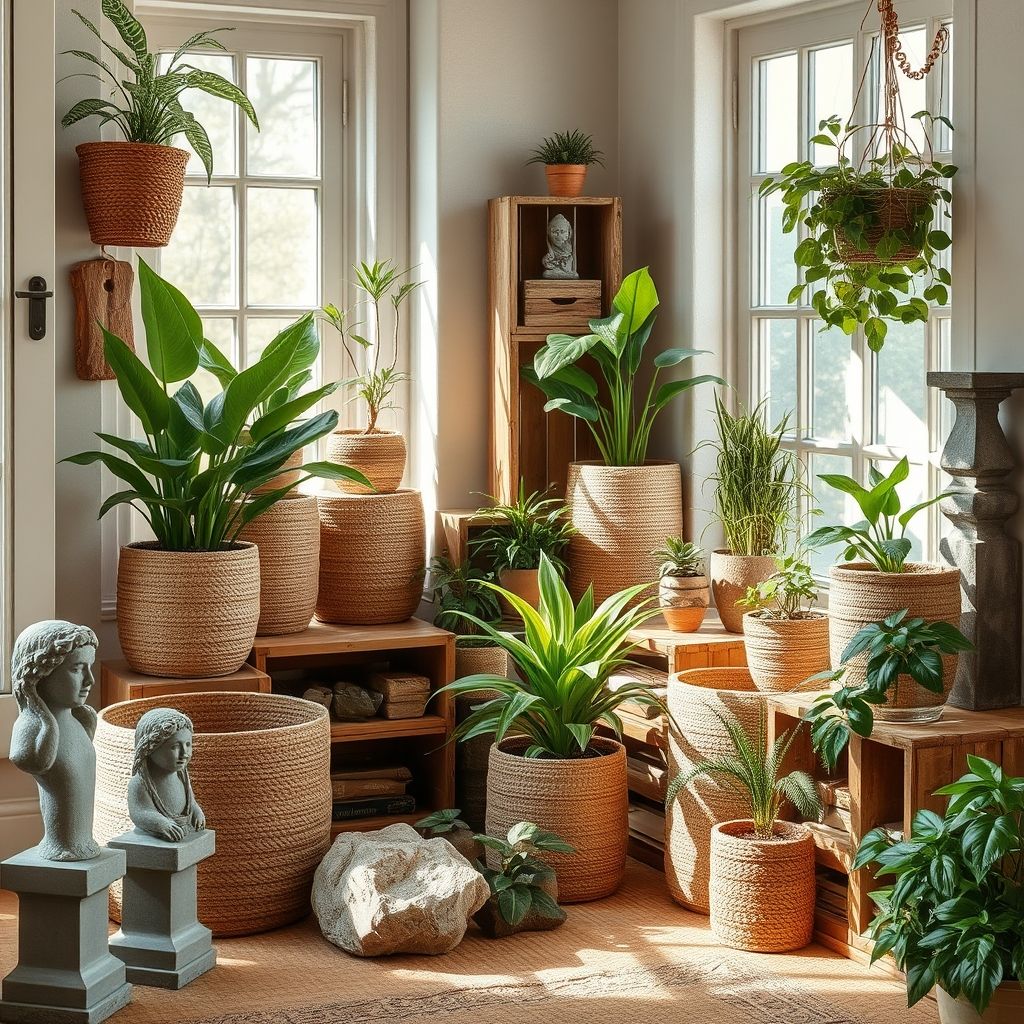
Jute pairs well with wood, stone, and raw metal accents, and clustering a few different sizes together reads better than one pot alone. A simple twine tie or a small tag is enough to dress one up further without covering up the texture that’s the actual point of choosing jute in the first place.
The one-line version: a well-placed jute pot with well-drained plants, watered a little less often, solves the same disposal problem as that plastic pot in your hand right now, without betting on a sorting facility that can’t see black plastic anyway. For another simple swap out of single-use plastic, see our guide to reusable bamboo utensils.