Search “how much beetroot juice to drink” and you’ll get a different answer depending on which site you land on. WebMD puts it at about 2 cups a day. Medical News Today lands on 250 milliliters. Examine.com skips a volume entirely and frames it as 0.1 to 0.2 millimoles per kilogram of body weight instead. None of these are wrong exactly. But none of them tell you what’s actually in the bottle you’re holding, and that’s the number that decides whether you’re anywhere near a studied dose or just drinking flavored water with a health halo.
We covered which organic beetroot juice brands actually disclose or verify their nitrate content in our organic beetroot juice roundup. This piece is about the number itself. Where the studied dose comes from, why the internet states it so many different ways, and what that means for how much of an actual bottle you’d need to drink.
Where the Studied Dose Actually Comes From
The dose most commonly used as a benchmark in the sports science literature comes from research reviewed by the Gatorade Sports Science Institute: roughly 0.1 millimoles of dietary nitrate per kilogram of body mass. For most adults, that lands in a 5 to 7 millimole range. Nitrate’s molar mass is about 62 milligrams per millimole, so the range converts to approximately 310 to 430 milligrams. That’s the figure our juice roundup uses as the benchmark, and it’s a single point estimate rather than the wider range Examine.com cites.
Both are legitimate. They’re just framing the same underlying research differently. Examine’s wider 0.1 to 0.2 mmol/kg range accounts for the full spread of doses used across different trials, some of which pushed higher to see whether more nitrate produced a bigger effect. GSSI’s narrower figure reflects the dose researchers have returned to most often. Examine’s own review cites trials using anywhere from roughly 200 to 800 milligrams, a real spread across different studies, not confirmation that any one product’s claimed content is accurate. Our juice roundup flags one brand’s claimed 500 to 800 milligram figure for exactly that reason. It happens to land inside this broader trial range, but nobody outside the company has verified the brand’s own bottles actually contain it. The GSSI figure stays the more conservative target here, and the one this site anchors to.
What That Looks Like in an Actual Bottle
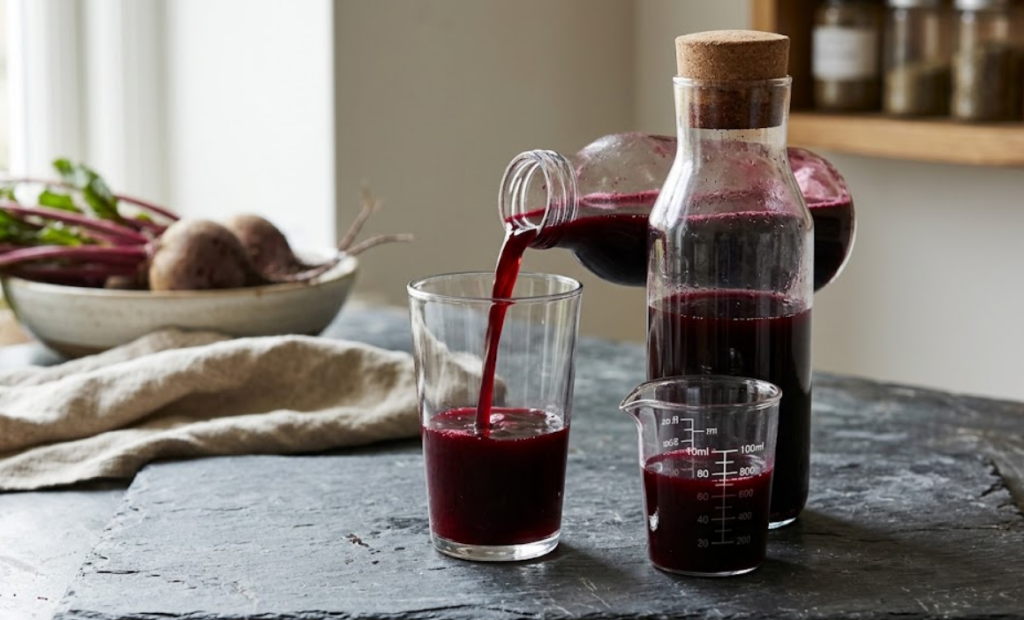
The same GSSI review notes you typically need about half a liter of beetroot juice to reach that dose, not a shot glass of it. That’s a meaningfully different picture than “drink some beet juice,” and it’s why serving size matters as much as whether a brand discloses a nitrate figure at all. A 70-milliliter shot marketed as a dose and a 500-milliliter bottle marketed as a daily serving aren’t interchangeable, even from the same brand, unless you know the concentration of each.
None of the general-health coverage above ties its recommendation to a specific brand’s actual measured content. That’s the gap our juice roundup exists to close. Two of the three organic juice brands we reviewed there disclose a nitrate figure or have had one independently confirmed; the third offers only an unverified brand claim.
Why Juice Gets You There More Reliably Than Powder
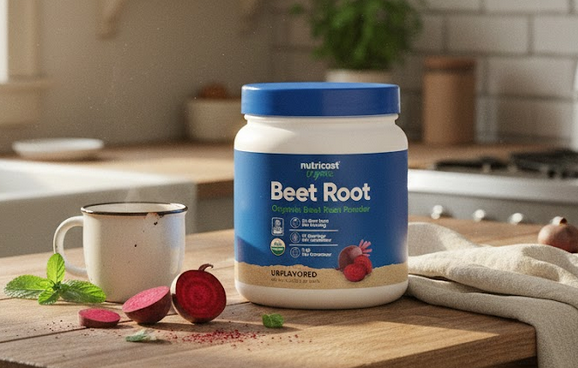
ConsumerLab’s independent testing found nitrate content ranging from 4.3 to 495.7 milligrams per serving across the juices, powders, and chews they tested. Powders specifically topped out around 173.5 milligrams, well under the 310 to 430 milligram range the actual clinical studies used. Drying beets into powder reduces nitrate concentration in a way fresh or cold-pressed juice doesn’t. If hitting the studied dose is the actual goal, none of the organic beetroot powders ConsumerLab tested got there on their own. We cover that in more depth in our organic beetroot powder roundup.
The biology behind why nitrate becomes nitric oxide in the body, the oral bacteria conversion step, the nitrite-to-NO pathway, doesn’t change based on whether the nitrate comes from juice or powder. We’ve already broken that down in our piece on how nitrate converts to nitric oxide, so we won’t repeat it here. What differs between juice and powder isn’t the biology. It’s how much nitrate survives processing to reach your glass in the first place.
What This Means for Choosing a Bottle
If you’re buying organic beetroot juice specifically to hit the dose used in the research, three things matter more than the word “organic” on the label. Does the brand disclose an actual nitrate figure? Has an independent lab verified that figure, rather than the brand simply claiming it? And how large a serving would you actually need to drink to reach 310 to 430 milligrams? A brand that states a number but sells it in a 70-milliliter shot is telling you something different than a brand stating the same number per 500-milliliter bottle.
Our organic beetroot juice roundup walks through which brands actually answer those questions, and which ones leave you guessing.