Beet juice has one of the better reputations in the supplement aisle. Athletes drink it before races, and health outlets cite it more than most produce-aisle items for having real trial data behind it. So the assumption most people carry to the shelf is simple: organic beet juice, any organic beet juice, does that thing beet juice is known for.
It mostly doesn’t. Not because the beets are fake, but because the benefit tracks a specific dose of nitrate, and almost no brand tells you what dose is actually in the bottle.
The studies behind beet juice’s reputation used doses in a narrow band, generally 5 to 7 millimoles of nitrate as reviewed by the Gatorade Sports Science Institute, which converts to roughly 310 to 430 milligrams. That number matters more than the word “organic” for this specific use, because a bottle can be perfectly organic and still land nowhere near what was tested. Most brands, including several with real organic certification, never publish a nitrate figure at all. Fewer still let anyone besides themselves check that figure.
We looked at the organic beet juice brands most commonly recommended for this purpose. We checked which ones disclose an actual number, and which of those numbers anyone besides the company selling it has ever verified.
Some links in this article are affiliate links. No brand paid to be included.
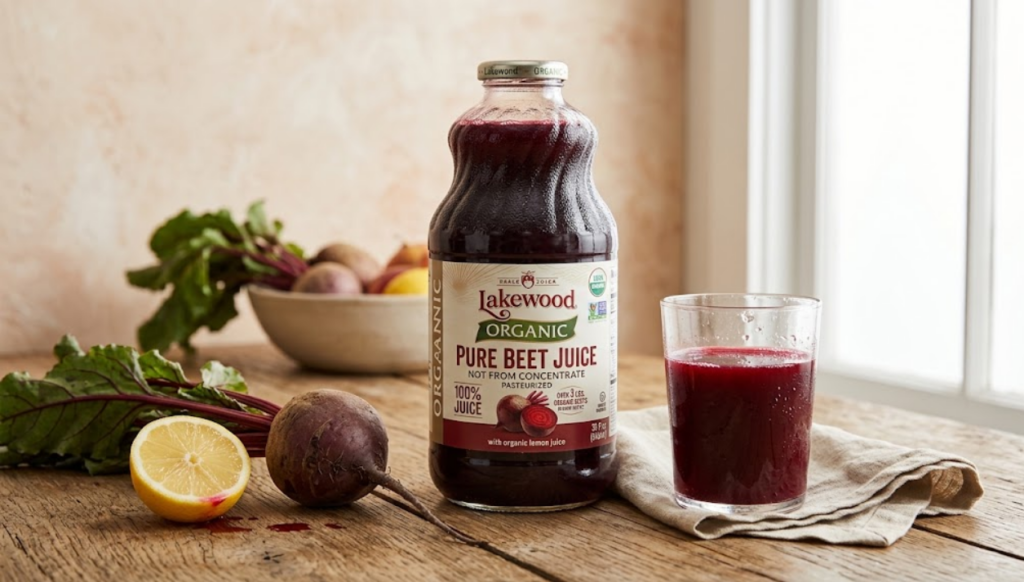
✅ USDA Certified Organic (QAI) ✅ Two ingredients: organic beets, organic lemon ✅ One of 10 products in ConsumerLab’s December 2025 independent test Buy on Amazon
Lakewood is USDA Certified Organic through Quality Assurance International. It uses just organic beets and a splash of organic lemon, and comes in glass rather than plastic. None of that is unusual for this category on its own.
What sets it apart is that Lakewood was one of ten products ConsumerLab put through independent lab testing in their December 2025 beetroot review. The specific nitrate figure they measured for Lakewood sits behind ConsumerLab’s membership paywall. The free, public version of their report confirms Lakewood was tested and that results across all 10 products ranged from roughly 2 to nearly 500 milligrams per serving, but it doesn’t show Lakewood’s individual number, so we can’t hand you the exact figure for free. What we can confirm: the number exists, and a lab with no stake in the sale measured it. That’s more than the other two brands on this list can say.
The trade-off is honest, and it cuts both ways: you’re buying confidence that the number is real, not confidence that the number is good. ConsumerLab’s full test batch ranged from 4.3 to 495.7 milligrams per serving, so an independent test alone doesn’t tell you where Lakewood landed on that spread. Being tested means the brand didn’t dodge scrutiny. It doesn’t mean the result cleared the studied dose.
Best for: readers who want an actual independent lab test standing behind the product, even without seeing the exact number themselves.
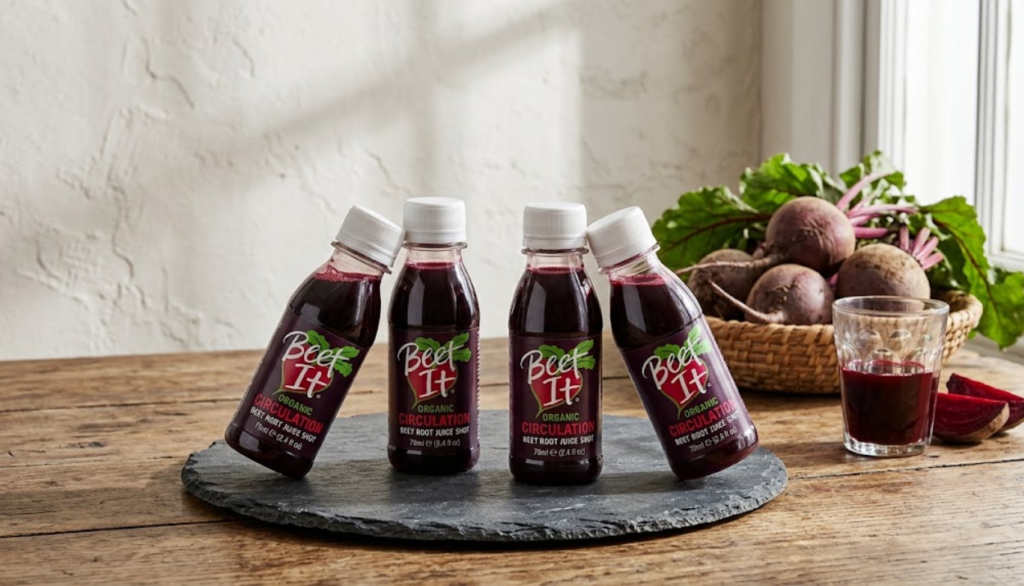
✅ Certified organic by the Soil Association ✅ States 300 mg dietary nitrate per 70 ml shot on the label ⚠️ Just under the low end of the studied range (310-430 mg) Buy on Amazon
Beet It sells more than one relevant product, and it’s worth not conflating them. The standard “Organic Beet Juice” bottles are USDA Organic certified but disclose no nitrate figure. The “Sport Nitrate 400” / “Pro-Elite” shots disclose 400 mg but carry no organic certification at all, only a Non-GMO claim, despite similar branding. The Circulation Shots are the one product in the lineup that does both: certified organic by the Soil Association, a UK-based organic certifier, not the USDA, and it states its nitrate dose. Worth knowing if a US-only certification matters to you.
Beet It’s own product page states 300 milligrams of dietary nitrate per 70 milliliter shot directly. That’s close to the 310 to 430 milligram range the actual trials used, but it falls just short of the low end, not inside it. That number comes from Beet It, not from an independent lab, so treat it as disclosed, not verified. It’s still a real, checkable figure instead of a vague marketing gesture, which already puts it ahead of most of the category, even short of the exact range.
Best for: readers who specifically want a beet juice that states its nitrate dose and comes close to the studied range, and are comfortable with a non-US organic certification.
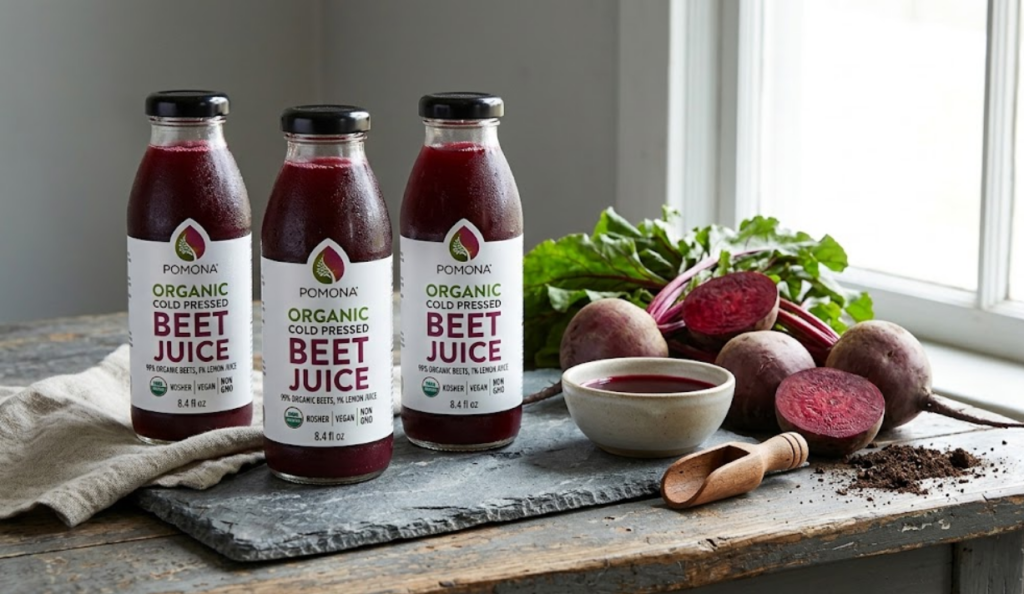
✅ USDA Certified Organic ✅ Cold-pressed, not from concentrate ⚠️ Claims 500 to 800 mg nitrate per serving with no independent test behind it Buy on Amazon
Pomona’s own product page claims “approximately 500 to 800 milligrams of dietary nitrates” per 8.4 ounce bottle, the largest number of any organic brand we found, and higher than the top of the range the actual clinical studies used. It is USDA Organic and genuinely cold-pressed, real qualities that count in its favor.
But we could not find any independent test behind that nitrate figure, ConsumerLab or otherwise. It’s the brand’s own approximate number. They present it with a tilde as though it were precise, and nobody outside the company appears to have checked it.
We’re not saying the number is wrong. We’re saying nobody has confirmed it’s right. A self-reported figure this much higher than everyone else’s deserves more scrutiny, not less.
Best for: nobody, until the claim is independently verified. We’re leaving this one flagged rather than recommended.
The Thing Nobody Tells You
“Certified Organic” was never built to answer the question most people actually care about here. It verifies farming and processing inputs. It says nothing about how much nitrate ends up in your glass.
The clinical dose that produced measurable results, lower resting blood pressure, reduced oxygen cost during exercise, comes from research the Gatorade Sports Science Institute reviewed. That research sets the effective range at 5 to 7 millimoles of dietary nitrate, roughly 0.1 millimoles per kilogram of body mass. Nitrate’s molar mass is about 62 milligrams per millimole, which puts that range at approximately 310 to 430 milligrams. The same review notes you typically need about half a liter of beetroot juice to reach that dose, not a splash of it.
That’s also why juice consistently outperforms powder for this specific purpose, and it’s worth being direct about it here since we cover organic beetroot powder on this site too. ConsumerLab’s own independent testing found nitrate content ranging from 4.3 to 495.7 milligrams per serving across the juices, powders, and chews they tested. Powders specifically topped out around 173.5 milligrams, well under the dose the actual trials used. Drying beets into powder reduces nitrate concentration in a way fresh or cold-pressed juice doesn’t. If hitting the studied dose is the actual goal, none of the organic beetroot powders ConsumerLab tested got there on their own. That includes the brands our own powder roundup recommends.
Label Decoder
Term
What It Actually Means
Cold-pressed
A processing method, not a nitrate or organic guarantee on its own
Not from concentrate
Wasn’t dehydrated and reconstituted. Generally preserves more of the original nitrate than concentrate or powder, but still not a guaranteed number
A real, accredited UK organic standard. Not the same certifying body as USDA, worth knowing if that distinction matters to you
“X mg nitrates” on a label
A real number only if it’s been independently tested. A brand-stated figure with no lab behind it is a claim, not a verification
Honest Recommendation
If independent testing matters most to you, Lakewood is the safer default on transparency, not necessarily on nitrate content. Somebody other than the company selling it has actually measured this one. That exact number isn’t public without a ConsumerLab membership, and testing alone doesn’t confirm it lands in the studied range.
If seeing an actual dose printed on the label matters more, Beet It’s Circulation Shots state one: 300 milligrams, just under the low end of the studied range. Just remember that number is self-reported, not lab-verified.
Skip treating Pomona’s 500 to 800 milligram claim as settled fact, even though it’s the biggest number and the most tempting one to believe. Nobody outside the company has confirmed it.
If you already have organic beetroot powder in your pantry and are wondering whether it gets you anywhere close to these numbers, our organic beetroot powder roundup breaks down what the label does and doesn’t tell you there too.