Beetroot powder sells on one promise: it raises nitric oxide and improves blood flow. That claim holds up in the research. What most brands skip is the actual chemistry between “beet” and “nitric oxide in your blood.” They also skip a bigger problem. Independent lab testing found that nitrate content in beetroot products varies more than 100-fold between brands. Almost none of them disclose it.
This piece covers the pathway itself. It explains why nitrate content varies so wildly between products, and it covers the other compounds in beetroot that marketing rarely mentions. For brand-by-brand rankings on which products actually disclose their numbers, see our organic beetroot powder roundup.
Some links in this article are affiliate links. No brand paid to be included.
The Pathway: How a Root Vegetable Becomes a Signaling Molecule
It Starts in Your Mouth, Not Your Stomach
Beetroot delivers one of the most concentrated dietary sources of inorganic nitrate (NO3-). On its own, nitrate does nothing useful in the body. Your body has to convert it twice before it becomes nitric oxide. The first conversion doesn’t happen in your stomach or liver. It happens in your mouth.
Your saliva actively concentrates roughly 25% of the nitrate you swallow and recirculates it back to your mouth. There, facultative anaerobic bacteria on the back of your tongue, mainly Veillonella and Actinomyces species, use nitrate reductase enzymes to reduce nitrate to nitrite (NO2-). This step matters more than people assume. Research published in Nitric Oxide tested this directly. When subjects used antibacterial mouthwash to eliminate oral bacteria, their plasma nitrite barely rose after a nitrate load, despite identical nitrate intake. Oral bacteria control the rate-limiting step in the entire pathway. The conversion that makes beetroot powder work happens on your tongue, not in your gut.
From Nitrite to Nitric Oxide
You swallow the nitrite a second time. The acidic environment in your stomach converts a portion of it non-enzymatically into nitric oxide and other reactive nitrogen species. Your bloodstream absorbs the rest, where it sits as a circulating reserve. Under low-oxygen conditions, tissues including exercising muscle and the blood vessel lining reduce this nitrite to nitric oxide directly. This backup system supplements your body’s normal enzymatic nitric oxide production, and it becomes more active exactly when oxygen runs short. Dietary nitrate essentially builds a nitrite reserve your body draws on most during exercise, not least.
Clinical trials using beetroot juice and powder have documented measurable drops in systolic blood pressure. They’ve also shown improved oxygen efficiency during submaximal exercise. These effects generally appear within 2 to 3 hours of ingestion and last several hours. The effect size stays modest, but it holds up consistently across multiple independent trials. That’s more than most supplement categories can claim.
Why Nitrate Content Varies So Much Between Brands
The Testing Data
In December 2025, ConsumerLab independently tested ten popular beetroot juices, powders, and chews. Nitrate content ranged from 4.3 mg to 495.7 mg per serving, more than a 100-fold difference. Beetroot powders alone ranged from 4.1 mg, in a product that failed ConsumerLab’s own approval threshold, up to 173.5 mg per serving. Clinical trials showing measurable blood pressure and endurance benefits typically use 300 to 600 mg of nitrate daily. Several of the tested products would require an implausible number of servings to reach a dose anyone has actually studied.
Why the Gap Exists
The variability starts before the beet ever reaches a dehydrator. Nitrate content in raw vegetables depends heavily on soil nitrogen levels, cultivar, growing season, and even which part of the root growers use. A single crop can vary several-fold in nitrate concentration based on growing conditions alone. Two farms can grow the same labeled beet variety, both organically certified, and still start with very different raw nitrate levels before any processing begins.
The rest of the gap comes down to formulation and testing, or the lack of it. “Beetroot powder” can mean pure dried beet at high concentration. It can also mean beet powder diluted with fillers, maltodextrin, or other bulking agents to hit a price point, and no rule requires brands to disclose that ratio. Add undisclosed dilution to natural growing variability, then remove any requirement to test or publish actual nitrate content, and a 100-fold spread between products stops looking surprising. It’s close to the default outcome of an unregulated claim.
USDA Organic certification doesn’t touch any of this. It governs whether a farm used synthetic pesticides and fertilizers to grow the beet. It says nothing about the beet’s actual nitrate concentration. It says nothing about dilution in the final product. It says nothing about whether anyone tested the finished powder for what it claims to deliver.
Betalains: The Other Reason Color Is a Real Signal
The deep red color in beetroot comes from betalains, a class of pigments (betacyanins specifically) that differ chemically from the anthocyanins found in most other red and purple plants. Betalains work as potent antioxidants in their own right. Research on red beet pigments has documented their capacity to inhibit lipid peroxidation and scavenge free radicals, entirely independent of the nitrate pathway. Betanin, the primary red beet betacyanin, shows real bioavailability in humans after oral consumption. This is a second, separate mechanism sitting inside the same root vegetable.
Betalains are heat sensitive too. Significant degradation occurs above roughly 50 to 60°C, and the rate climbs sharply as temperature rises further. That makes color vibrancy a genuinely useful, low-effort quality signal for betalain and antioxidant content specifically. A washed-out, brownish beetroot powder has likely lost more of its betalain content than a vivid magenta one has. It doesn’t work as a direct proxy for nitrate content, which is a separate compound with its own separate testing question. But it does work as a real signal for this specific class of antioxidants.
The Oxalate Question Nobody Asks
Beets, like spinach and rhubarb, carry naturally high oxalate levels. These organic compounds bind to calcium and can contribute to calcium oxalate kidney stones in susceptible people. Concentrating beetroot into powder form concentrates its oxalate content the same way it concentrates nitrate and betalains. Research on dietary oxalate and kidney stone formation found that diet supplies roughly half of urinary oxalate in most people, with the body producing the rest internally. People with a personal or family history of calcium oxalate stones show meaningfully more sensitivity to concentrated oxalate sources than the general population does.
This isn’t a reason to avoid beetroot powder if you have no history of kidney stones. Typical serving sizes fall well within a range most kidneys handle without issue, especially with adequate hydration and normal dietary calcium intake, since calcium binds oxalate in the gut before it reaches the kidneys. It is a reason to watch your dosing carefully if you do have a personal or family history of stones. It’s also a gap in the beetroot powder conversation worth naming directly, rather than pretending a concentrated supplement carries zero downside for everyone.
What This Means for Choosing a Product
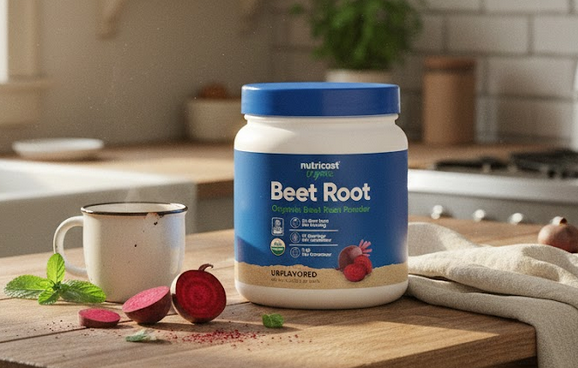
The organic label answers one question: did the grower avoid synthetic pesticides and fertilizers. It answers nothing about whether the nitrate you actually bought this product for shows up in a meaningful amount. It says nothing about how anyone measured that nitrate, or whether anyone measured it at all. Two USDA-certified powders can sit on the same shelf and differ by a factor of ten or more in actual nitrate content, and neither label has to say so.
A brand that lists actual nitrate content per serving is giving you real information. So is a brand that ConsumerLab or a similar independent lab has actually tested. A brand that discloses neither isn’t necessarily cutting corners, but you have no way to check, and for a product you bought specifically for its nitrate content, that’s the one variable actually worth asking about. For the brands that disclose this and the ones that don’t, see our full organic beetroot powder roundup.