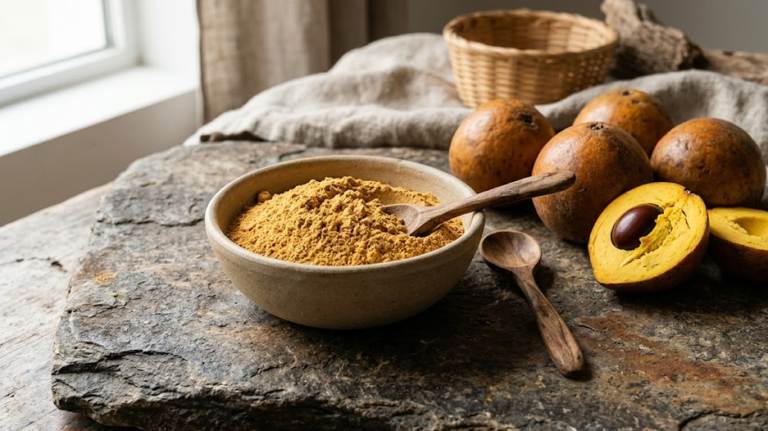
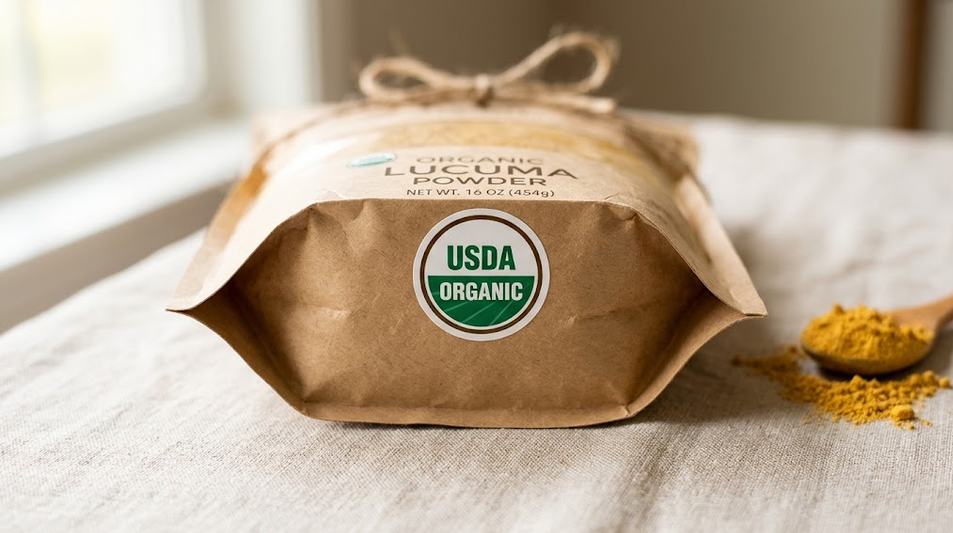
Organic lucuma powder is supposed to be the clean option. The seal says so. The marketing copy says so. The assumption is that organic certification covers the things most likely to harm you. Lead is on that list.
It doesn’t, not for heavy metals. USDA Organic certifies farming inputs: no synthetic pesticides, no prohibited fertilizers, no GMO seed stock. Those exclusions are real. The standard does not require that the finished product be tested for heavy metals. That’s a different problem, and it’s one the certification was never built to solve.
Peru dominates global lucuma supply and exports, with smaller production in Chile and Ecuador. For lucuma sourced from Peruvian Andean growing regions, where peer-reviewed research has confirmed lead levels in agricultural soils above natural background values, that gap matters. The Andean soil contamination concern is specific to high-altitude Peruvian production, which represents the majority of global commercial supply.
What the Research Actually Shows
No large-scale independent organization has published testing results for lucuma powder lead content. That absence cuts both ways: no evidence of a problem, and no evidence there isn’t one. The data doesn’t exist in a form you can look up.
ConsumerLab has documented that USDA Organic certification does not guarantee a product is free of heavy metals, and that their testing has found elevated lead in certified organic products. The closest documented parallel to lucuma is maca, another Peruvian Andean crop: a peer-reviewed study found lead in maca edible tissue averaging 0.20 mg/kg (200 ppb) in areas affected by mining and metallurgical activity, exceeding FAO/WHO guidelines. Maca is a root crop, which accumulates more lead than fruit crops do. The finding still matters: it shows the Andean contamination pathway is real and measurable in finished product.
The Jeeng study linked above found lead above natural background in high Andean agricultural soils. The source is not prohibited pesticide applications. Lead enters these soils through natural geology and centuries of mining and metallurgical activity in the region. Organic certification has no mechanism for catching contamination from the soil itself.
Why Lucuma Is Not the Highest-Risk Category
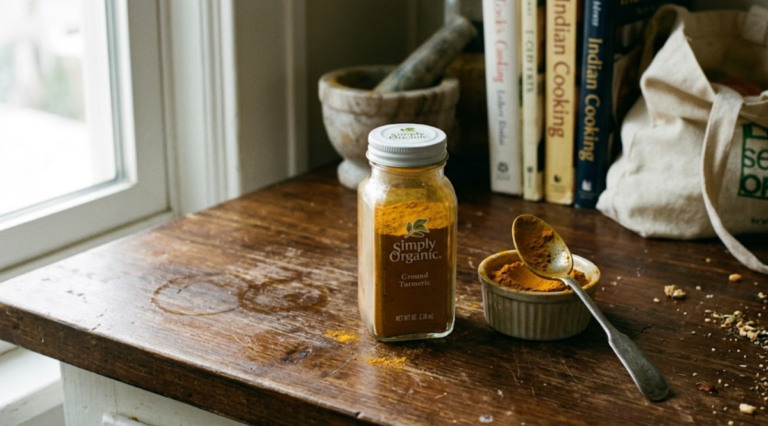
Lucuma is a fruit. Research on lead uptake across crop types consistently finds that fruit crops accumulate the least. Root crops and leafy greens carry the highest bioaccumulation from contaminated soil. In direct comparisons, tomatoes and beans showed far lower lead levels than carrots and lettuce grown under the same conditions. Turmeric, ginger, and cassava (all roots or rhizomes) present a more direct pathway from contaminated soil to finished powder than a tree fruit like lucuma does.
The risk for a fruit powder isn’t zero. Contamination during drying and milling in areas with elevated soil lead is a real pathway, separate from plant uptake. Cross-contamination in shared processing facilities that handle higher-risk crops is another. Lot-specific testing matters even for categories where the plant biology is relatively favorable.
Where the Regulatory Floor Is
The FDA sets no enforceable lead limit for dietary supplement powders. The closest voluntary benchmark is the USP <2232> Permitted Daily Exposure of 5 micrograms per day. California’s Proposition 65 sets a more conservative threshold: 0.5 micrograms per day for reproductive toxicity. A product that clears the USP benchmark may still require a Prop 65 warning label if sold in California.
Neither number tells you what’s in your specific lot. They define the thresholds at which action is required. What’s actually in the package you bought depends on when and where the lucuma was grown, how the facility dried and milled it, and whether anyone tested that batch. The label doesn’t answer any of those questions.
What “Tested” Actually Means on a Label
“Third-party tested” on a supplement label is a claim, not a standard. It doesn’t specify which lab ran the test, what contaminants the lab screened for, what detection limits it used, or whether the results are available to you. Some brands mean a full heavy metals panel by an accredited lab. Others mean a single pesticide screen from their own facility. The FDA does not regulate the phrase.
A certificate of analysis is different. A COA is a lot-specific document from an accredited third-party lab. It lists what the lab tested, the method used, the detection limits, and the actual results for the exact production batch you are buying. Not a generic test from a different lot six months ago. Among the organic lucuma brands currently on Amazon, none publish COAs. Terrasoul will share one on request for a specific lot. HerbaZest would require a direct inquiry with no guaranteed outcome.
The Question That Actually Matters
The organic certification on your lucuma powder answers one question: did a farmer grow this crop without synthetic pesticides and prohibited inputs? That question has an answer. It’s yes, and it means something.
It doesn’t answer whether the specific lot in your bag has been tested for lead by an independent lab, or whether that result is available to you. Those are two separate questions. The seal on the front can’t answer either of them. A COA for your lot can. If that matters to you, request one before you use the product. If it doesn’t, the two brands in our organic lucuma powder roundup are the ones with the cleanest available signals: one with a documented COA request path, one without.
The same gap runs across South American and Andean superfoods. We documented it for arrowroot in this breakdown and for turmeric in this one. The mechanism is the same each time. The organic label doesn’t move.